Mevlevi Ayinleri Serisi 1, Sûz-i Dil-ârâ Ayîn-i Şerîfi (Üçüncü Selim)
Mevlevi Ayinleri Serisi 1 · Sûz-i Dil-ârâ Ayîn-i Şerîfi (Üçüncü Selim) · Turkey · RAKS
Sûz-i Dil-ârâ Ayin-i Şerifi (Üçüncü Selim)
The cassette
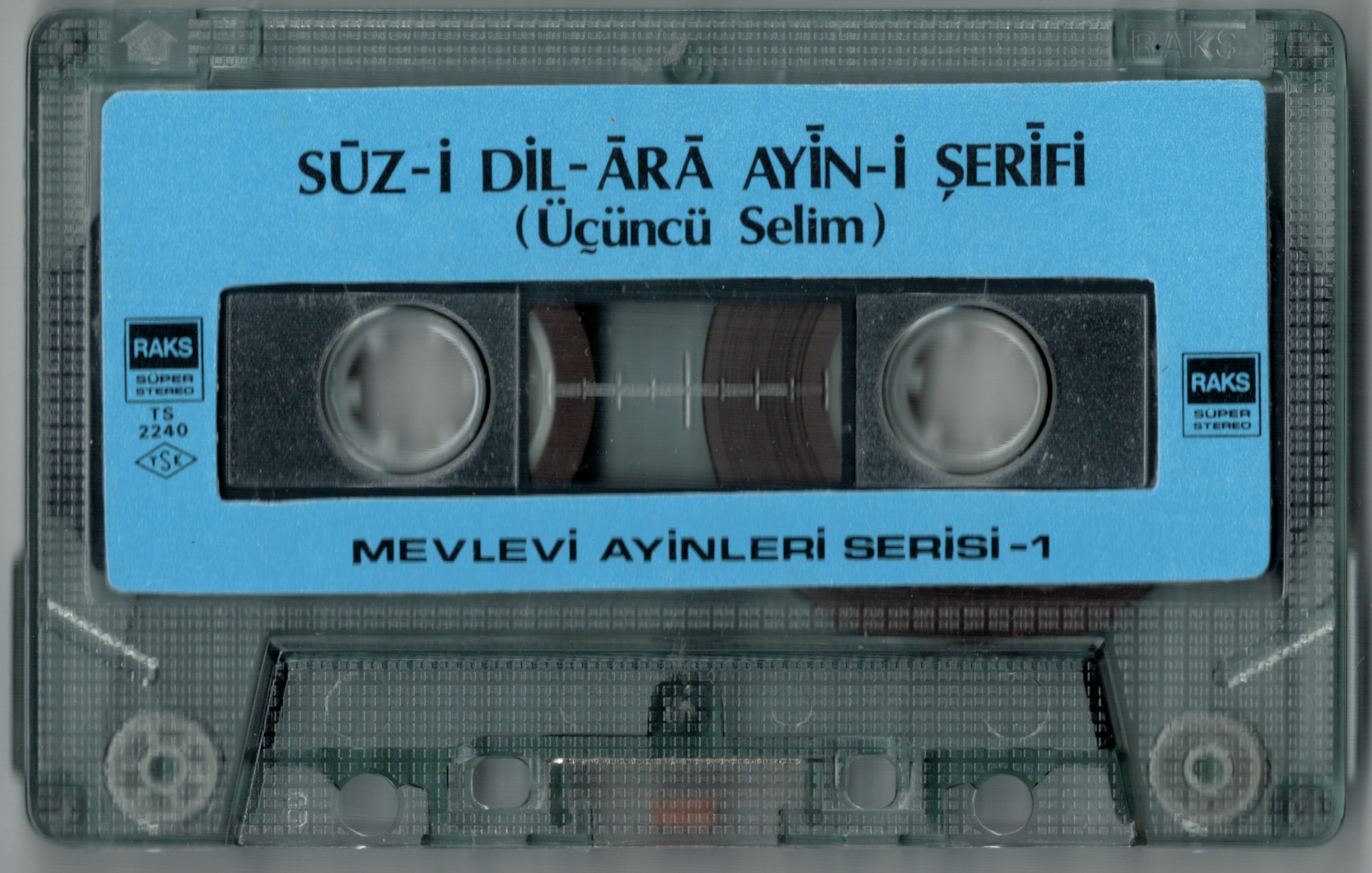
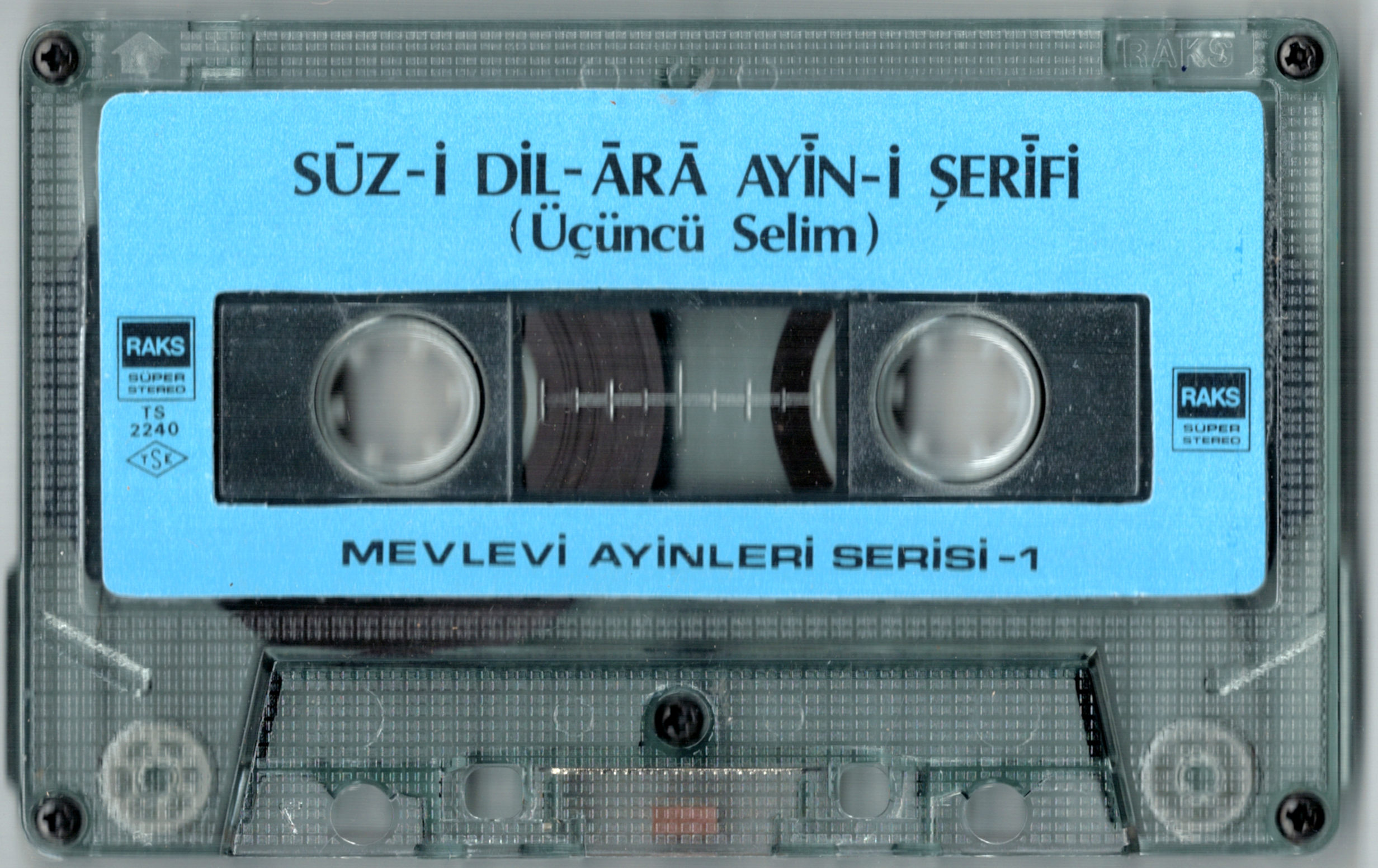
Turkish cassette with a light blue label, printed by RAKS (“Süper Stereo” brand). The label carries the code TS 2240 and the mark of the Turkish standards institute (TSE). The shell is transparent grey, with “RAKS” embossed on it. The labels on the two sides are identical and do not mark A or B.
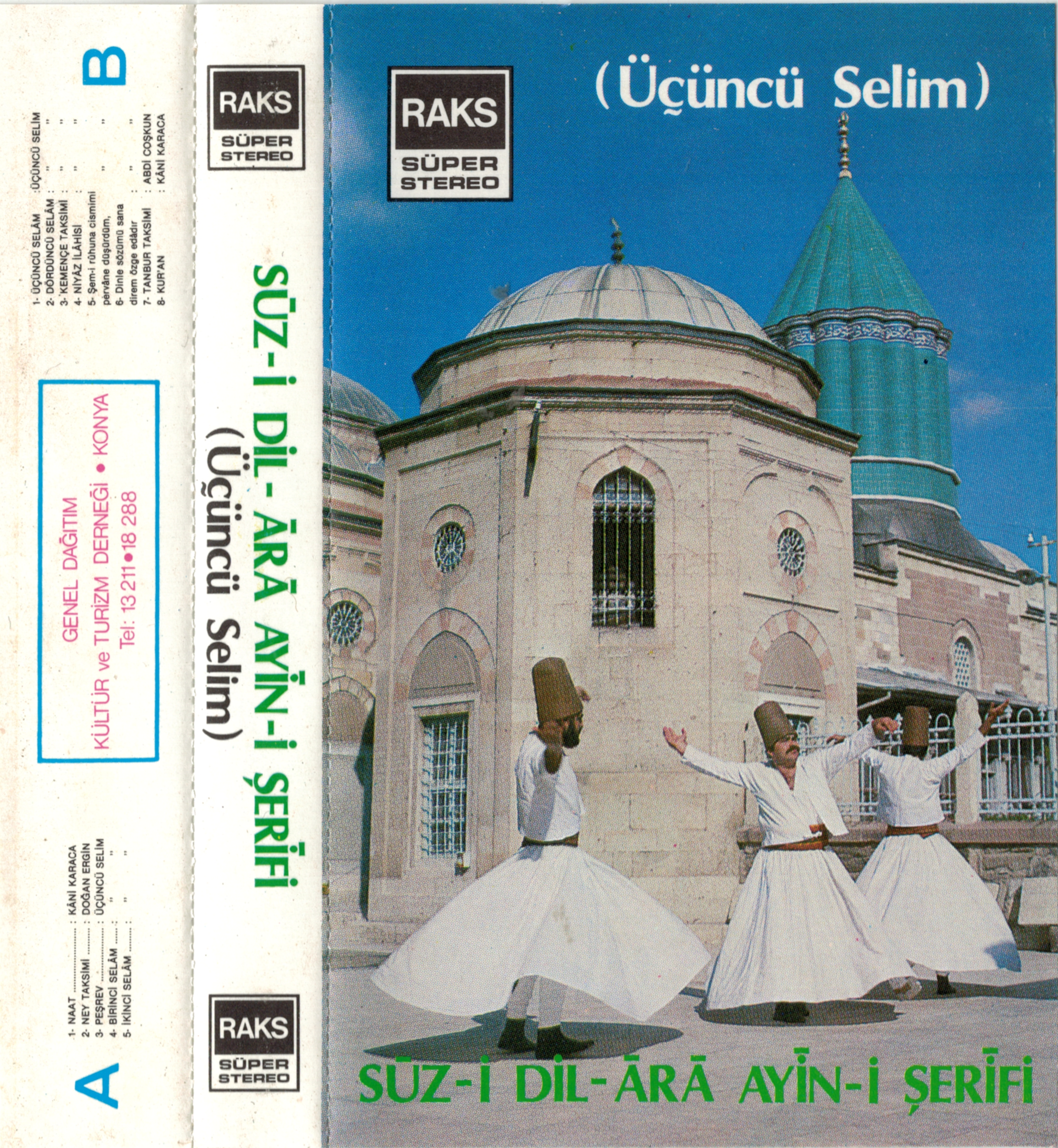
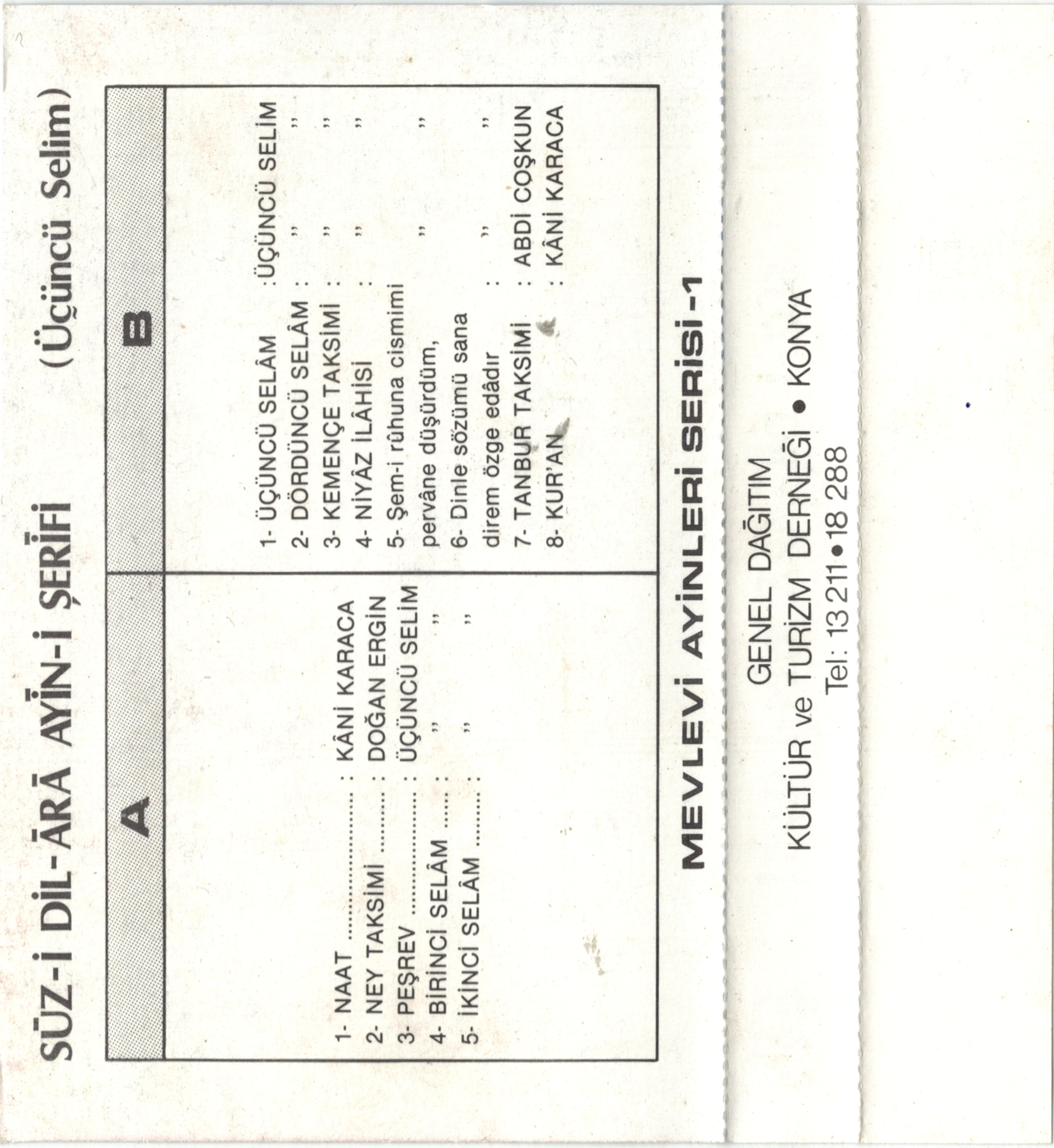
The cover shows three whirling dervishes in front of a building with a conical turquoise dome, which resembles the mausoleum of Mevlânâ in Konya. The back has the table of tracks. At the bottom is the distributor: Kültür ve Turizm Derneği, Konya, with two telephone numbers.
There is no year, producer, place of recording, track durations or barcode.
The tracks
Side A: Naat (Kâni Karaca), Ney Taksimi (Doğan Ergin), Peşrev, Birinci Selâm, İkinci Selâm.
Side B: Üçüncü Selâm, Dördüncü Selâm, Kemençe Taksimi, Niyâz İlâhisi, two sung verses (“Şem-i rûhuna cismimi pervâne düşürdüm” and “Dinle sözümü sana direm özge edâdır”), Tanbur Taksimi (Abdi Coşkun), Kur’an (Kâni Karaca).
In the column of names, some tracks have a ditto mark referring to “Üçüncü Selim”. The column mixes composers and performers, so for some tracks it isn’t clear who performs. No performer is given for the Kemençe Taksimi.
The ritual and the composer
An ayin is the musical suite of the Mevlevi dervish ritual, the order linked to Rumi (Mevlânâ), based in Konya. It follows a fixed scheme: a eulogy to the Prophet, a ney improvisation, a peşrev, four selâms and a closing recitation of the Quran. Sûz-i Dilârâ is the musical mode (makam) of this ayin.
The composer named is Selim III (1761–1808), an Ottoman sultan who played the ney and composed music. His ayin in this makam was transcribed in 1794 by Abdülbâki Nâsır Dede, sheikh of the Mevlevi lodge of Yenikapı, in the treatise Tahrîriye. Some studies note that the attribution of all the parts is disputed: the opening peşrev is said to be by Seyyid Ahmed Ağa.
Who plays
Kâni Karaca (1930–2004) was born in Karataş, near Adana, and lost his sight at a few months old. He memorized the Quran as a child and moved to Istanbul in 1950. He studied with Sadettin Heper, from whom he also learned the Mevlevi ayins. From 1955 he took part in the ceremonies in memory of Mevlânâ in Konya.
Doğan Ergin was the lead ney player of the Mevlevi Ensemble of Turkey. He composed a Ferahnak Asiran Ayin, completed in 1986. I found no dates for him.
I found no information on Abdi Coşkun, who plays the tanbur.
What we don’t know
We don’t know the year of this cassette, and we found no information on the RAKS label. It isn’t clear whether TS 2240 is a catalog number or a reference to the standard. We don’t know who the other musicians of the ensemble are, or when and where it was recorded. From the format and the TSE mark one might think of the 1980s or early 1990s, but that is only an impression.
Covers
Tracklist
Side A
- Naat
- Ney Taksimi
- Peşrev
- Birinci Selâm
- İkinci Selâm
Side B
- Üçüncü Selâm
- Dördüncü Selâm
- Kemençe Taksimi
- Niyâz İlâhisi
- Şem-i rûhuna cismimi pervâne düşürdüm
- Dinle sözümü sana direm özge edâdır
- Tanbur Taksimi
- Kur'an