How I Built a Home AI Network for Under a Thousand Euros (and a Bit of Madness)
16 October 2026
It all started with a deal. A Chinese mini PC, dedicated AI chip, rock-bottom price. I bought it. It looked like the dream: AI power in a 15-centimetre cube.
Then I opened the box.
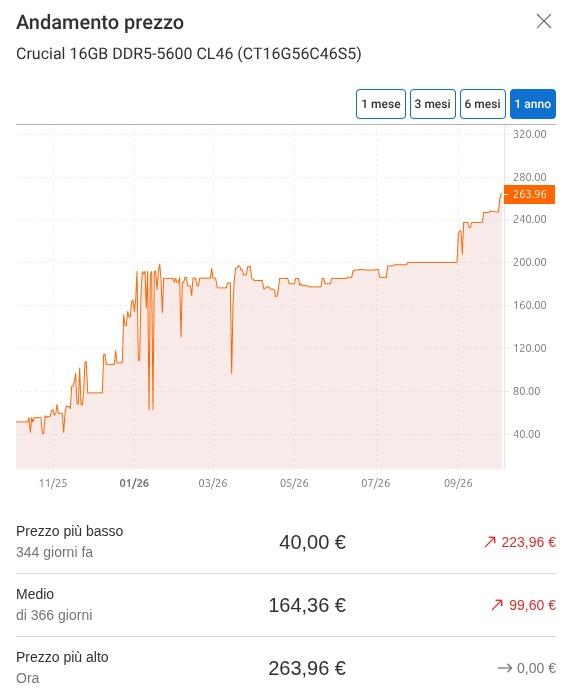
There was a single 16 GB RAM stick. No dual channel. Half the performance. The manufacturer, like plenty of others, had cut the second slot to save money: RAM costs too much, better to sell just one stick and hope nobody notices.
I checked the price of a 16 GB stick. Almost as much as a kidney. So I asked myself: “Hang on — if I buy another mini PC, wouldn't that cost less?”
Here Comes the Madness
I found a second mini PC: weaker CPU, smaller hard drive, but the same kind of RAM. It cost less than the single RAM stick inside it. I bought it, took it apart, and moved that RAM stick into the AI mini PC.
The result? Two 16 GB sticks, dual channel active, 32 GB total. A terabyte of internal storage. And a second mini PC to turn into a backup server or a secondary compute node.
I spent under a thousand euros. Today I set the whole thing up. I installed Ollama, enabled the Intel Arc GPU, exposed the API on the network. The node is alive. The other nodes — the agents I configured over the past few days on €50 salvage mini PCs — can talk to it. Every node is in place and the home AI network is born.
A datacenter under the desk.
Why This Story Matters
It's not just a money-saving trick. It's a choice.
Today AI is sold as something you have to buy, subscribe to, pay for. It has limits, and as if that weren't enough, someone else is doing their business off you by reading your chats. But you can build your own. With little. With ingenuity. Knowing you don't need the whole world in your hands to do useful things.
I spent under a thousand euros. I reused hardware. I avoided depending on external services. I built a network that belongs to me.
What I Learned
- The price of RAM has gone up; the industrial system is building barriers to entry.
- Buying two mini PCs can cost less than a single upgrade.
- AI shouldn't be a luxury. It can be made at home, with care, with intelligence. And while having fun.
And Now? Here's a List of Models I'd Like to Try Over the Next Few Days
Qwen2.5-Coder 7B — the most solid choice for code on consumer hardware. Strong on Python, JS, SQL, refactoring. There's also the 14B variant, which fits in 20 GB at Q4.
Qwen2.5-Coder 14B — the practical ceiling of my machine for coding. Noticeably better quality, ~9 GB at Q4.
DeepSeek-Coder-V2 16B (MoE, ~2.4B active) — interesting because it's fast despite the nominal 16B, thanks to the mixture-of-experts architecture. Great for completion and debugging.
Llama 3.1 8B — generalist, good as a “second opinion” when the specialised model gets it wrong. Not the best at code, but reliable.
Gemma 2 9B — remarkably high writing and reasoning quality for its size. A good test to see whether the GPU can handle a heavier “dense” model.
Mistral Nemo 12B — the largest that loads comfortably in 20 GB at Q4. Useful for finding the practical limit of the setup: if it runs smoothly, there's headroom.
Phi-3.5 Mini (~3.8B) — small but surprisingly capable at reasoning. Handy as a “fast” model for quick tests.
LLaVA (vision-language, 7B) — to try image analysis. Counts as an experiment.
Why I Didn't Name the Mini PC Brand
I have no interest in doing so. I've always named Proton and Brave in my posts instead, because they're companies whose foundation is respect for privacy. I support them because they build tools that let us be online without being watched. They're examples of how a business can be sustainable and ethical at the same time. Those companies deserve visibility, because they help us build a better internet.
“Free technology isn't just code — it's the freedom to look under the hood.”
👤 Lorenzo | ItsMeLarry all about me here
🧪 AI & Open Source Experiments | 🕹️ Retro Gaming & Graphic Novels 🎸 Rock, Folk, Jazz, Punk | 🔒 Privacy First 📍 Tuscany / Digital