Kung Fu Junkie and the Georgian “undersky”
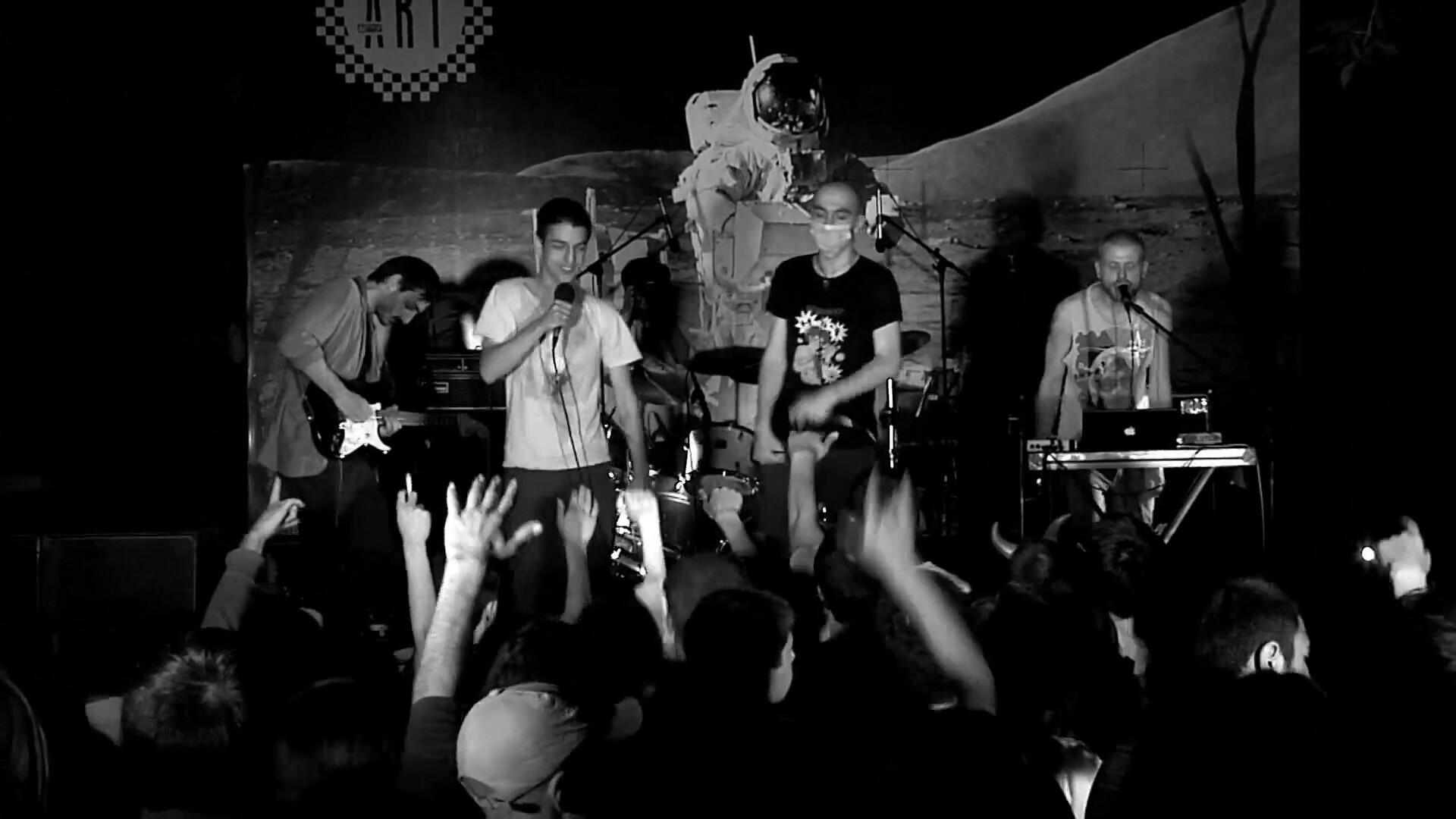
We’re not underground – we’re undersky! Kung Fu Junkie's slogan
Anywhere I go, anywhere I flow/I bring a little piece of shining Kung fu Junkie – ANY1 (Link)
In 2019, the Georgian newspaper Radio Tavisupleba (Radio Freedom) published an article on the situation of Georgian crematoria (Link). The article opened with an interview with Zura Jishkariani and Maxime Machaidze, members of the hip hop trio KayaKata, who described how they were forced to fly to Kyiv to cremate the body of their friend Tazo Liparteliani, who committed suicide on June 17, 2016. Radio Tavisupleba's article went on to explain that Georgia has no laws against cremation, but that strong religious pressure has made the practice increasingly difficult. Unfortunately, Tavisupleba's article didn't address who Tazo Liparteliani really was, and how his story had a huge impact on the history of alternative music and, more generally, Georgian counterculture during the early 2000s.
A brief introduction to the Georgian underground
me ver gasts'avli rok'-en-rols, me ver vik'isreb aset rols. mtels chems tskhovrebas, vutmob mtlianad ch'eshmarit'ebas I can't teach you rock & roll I couldn't take on such a responsibility My whole life I've given it all up for the truth Kisho Glunchadze – česmariteba (Truth) (Link)
Since Georgia was the only Soviet republic to share a border with NATO, Georgia became one of the Soviet Union's largest black markets from the beginning of the Cold War.
The widespread diffusion of Western films and music reached such levels that many Georgian artists during the 1980s, despite strong government pressure, no longer even attempted to hide their main artistic inspirations: contrary to popular belief, the first rock festival in the Soviet Union was held neither in Leningrad nor Moscow, but in Tbilisi, in 1980. Writer Davit Turashvili, in his novel “Jinsebi Taoba” (The jeans generation, translated in english as “Flight From the USSR”), extensively described the strong and widespread youth counterculture of the early 1980s. Many of the young people living in the republic's largest urban centers spoke fluent English, listened to Pink Floyd, and had even begun to rediscover Orthodox Christianity, a factor that would contribute to the country's independence process.
In July 1985, Bob Dylan himself visited Tbilisi to receive an award from the House of Writers. One of his biggest fans, the young Kisho Glunchadze, nearly got run over while trying to take a picture of him and shouted, “Mr. Bob Dylan, I love you!” It was from this naive gesture that one might say the Georgian rock scene was born: Glunchadze in fact began a prolific career as a singer-songwriter, alongside other artists such as Irakli Charkviani, Dada Dadiani, Lado Burduli, and Sergi Gvarjaladze. (Link)
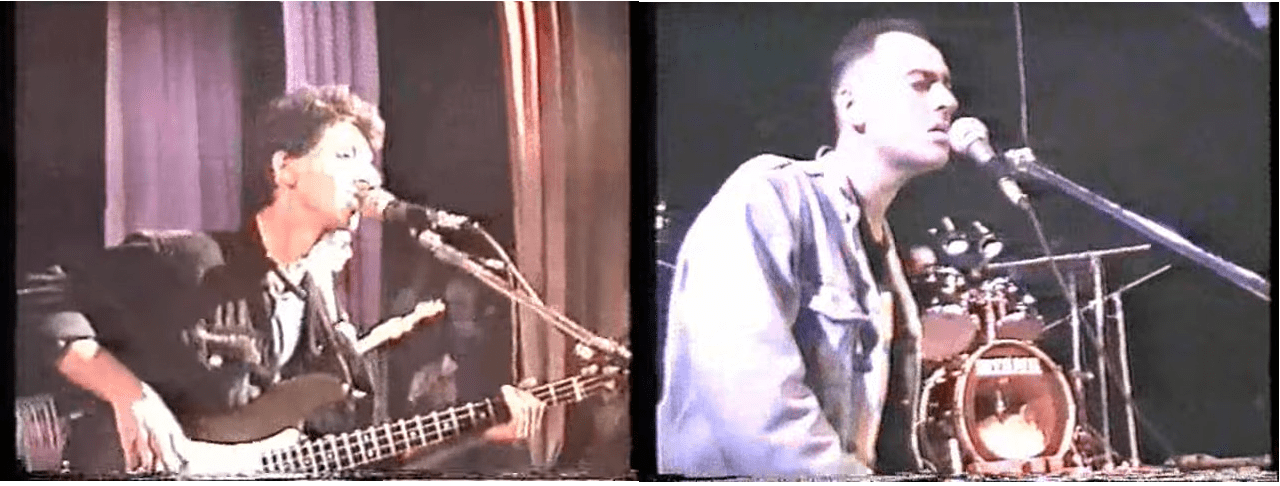
Despite limited resources and the impending disintegration of the USSR, the Georgian rock scene of those years saw the production of dozens of albums and concerts; some artists, like Mother on Mondays, even managed to tour other republics.
In 1992, the director Giorgi Ebralidze even created a collection of video clips, 4 videonovelas, which can be found today in a fragmented way on the internet.
Children's Medicine – Shedikhar Tqeshi (You enter the wood)
Irakli Charkviani – Wooden Monkey
Kisho da inteligentsia – Kristiani
But the dramatic effects of the wars of the 1990s and the total socioeconomic collapse of Georgia following the disintegration of the Soviet Union forced many to leave their country. Among those mentioned above: Charkviani and Gvarjaladze moved to Germany, Dadiani to the United Kingdom, Glunchadze to the United States, and some never returned to their homeland.
In addition to their own, more than a million Georgians emigrated en masse from an increasingly dilapidated country. Those who remained found themselves forced to survive either by working for the government or organized crime (although the two often coincided), and rock was replaced by rap music, which perhaps best expressed the enormous state of violence and poverty into which Georgia had fallen. Many of the rap songs of this period were often shameless copies of overseas songs, which for Georgian culture were equivalent to real obscenities: for example, the hip-pop trio ekscesi, in the late 1990s, released a video clip in which the band members descended on stage hooded and crucified. (Link).
Other well-known artists of that period included Mikheil Bedinashvili, aka Bedina, and Akaki Babunashvili, aka Šavi Printsi (Black Prince). But it wasn't just rappers who stayed in Georgia. The most famous example was the stay of Nika Machaidze, who later adopted the stage name Nikakoi (Russian for “nobody”). Even during the blackouts that violently hit Georgia in 1999, as narrated in the documentary Power Trip by Paul Devlin (Link), Machaidze continued to produce electronic music despite having less than an hour of electricity a day (Link), and in fact it was precisely these obstacles that made his art unique: the precariousness of the means was such that Machaidze in that period even managed to compose a piece of music using a file in Photoshop format (Link).
After years of solitude, the electronic music scene then saw the return of Natali Beridze, known as TBA, and Gogo Dzodzuashvili, founder of Post Industrial Boyz, who joined Goslab (Link), which was an experimental audiovisual arts collective founded in 1999 by Machaidze. Goslab explored themes such as the trauma of the Abkhazian conflict, the relationship between humanity and technology, and the post-Soviet legacy. Some of Georgia's greatest electronic music works were released during this period, such as Nikakoi's შენтыmental and TBA's Annulé.
The Eurasian Laboratory
Tazo Liparteliani was born in 1986. Raised in 1990s Tbilisi, he began his career featuring on some tracks by the hip-pop duo “tskhovrebit jarisk'atsebi” (Soldier's Life), composed of rappers Dzvali and Grapi. This brief stint is mentioned in Iva Pezuashvili's novel “bunkeri” (The Junkyard), where Lipaterliani is introduced by the stage name “Grinch” (many rappers of the time used names from family friendly films).
After the Rose Revolution of November 2003 and the beginning of Saakashvili's presidency, Liparteliani participated in the television program Geobari (the Georgian version of “The Big Brother”), where his blonde hair, quite atypical for Georgians, earned him the nickname Paris Lee.
Aside from these brief experiences, Liparteliani, like many of his peers, was a twenty-year-old NEET in one of Europe's poorest countries. Despite the initial euphoria, Saakashvili's reforms had ultimately enriched a tiny percentage of the population, while the rest of the population was trapped in a country where the only way to secure a future was to flee abroad or join the police force. Saakashvili wanted to project the image of Georgia as safe and open to investment, and the police had been so greatly expanded that prisons were filled with young men sentenced to decades for just a few grams of narcotics. The situation was so dire for many that in 2007, Levan Managadze—a displaced person from Abkhazia—and his band Vodka Vtraiom (from the Russian for “Vodka for Three”) took the stage at the Tbilisi Technical University to perform “gldaneli catsi” (Boy from Gldani, named after Tbilisi’s poorest neighborhood), which soon became the symbol of that era and the anthem of a generation (Link)
ar makvs puli vtskhovrob gldanshi ver davdivar rest'oranshi
da me ara makvs pulebi mt'k'iva pekhis gulebi da varsk'vlavs vkhedav lamaz tsaze me vmushaob zap'ravk'aze. da mitkhres magrad tovso mtashi da magrad minda rest'oranshi
I don’t have a penny and I live in Gldani—I can’t go to a restaurant And I don’t have a penny and my feet hurt And I see a wonderful starry sky and I work at the gas station and they told me there’s snow on the mountains, but I don’t want to go to a restaurant
As Pezuashvili recounts, the rap scene quickly collapsed, and young Georgians also lost their outlet.
The few other existing cultural realities, such as Gosplan, were perceived as paternal and snobbish, aimed at an overly upscale and conformist audience, while the low culture of rap and neomelodic singers did not attract young people who were by now growing up surrounded by Western culture, which could now flow into the country without any restrictions.
It was in this context that Liparteliani entered the Eurasian Laboratory in 2006, along with other artists in their early twenties. It was among the founders of the Eurasian Laboratory that Liparteliani presumably met Zura Jishkariani.
Jishkariani, after having attempted to study sociology at university in the early 2000s, decided to devote himself entirely to music, starting his career in 2005 within the post-punk group Eva (Link). Jishkariani was also interested in writing, and it was he who drafted the “manifesto” of the Eurasian Laboratory (in English):
We are living in the country which is underground the world. We are just 20 years old, and we have already been trough war, fear, dark, cold, drug-addiction, alcoholism, missing pals and three vain, attempted experiments of building the State. We are just 20 years old, but we already have accumulated enough hatred, mistrust and yearning for warmth to dance on the ruins
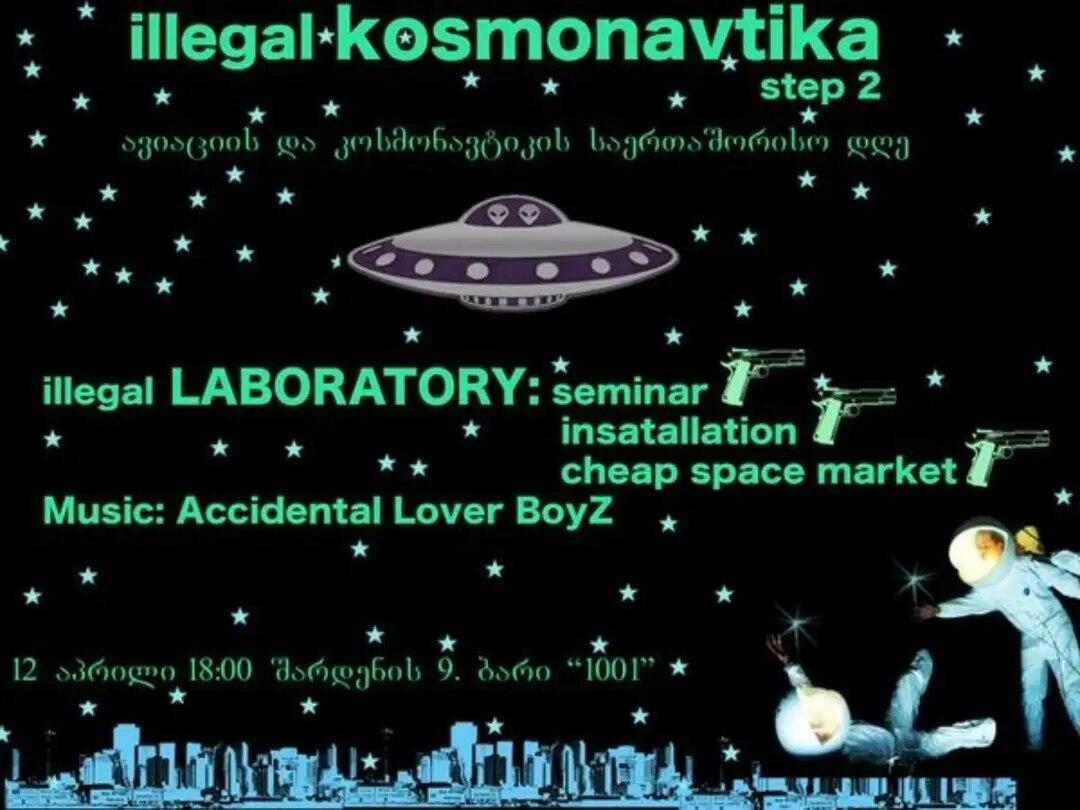
Accidental Lover Boyz – Wedding Song
The other members of Eurasian Laboratory were also musicians, writers, craftsmen, and filmmakers, all of whom grew up in a context of enormous economic and social hardship. Their initial activities involved experimental artistic performances at events held in abandoned buildings or theaters. They didn't consider themselves a true collective but rather a lifestyle, consisting of gatherings, drinking, and improvisation. From these latter projects, curious musical projects like “Accidental Lover Boyz” and “Baby Newz” were born, with organized tours throughout Georgia and even in other countries like Armenia. They defined their music as “Sokomuzika” and “Second Hand Techno,” purposely avoiding comparisons with any previous movement (despite the obvious influences). The only project they had no qualms about classifying with “antiquated” musical labels was yet another one born during yet another party of junk food, cheap alcohol, and weed. Initially born as a joke to play “pop” music in English without knowing either the first or the second, it would soon become one of the biggest underground groups, or as they called it, undersky: Kung Fu Junkie.
Kung Fu Junkie
In the beginning, Kung Fu Junkie (KFJ) was a sort of collective, with members coming and going freely. Initially, Liparteliani handled programming, Jishkariani was on vocals, and Archil Kelbakiani (aka Farcilla) and Amiran Ninua (aka Cutkill) were on guitar and second vocals, respectively. Over time, Anano Sikharulidze and Maxime Machaidze (Nikakoi's son) were also added, while Kelbakiani soon left the guitar position, being replaced by Temur Ezugebaia, also displaced by the Abkhazian conflict. Ultimately, Liparteliani, Jishkariani, and Ezugebaia—aka Grinch, Zombie, and Vinda Folio, respectively—were the most important members of the project, which evolved into a full-fledged group around 2012.
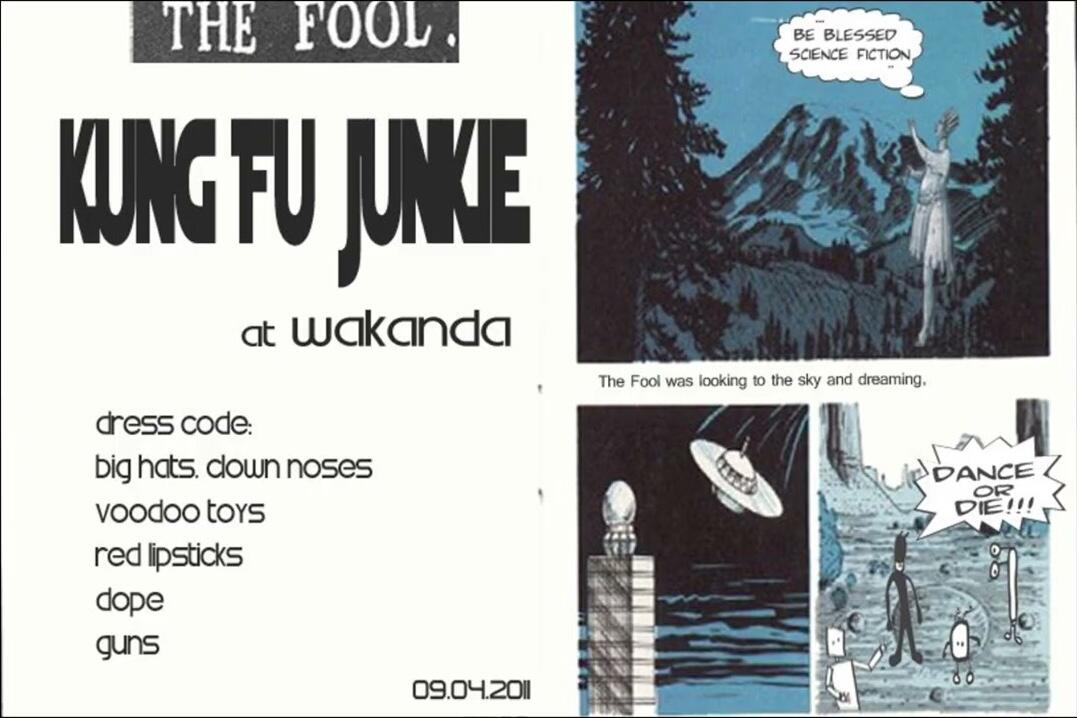
Compared to the Georgian boy band Sakhe of the early 90s, Kung Fu Junkie considered themselves more similar to Genesis P-Orridge's Psychic TV, although musically they were perhaps actually more akin to the Scandinavian “Aqua”. Their songs were based on the classic “Four-on-the-floor” structure, with catchy melodies and choruses, almost parodic in their simplicity. The lyrics, exclusively in English, were totally nonsensical, often full of obscenities and almost always improvised, because Kung Fu Junkie's aim was exclusively to make the audience dance. It is no coincidence that the motto of both KFJ and Eurasian Laboratory was “Dance or Die!”, as was the name of one of their most famous improvisations (Link).
In any case, despite the deliberately broken English (perhaps a parody of the Georgian government's new strategy of replacing Russian with English to open up to the international market), which spouted oxymorons (“I'm going down to the sky”) (Link) or obscenities (“Dancing like a f*ck on the dance floor/F*cking like I dance on the dance floor”) (Link), when the lyrics got tangled up in expressions that made a little sense, you could understand what KFJ wanted to express. Songs like “Biorobot” (Биоrobot) (Link) and Genetic Code (Link) talked about the feeling of love directed towards a “biological robot”; Sci-Fi (Link) talked about space as an escape from depression and ulalaH (Link) of a hedonistic lifestyle. But the Kung Fu Junkies' greatest hit was, without a doubt, the romantic “Flowerz in My Brain” (Link), which was absolutely brilliant despite its deliberate nonsense.
In the imagination of these young Georgian boys growing up in the densely populated suburbs of Tbilisi, the Khrushchevkas and Brezhnevkas of their childhood became spaceships, the teleandza transformed into the Tokyo Tower, and Georgia itself entered this futuristic, science-fiction dimension.
One might even venture that their “second-hand techno,” paradoxically, followed the same path as the original techno, but instead of Detroit's abandoned factories and racial discrimination, Kung Fu Junkie featured post-Soviet desolation and the precariousness of a generation that had witnessed war and the collapse of their country. In both contexts, the purpose of electronic music was the same: to escape reality and imagine a new one. Jishkariani himself began curating columns on science fiction and artificial intelligence on the collective's blog, even creating prototype chatbots, the most famous of which, Cyber-Galaktion, was trained on the writings of the poet Galaktion Tabidze. In hindsight, Jishkariani certainly didn't aspire to invent OpenAI years in advance, but simply wanted to bring the Georgian language, with its unique vocabulary and alphabet, into the 22nd century (and it's worth remembering that until the 1910s, Georgians were forced to write in the Latin alphabet, as many software didn't recognize, and still don't recognize, the Unicode characters of the Georgian alphabet).
The demonstrations of 2011 and the protests of 2012
Music, however, wasn't just a way for KFJ to express their message to the world. During their concerts, the members of the collective dressed in alternative and provocative ways: Jishkariani often showed up wearing a bra and holding a toy gun, while Liparteliani sported a Georgian flag T-shirt, but with cannabis leaves instead of St. George's crosses, in defiance of the state's repressive laws. In 2011, Kung Fu Junkie even appeared on the cover of the music magazine Tabula Art, in which they force the reader to pick up a joint, under threat of a water pistol. (Link).
In 2011, Kung Fu Junkie recorded what is perhaps still today the first and only openly homosexual Georgian song: Go Boyz (Link).
Nobody knows, how does it feel/to be alone with a million of people Kung Fu Junkie – Go Boyz
On November 25, 2011, on the occasion of the International Day for the Elimination of Violence against Women, Kung Fu Junkie participated in a charity evening and openly asked their contacts on Facebook to bring rainbow flags (Link). To give context to how subversive their action was, just two years later, the peaceful protest against homophobia on May 17, 2013, would be met by a horde of angry Georgians, resulting in such a dramatic toll of injuries that it prompted the European Union to intervene in the matter.
The political activism of KFJ and Eurasian Laboratory peaked during the historic 2012 elections. Following the release of videos demonstrating systematic police violence inside Gldani Prison No. 8 against inmates, Sergo Gvarjaladze publicly called on young Georgian artists to produce a protest song for his independent label Komuna. The result was the protest song sistema unda daingres (lit. The system must be destroyed) (Link) (Link), which was very successful in mobilizing the youth, who were instrumental in the victory of Bidzina Ivanishvili and his Georgian Dream alliance, which at the time presented itself to the youth of the capital as a social democratic force, liberal on civil rights and also a patron of the arts, given the immense capital that Ivanishvili had donated for the purchase of works of art and the restoration of old parks and monuments. (Link)
It is no coincidence that, given how the Georgian Dream government would soon turn into yet another oligarchic and authoritarian regime, the participation of the Kung Fu Junkies and their colleagues in the 2012 protests remains a matter of controversy to this day—although all of this should be viewed in light of the exhaustion that young Georgians were experiencing on a daily basis at the time.
The “End” of Undersky, the beginning of the Underground, and the death of Liparteliani
The new political climate, the return of other Georgians artists who had emigrated abroad, and the experience gained in previous years meant that, starting in 2012, the Georgian underground began, little by little, to emerge from. In 2008, Cafe Gallery was founded, one of the first “official” meeting places for the community, which was joined in 2012 by Mtkvarze, founded by Ketevan Gabunia. In the following years, Bassiani was founded in 2014, Khidi in 2016, and Stamba in 2018, by the entrepreneur Temur Ugulava, who passed away this year. (Link). (Link)
This significant acceleration in real estate investments in venues designed exclusively or also for electronic music and the Georgian underground also involved Kung Fu Junkie. The aforementioned Tabula newspaper purchased a television channel in 2012 where the collective was able to perform.Link) Kung Fu Junkie also began recording their music for the first time, after spending years improvising live, starting with the EP, Dance 2 the Light, via German DJ Gare Mat X's Berlin-based label Progrezo Records, and later with various tracks on YouTube and Soundcloud. Their limited discography later expanded with singles Yoshiwara Bitch (Link), Summer in the Sky (Link), and Big Green Dragon (Link)
It was as if they had taken their 'revenge' against the old guard, achieving a degree of economic independence in the process, the activity of the Eurasian Laboratory was gradually scaled back until it finally ceased in 2014.
But political activity, although less emphatically than in 2012, continued. The new administration of Ivanishvili and his party gradually began to make no secret of the idea of trying to reach new agreements with Russia despite the 2008 war. This is why in 2014 the KFJ participated in the demonstrations for the boycott of the Sochi Olympics, while in 2016 Liparteliani (wearing a keffiyeh), Jishkariani and Ezugebaia performed at the commemoration of the 10th anniversary of the death of Irakli Charkviani, playing a cover of Gvardia (Border Guard), a song composed by the singer-songwriter during the conflict in Abkhazia in the 1990s.Link).
Kung Fu Junkie were also supposed to perform at the Tbilisi Open Air that year, but on June 17, Liparteliani took his own life, triggering the events described at the beginning of this article. The surviving KFJs still performed, but their final concert took place a year later, at the 2017 Tbilisi Open Air, with a performance of the sentimental “Flowerz in My Brain” in honor of Grinch.
The Legacy of Kung Fu Junkie
Eko & Vinda Folio
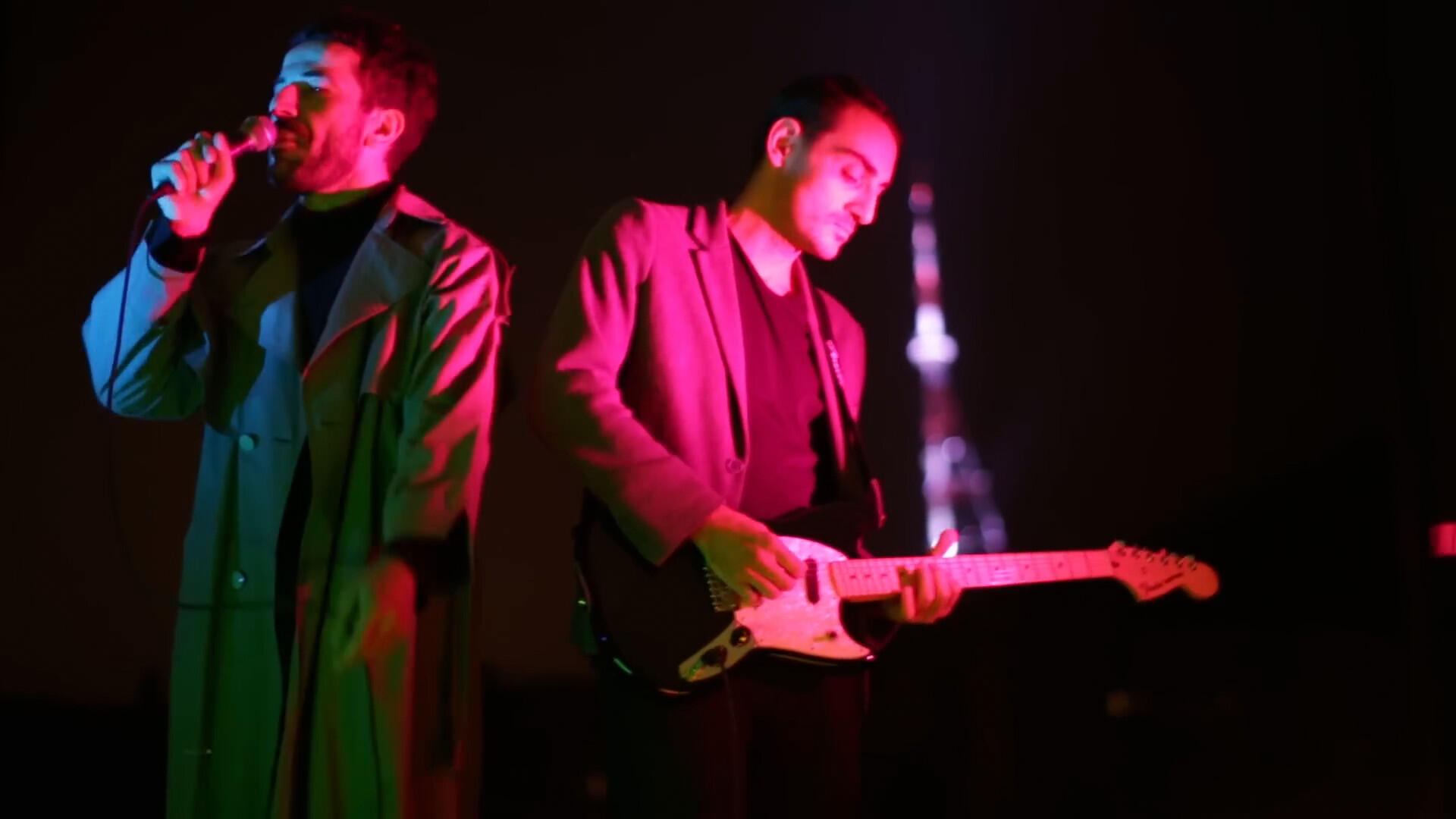
In 2012, controversial singer-songwriter Erekle Deisadze also participated in the composition of “sistema unda daingres,” and soon after, together with Ezugebaia, he recorded a second post-punk version of the song, written by Eko (short for Erekle) & Vinda Folio. The new version was even more violent than the previous one, with Deisadze screaming, “I see the corpses of policemen in my dreams.”Link). Eko & Vinda Folio also recorded “agurit xelshi” (lit. With brick in hand) (Link) and “rac mamas unda” (lit. What daddy wants) (Link), two other politically engaged songs that had a large following and provoked various reactions.
The turning point, however, came in 2016. The Russian post-punk band Motorama suggested Deisadze to turn to the French record company Talitres, with which the duo released the romantic and sentimental “shen anateb” (lit. You shine) (Link), a complete change in style that didn't go unnoticed. Three years later, Talitres again produced the duo's first album, “Terapia,” and financed an international tour, which, however, was unsuccessful, partly due to Covid.
vin mogiq'veba chemze ambebs? rogor mivsebs skhva am sitsarieles zghva mshvidobisa, nu ghelav shen you met'q'vi shens sakhels, dagibruneb dak'argul simshvides
Who will tell you about me? How can anyone else fill this void? A sea of peace, do not be troubled If you tell me your name, I will give you back your lost peace of mind. Eko & Vinda Foglio – pikrebi gamch'virvale (Clear Thoughts)
While working on their joint project, Deisadze and Ezugebaia continued their solo careers, the former as a singer-songwriter, poet, and rapper, the latter as an electronic music producer and video maker.
Erekle Deisadze – Industriis Kharo (Oh Industrial Breeze)
Note: I've often seen Deisadze around Tbilisi, but I've never had the chance to speak with him, partly because his reputation has significantly deteriorated since the 2024 protests. Deisadze has been heavily criticized for participating in the 2025 Poezia metroshi (Poetry in the Metro) initiative, funded by the Tbilisi Municipality's arts fund, whose main funder is the Georgian Dream-led Tbilisi Municipality. He also received criticism for being a member and supporter of the radical left-wing association Khma Modzraoba (Voice Movement), whose Eurosceptic positions (though still against the Georgian Dream government) have always drawn much criticism from Georgia's pro-European opposition.
I did, however, meet Ezugebaia in person, a figure who is much less politically exposed and therefore equally criticized, and he was quite shocked that I not only knew him but also knew Kung Fu Junkie.
LTFR is not KayaKata
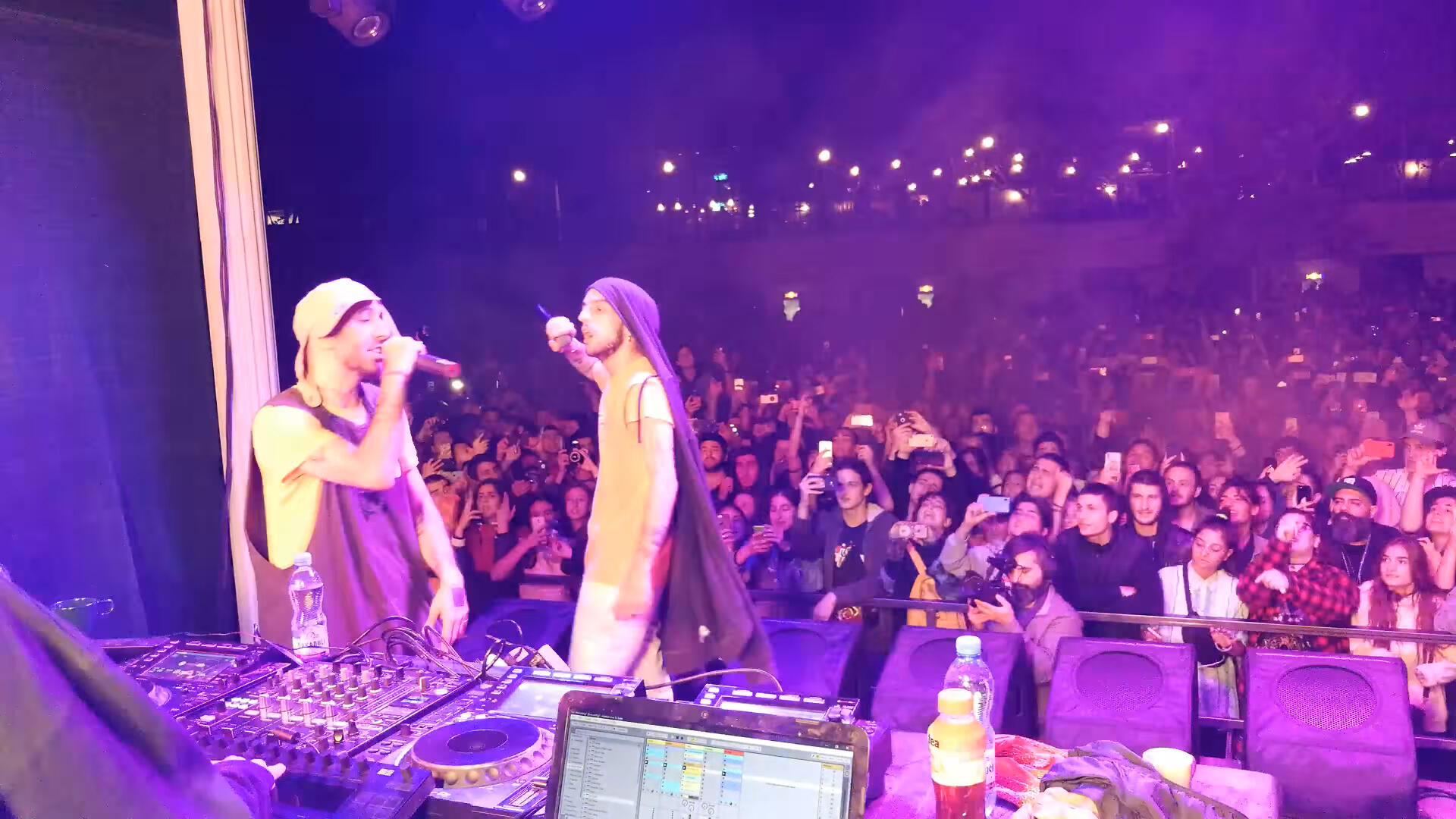
Following in his father's footsteps, Maxime Machaidze, also known by his stage names Luna999 and Max95, began releasing mixtapes on his YouTube and Soundcloud channels around 2014. In 2016, he renamed his project LTFR (Let the Funk Ride, from the song of the same name) also collaborating with other artists. In a few years, LTFR became a full-fledged record company and even a fashion and design label. It was within LTFR, however, that KayaKata was formed in 2017, a hip-pop trio composed of Machaidze, Jishkariani, and producer Nikoloz Sabanadze. Their debut was Jungle with Fiction, which was an immediate success.
KayaKata's music belonged to the then-declining genre of mumble or SoundCloud rap, which both Jishkariani and Machaidze had skillfully adapted to the Georgian language. Indeed, Georgian, with its non-agglutinative words and vowel range, seemed to be the perfect language for a genre that placed more importance on sounds than words. Despite this premise, KayaKata's music still featured high-quality lyrics. Considering that Kata comes from the Jamaican slang for “marijuana,” in their songs, mostly in slang, Machaidze and Jishkariani addressed drug abuse, excessive debt (Polo Palace), the idealization of criminal figures, and the decay of Tbilisi's suburbs (especially Samgori and Varketili). In 2018, they adapted the folk song Sisona Darchia (about the phenomenon of the “pirali,” armed bandits from the Caucasus during the Ottoman period) into a wild ballad (Link), extraordinarily remixed by the aforementioned TBA (Link).
KayaKata achieved colossal success considering the relatively small Georgian listening population. Their discography includes dozens of singles, EPs, and a single album, “Sadaa,” some of whose songs have racked up tens of millions of plays. (Link)
sad arian veluri bavshvebi? k'orp'usebs ro ghech'avdnen purtslebivit k'omiksis sad arian veluri bavshvebi? ghameebs ro anatebdnen tsitsinatelebivit arasdros ar gaizardo es guli rom skhva guls ando arasdros ar daidardo nats'vimar silashi vardo q'vavilebivit vin dagvrgo? haa? rk'inabet'onis aspalt'ze amozrdilebi ertkhelats rom avibargo damit'oveben mogonebad am k'orp'usebis chrdilebi tbili dilebi, utskho binebi get'osshvilebi, mindobilebi am tsaaas k'ide ramdeni blast'eri me have to unBlaaast rom ts'q'vdiadebshi dak'arguls vutkhra u’re not lost Baby, baby, baby u’re not lost
Where are the wild children? Those who tore the neighborhood apart Where are the feral children? That shone like stars at night Never let it grow this heart to entrust it to another Never worry Oh rose of the wet sand Who planted us like flowers? Huh?! Grown up on the asphalt of reinforced concrete When one day I'll go away The shadows of this neighborhood will remain for me as memories Hot days, foreign buildings Children of the ghetto, so confident towards this sky How many more blasters do I have to unblast? So that I can tell those lost in the darkness you're not lost? Baby, baby, baby u’re not lost KayaKata – Sarbeni (Tapis roulant) (Link)
As mentioned in this song, perhaps KayaKata's best, their focus was on the “veluri bavshvebi” (Wild Children), whose belonging to a particular neighborhood in Tbilisi could be ridiculed or respected. In his personal philosophy, which Jishkariani recently expressed with the single Funk of 93, the world would have a center, Rome, surrounded by a huge suburb where the rest of the population is forced to struggle to survive. It's a postmodern and highly simplified representation, but KayaKata wanted to express this sense of simultaneous belonging and exclusion that young people from the suburbs felt during the 1990s and early 2000s. In any case, a separate article would be needed to analyze the entire musical output of KayaKata, who remain without a doubt the most interesting project born after the dissolution of KFJ, and one of the best in contemporary Georgian music.
DillaNext
Around 2020, Jishkariani scaled back his musical commitments to undergo a period of drug recovery, while Machaidze, on the other hand, also dedicated himself to fashion and entrepreneurship.
Jishkariani returned from his recovery around 2022 (Link), adopting the new name of “DillaNext” and proclaiming himself “mayor of Dioscurias”, from the Ancient Greek name for Sokhumi.
However, both during and after his recovery, Jishkariani devoted himself to writing. His works include “saghechi gantiadebi” (lit. “Chewing Dawns”), called the first post-apocalyptic book in the Georgian language; tanapa, an experimental work written in Georgian, C#, C++, Python, and AIML; and “Catastrophe in Subtropical Eden”, based on his childhood diary during the Abkhazian conflict.
This latest book is part of a more recent phase of projects and collaborations through which Jishkariani is recovering and reworking his past. On his YouTube channel, he has reuploaded dozens of old videos, demos, interviews, and other recordings from the Kung Fu Junkie era, and has begun actively engaging with the memory of the Abkhazian conflict. He returned to the music scene in 2025 with numerous collaborations, including the song “2025” sokhumeli bichi (Sokhumi's Boy), recorded together with singer-songwriter Tamada, and the release in 2026 of the EP titrebi (Credits).
The memory of Liparteliani
Grinch's death, however, has not been forgotten. On the contrary, all former KFJ members have continually remembered their friend's passing over the years, entering the collective imagination of the Georgian underground, to the point that perhaps Liparteliani has become more famous dead than alive—or, at least, that's what the numbers say.
In 2018, KayaKata released the single “ataris” featuring “Trippyboy030,” one of the many names Liparteliani used. Ataris is a sort of cathartic invocation: Jishkariani addresses Grinch, condemned to hell for taking his own life, asking him to tell “the one who designed sunsets, constellations, and mice” to “turn up the bass.” The song ends with the sound of tires screeching and an old Grinch improvisation. The song achieved incredible success after being remixed by Nikakoi, and in 2020 it was performed with the support of violinist Zagareli's orchestra (Link), receiving a standing ovation from the audience.
In 2019, it was Ezugebaia's turn, who together with Jishkariani released the single “gilgameshi edzebs” (Gilgamesh search) with LTFR (Link) which immediately achieved exceptional success.
me ganvitsdi bzarebs, romelits gzas ganagrdzobs me vedzeb skheuls, romelits hgavs horizont's gilgamesh gzaze arapers datmobs is grdznobs q'velapers, rats ghup'avs dros shen ver daakhvev dros, rogorts am simgheras pankarze shentvis davrchebi me mkholod, rogorts mze k'edelze me vitsvli adgils, gavurbivar usiq'varulo ts'lebs gilgamesh chadis psk'erze, is edzebs q'vavilebs
I see all the cracks in the path I'm looking for something in the sky that looks like the horizon Gilgamesh will give up nothing along his path He perceives everything that kills time You can't roll time, like this song on a pencil I'll stay only for you, like the sun on a wall I'm moving places, fleeing from years of lovelessness Gilgamesh descends to the bottom, in search of flowers DillaNext, Vinda Folio – gilgameshi edzebs
In the same year, the fateful “gavrilovis ghame” (Gavrilov's Night) occurred, when Duma member Sergei Gavrilov, invited to a plenary session by the Georgian Orthodox Church, addressed the Georgian parliament. Ezugebaia and Jishkariani took part in the protests (Gavrilov had voted in favor of recognizing Abkhazia) by playing Gvardia again, as they had done three years earlier.Link).
During New Year's Eve 2021, Ezugebaia and Jishkariani, accompanied by Zagareli, played a symphonic cover of “Flowerz in my brain” live on television (Link).
But perhaps the most famous dedication to Grinch was certainly “teknomagia”, published in 2022 (Link). The song opens with the “chakrulo” chorus, a Georgian polyphonic chant famous for being included on the Voyager Golden Record sent into space by NASA in 1977 (which appears on the single's cover) and is full of references to space exploration, as if Liparteliani had finally managed to fly into space. Of all the songs I've written about in this article, teknomagia is perhaps certainly the most famous, to the point that many are completely unaware of its meaning and to whom it is dedicated.
varsk'vlavtgogona chamch'ide kheli rom davinakhot ik, sadats sakhlobs varsk'vlavta veli varsk'vlavtbich'una aante tsetskhli, rom gadavprindet, sadats akvs mindvrebs varsk'vlavta mt'veri
Space Girl Take my hand And show me where the stars are Space Boy Light this bonfire So that we can fly to where the stars are DillaNext and Vinda Folio – Teknomagia
The artistic revaluation of KFJ
As previously noted, during his recovery, Jishkariani began reissuing much of Kung Fu Junkie's old material. In 2021, the Bloom Music label released two collections of KFJ's entire discography, along with some recordings by other Eurasian Laboraty projects like Accidental Lover Boyz and Baby Newz. However, the true recognition of their cultural significance came in 2025, when producers Natia Sartania and Jaba Shavishvili, under the patronage of the Sakartvelos Banki (Bank of Georgia), released the vinyl-only compilation “Dance or Die: Undersky Gnostic Pop,” catalog number GMLC010 of the Georgian Music Legacy Collection. This placed KFJ on the same level as many other Georgian musical legends mentioned at the beginning of this article, such as Dadiani, Charkviani, and the members of Goslab.
To justify such a decision, Sartania and Shavishvili used a famous quote by the philosopher Merab Mamardashvili, the most important Georgian intellectual of the 21st century.
“Georgians really have a talent for joy. An illicit joy, in truth, because there is nothing from which it can spring, or rather, everything conspires against its existence. And yet, from a bottle of wine and a piece of bread, a banquet can be conjured. It's a charade. No one really feels that there is a reason to celebrate, but we say: must there be a reason to celebrate? We exist, and we exist in spite of everything, you understand? I would call it a cheerful tragicism.” (Link)
To celebrate the 10th anniversary of Liparteliani's death, Ezugebaia and Jishkariani were then invited again by the television program Akustika, where some of their songs were rearranged by emerging artists, such as Chinese Girl by the trio Tape Visitor (Link), Go Boyz by Superblond (Link) and Teknomagia by LIOwithILA (Link).
The rest of the Georgian underground
This article has focused almost exclusively on Goslab, Eurasian Laboratory, Kung Fu Junkie and their legacy, but obviously this is a small part of the Georgian underground, which, despite appearances, is extremely prolific.
There has been no mention of the scene in Kutaisi, Georgia's third city, which rose to international prominence when Saba Vashakmadze and Nodo Kuprava released Mdevari (Persecutor) in 2021 (Link), which would quickly become the biggest hit in the history of Georgian post-punk. There was no mention of the techno scene, which is perhaps also the most famous and prestigious in Georgia. Paradoxically, it rose to prominence when the government, in 2018, in an attempt to forcefully close Bassiani and Café Galery in Tbilisi, achieved the opposite effect, with a huge and well-attended demonstration that attracted international attention, making figures like Ana Kublashvili (Newa), Gio Shengelaia, and Ladouka Ninua (Sevda) legends in their field (even though the list of Georgian DJs in general is very, very long).
Non si è parlato dei Bedford Falls, dei Superblonde, di Mamaflex, dei Mechanical Rainbow etc.
There were no mention of Bedford Falls, Superblonde, Mamaflex, Mechanical Rainbow etc.
There was no mention of film, literature, fashion, and other visual arts either; they absolutely need someone to talk about them, especially before it's too late.
What's been happening in Georgia since 2019 is taking on increasingly disturbing connotations. Georgian Dream has revealed itself for what it truly is: an oligarchic party completely uninterested in the nation's long-term economic and political situation. For this reason, many Georgian artists are effectively fleeing their country, and the protests, rather than uniting Georgian society (the stance taken by the individual artists cited in this article also deserves a separate analysis), have profoundly divided it.
Perhaps, the system needs to be destroyed again.
Edit: As a person mentioned in this article told me, Tazo Liparteliani was not born in Abkhazia, as I had initially written
As a person mentioned in this article told me, Liparteliani didn't found the Eurasian Laboratory