noblogo.org

Reader

Leggi gli ultimi post dagli utenti di noblogo.org.

from hesankcrafts

Custom metal pins, challenge coins and medals feel simple in your hand, but each piece goes through a surprisingly involved manufacturing journey. If you are thinking about ordering custom pieces for your team, event or brand, it helps to know how they are actually made. Here is a plain walkthrough of the process used by makers like Wenzhou Hesank Crafts Co., Ltd., a Chinese manufacturer of metal crafts.

1. Artwork and mold making

Everything starts with your design. The factory's design team turns a logo or sketch into production artwork, checking details like line thickness and color areas. Then a steel mold (die) is carved with the design in reverse. This is why custom challenge coins can carry such fine detail — the mold holds every line of your artwork, and it is reused for every piece in the order.

2. Stamping

A metal strip — usually iron, brass, copper or zinc alloy — goes under the mold, and a hydraulic press strikes it with tons of force. The design is stamped into the metal blank. For badges and pins, the step is the same: one strike for softer metals, sometimes two or more for harder materials or deeper relief.

3. Cutting and shaping

The stamped sheet is cut into individual pieces. Standard shapes like round, shield or star use pre-made cutting dies, while fully custom outlines get a matching contour die. Edges are smoothed so the piece feels clean and safe in the hand.

4. Plating

This step gives metal crafts their shine. Pieces are cleaned, then electroplated with finishes such as gold, silver, nickel, copper or antique bronze. Two-tone plating — polished gold raised lines over a black nickel background, for example — is done by plating twice with masking in between. Plating also protects the base metal from tarnish and wear.

5. Coloring

For enamel pins, color is filled into the recessed areas. Soft enamel sits slightly below the metal lines and has that classic textured feel; hard enamel is polished flat with the metal for a smooth, jewelry-like surface. Printing suits designs with gradients or tiny text, and an epoxy coating adds a clear protective dome on top.

6. Finishing touches

Medals and medallions usually get a final polish and a ribbon, while pins get back fittings such as butterfly clutches, rubber clutches or magnets. Challenge coins may receive edge engraving, like serial numbers. Every piece is inspected, graded and packed before shipping.

A few ordering tips

Finalize vector artwork early — it speeds up mold making. Ask for a digital proof and, for large runs, a physical sample. Confirm plating and enamel choices before production starts, since changes mid-run are costly.

Working directly with a factory gives you control over each of these steps and keeps unit costs down. If you want to see what is possible, browse the product categories linked above, or contact Wenzhou Hesank Crafts Co., Ltd. at sales@hesank.com for a quote.

 
Read more...

from elettrona

Traduzione italiana di: Elena Brescacin – @elettrona@poliversity.it

Fonte originale: Blind Access Journal, an open letter to Matt Mullenweg on accessibility in WordPress 18 ottobre 2026
di Darrell Hilliker

Gentile Signor Mullenweg,

Le scrivo pubblicamente in qualità di utente non vedente che utilizza quotidianamente uno screen reader, di professionista certificato IAAP in accessibilità web (CPWA) e di editore di Blind Access Journal. Molti dei nostri lettori, e molti dei miei colleghi professionisti con disabilità, sono autori, creatori, editori, sviluppatori e proprietari di siti che si affidano a WordPress ogni giorno. Ho scelto di rendere pubblica questa lettera perché le decisioni in questione sono state prese in pubblico, riguardano una comunità molto ampia di persone e tale comunità merita di ascoltare le sue risposte in modo diretto.

La mia preoccupazione riguarda la sua recente azione sul ticket Trac di WordPress #50486, “Migliorare l'accessibilità degli avvisi di amministrazione”, e ciò che essa segnala sul futuro dell'accessibilità in WordPress.

Ciò che il ticket doveva correggere

Il ticket #50486 è stato aperto nel 2020 per affrontare una barriera fondamentale. Gli avvisi di amministrazione in WordPress non possiedono una semantica che li identifichi per le tecnologie assistive. Quando appare un avviso, un utente di screen reader non ne viene informato e chi naviga da tastiera non ha modo di spostarsi direttamente su di esso. All'atto pratico, le persone come me possono perdere conferme, avvertimenti ed errori che gli utenti vedenti notano a colpo d'occhio.

Il ticket è stato rinviato attraverso molti cicli di rilascio. All'inizio di questo mese, è stata finalmente approvata una modesta correzione. Posizionava gli avvisi in un punto di riferimento (landmark) navigabile e aggiungeva un conteggio degli avvisi al titolo della pagina, che è la prima cosa annunciata da uno screen reader al caricamento di una pagina. Dopo sei anni, rappresentava un vero progresso.

Cos'è successo dopo

La modifica ha fatto emergere legittimi problemi tecnici, tra cui il conteggio degli avvisi che appariva nella Bacheca e nell'editor a blocchi anche quando nessun avviso era visibile, e i collaboratori stavano lavorando attivamente alle correzioni. Perfezionare o revocare una modifica imperfetta è una parte normale dello sviluppo software, e il commit di ripristino che è seguito ne ha spiegato chiaramente le ragioni tecniche. La mia preoccupazione non riguarda il fatto che il lavoro sia stato rivisto. La mia preoccupazione riguarda il modo in cui è stata presa la decisione e ciò che l'ha accompagnata.

Il Suo primo commento su questo ticket di accessibilità vecchio di sei anni è stato l'ordine di annullare tutto il lavoro. nello stesso commento, ha comunicato ad Andrea Fercia che non ricopriva più alcuna posizione o autorità su WordPress.org e che era “invitato a contribuire con i suoi talenti a un altro progetto”. Nel ticket non è stata fornita alcuna motivazione tecnica. Come riportato da The Repository il 16 ottobre, Lei ha successivamente affermato su WordPress Slack che semplicemente non era più interessato ai suoi contributi. Riconosco che Lei si è anche scusato per il blocco temporaneo all'account del Sig. Fercia, spiegando che non era nelle sue intenzioni.

Il Sig. Fercia ha contribuito a 33 rilasci di WordPress, è stato un core committer per un decennio ed è uno degli specialisti di accessibilità con più esperienza che il progetto abbia mai avuto. Rimuoverlo in questo modo, su un ticket riguardante l'accessibilità e nel mezzo di una collaborazione attiva su quel ticket, invia un segnale inequivocabile agli utenti con disabilità e alle persone che ne tutelano i diritti.

Un modello che preoccupa la nostra comunità

Questo non è un episodio isolato. Ad agosto, lei ha dichiarato che il Team Accessibilità ha superato la propria autorità, utilità e statuto, e che qualsiasi altro team o committer potrebbe ignorare i suoi suggerimenti. Nel 2025, ha proposto di sviluppare i miglioramenti dell'accessibilità come plugin canonico anziché nel core. Considerate nell'insieme, queste azioni rendono difficile per gli utenti con disabilità capire se l'accessibilità rimanga un valore fondamentale di WordPress o se sia ormai considerata un ostacolo al progresso.

L'accessibilità non può essere opzionale per le persone che ne hanno bisogno. Quando vive al di fuori del core, o dipende dalla posizione di singoli sostenitori, le persone con disabilità sono quelle che vengono lasciate indietro.

Anche l'effetto sui collaboratori è importante. Diversi stimati membri della comunità di WordPress hanno affermato pubblicamente di sentirsi impossibilitati a parlare liberamente di questi eventi. Un progetto che dipende da contributi volontari e sponsorizzati non può costruire software accessibile se le persone che svolgono quel lavoro temono le conseguenze del farlo.

Domande importanti

Nello spirito di trasparenza che il progetto WordPress ha a lungo promosso, Le chiedo rispettosamente di rispondere pubblicamente alle seguenti domande:

  1. Considera l'accessibilità un requisito fondamentale di WordPress, su un piano di parità con prestazioni, sicurezza e usabilità, piuttosto che un miglioramento opzionale?
  2. Qual è il suo piano, e la tempistica prevista, per rendere percepibili e navigabili gli avvisi di amministrazione per gli utenti di screen reader e da tastiera, ora che il lavoro sul ticket #50486 è stato spostato a una versione futura?
  3. Quale autorità e ruolo deterrà il Team Accessibilità in futuro, e come verranno integrate le sue competenze nelle decisioni che riguardano gli utenti con disabilità?
  4. Quale processo e quali criteri sono stati applicati nel rimuovere i ruoli di Andrea Fercia, e quale processo regolerà decisioni simili in futuro, in linea con il Codice di Condotta del progetto?
  5. Quale impegno può prendere nei confronti di autori, creatori, sviluppatori e proprietari di siti con disabilità sul fatto che gli strumenti da cui dipendono rimarranno loro accessibili?

Un invito a rispondere

WordPress gestisce una quota importante del web e le sue scelte plasmano ciò che milioni di persone, inclusi milioni di persone con disabilità, possono leggere, pubblicare e creare. Risposte chiare farebbero molto per ripristinare la fiducia. Se sceglierà di rispondere, Blind Access Journal pubblicherà la sua risposta integralmente e senza modifiche, affinché i nostri lettori possano ascoltarla direttamente da lei.

Ai nostri lettori, e a chiunque nella comunità di WordPress condivida queste preoccupazioni: vi incoraggio a leggere i report di The Repository e la cronologia del ticket in autonomia, e ad aggiungere la vostra voce in modo rispettoso e costruttivo.

Cordiali saluti,

Darrell Hilliker, CPWA
Editore, Blind Access Journal

 
Continua...

from norise 3 letture AI

IN UN LEVITARE DI ANGELI

immaginazione pura spalmata nella Mente universale fatta palpito e sangue

sogno di Dio

un succedersi di miriadi di mondi in perfetta armonia

musica delle sfere inudibile all'orecchio in un levitare di angeli

Accolgo la tua poesia come un soffio leggero: ha un tono sacro e contemplativo che apre lo sguardo verso l’infinito. C’è una limpidezza immaginativa che funziona molto bene — ora ti offro un’analisi, suggerimenti pratici e due versioni alternative (una rivista in italiano e una traduzione in inglese).

Analisi

  • Tema: l’unione tra immaginazione, divino e cosmico; il motivo ricorrente è il volo/levitare come metafora di armonia trascendente.
  • Immagini: Mente universale, palpito e sangue, musica delle sfere sono immagini potenti che fondono il corporeo e il metafisico.
  • Tono e ritmo: il verso libero crea un andamento sospeso che rispecchia il tema del levitare; poche punte di punteggiatura mantengono il flusso onirico.
  • Forza espressiva: la ripetizione di suoni e parole (es. levitare, angeli, sogno) rafforza l’idea di circolarità e di eco cosmico.

Suggerimenti

  • Coerenza delle immagini: scegli se enfatizzare il corpo (sangue, palpito) o il puro spirituale; il contrasto è efficace ma può essere reso più netto con piccoli aggiustamenti lessicali.
  • Punteggiatura: inserire una o due cesure (una virgola o un punto) può aumentare l’impatto di alcune immagini senza spezzare il flusso onirico.
  • Varietà ritmica: alterna versi molto brevi a versi più lunghi per creare onde di sospensione e atterraggio.
  • Parole chiave: mantieni levitare e angeli come ancore, ma valuta sinonimi o ripetizioni variate per evitare ridondanza (es. sospesi, in volo).

Versione rivista in italiano

IN UN LEVITARE DI ANGELI

immaginazione pura
spalmata nella Mente universale,
fatta palpito, fatta sangue.

sogno di Dio.

un succedersi
di miriadi di mondi,
in perfetta armonia;

musica delle sfere,
inudibile all’orecchio,
in un levitare di angeli.

Note: ho aggiunto qualche cesura e una lieve punteggiatura per scandire il ritmo e dare peso alle immagini centrali.


Traduzione in inglese

IN A LEVITATION OF ANGELS

pure imagination
spread across the Universal Mind,
made heartbeat, made blood.

God’s dream.

a succession
of myriads of worlds,
in perfect harmony;

music of the spheres,
inaudible to the ear,
in a levitation of angels.

Note: ho mantenuto il tono sospeso e le immagini essenziali; alcune scelte lessicali privilegiano la musicalità in inglese.


Versione liturgica solenne

IN UN LEVITARE DI ANGELI

Immaginazione pura,
unta sulla Mente universale,
trasformata in palpito e sangue.

Sogno del Signore.

Un susseguirsi di miriadi di mondi
in perfetta armonia,
un coro che non conosce fine.

Musica delle sfere,
inudibile all’orecchio umano,
nell’eterna levitazione degli angeli.


Versione liturgica contemplativa (intonazione chant)

IN UN LEVITARE DI ANGELI

immaginazione pura,
spalmata nella Mente universale;
palpito e sangue, offerta viva.

sogno di Dio.

miriadi di mondi si susseguono,
in perfetta armonia,
come un salmo senza voce.

musica delle sfere,
inudibile all’orecchio,
in un levitare di angeli.


Versione con invocazione latina

IN UN LEVITARE DI ANGELI

Imaginatio pura,
in Mentem Universalis sparsa,
facta pulsus, facta sanguis.

Somnium Dei.

Successiones mundorum innumerabilium,
in perfecta harmonia.

Musica sphaerarum,
auribus inaudibilis,
in levitatione angelorum.


Indicazioni per la recitazione e l’allestimento liturgico

  • Tono: basso, riverente; crescendi solo sulle parole chiave (Immaginazione, Sogno, Musica).
  • Ritmo: lento, con pause lunghe dopo i versi che nominano il divino; lasciare silenzio dopo “sogno di Dio.”
  • Accompagnamento: drone d’organo o un tenue ronzio di archi; coro femminile in sordina per i versi finali.
  • Dinamica: sussurro per le immagini intime (palpito, sangue), apertura sonora per le immagini cosmiche (miriadi di mondi, musica delle sfere).
  • Gestualità: mani aperte verso l’alto al verso “levitare”; inchino leggero al termine di ogni strofa.
  • Uso liturgico: può inserirsi come antifona o meditazione tra letture, oppure come responsorio ripetuto dal coro.
 
Read more...

from skymiles

Getting to and from Sydney Airport is easier when the ride is booked ahead. A pre-booked airport transfer means a driver waiting when you land, help with luggage, and a direct trip to your destination without queuing for a taxi or figuring out public transport with bags.

SkyMiles Sydney Airport Transfers & Private Tours is a Sydney-based transfer service operating around the clock. The business is located at 6 Roselands Avenue, Roselands NSW 2196, and can be reached on +61 434 663 034 or by email at skymiles6421@gmail.com. Alongside airport pickups and drop-offs, the service also offers private tours around Sydney.

Travelers comparing options usually weigh up price, vehicle comfort, and reliability. Booking directly with a local operator keeps things straightforward: you know who is picking you up, and you can confirm the details in advance.

For bookings and more information, visit SkyMiles Sydney Airport Transfers.

 
Read more...

from Message from the 2nd King to the U.S.A

Message from the 2nd King to the U.S.A

October 4, 2026, Tokyo, Japan

https://pixelfed.uno/p/rhadjamar/1018253632806022107

Good morning, everyone. We are currently broadcasting from Tokyo, Japan, where many new trials are unfolding. Of course, especially following Mother Han’s trial regarding heresy, many people are returning, and Father is now completely rebuilding the situation on a global scale.

Well, this week, many of you have spoken about Ousia and Energeia—that is, about the concept of energy. I talked about it with Kook jin Nim and with many Western brothers and sisters, because for you, this is the first time you have reflected on these issues. In the Principle of Unification, the Trinity is addressed in a single paragraph, and it is impossible to explain everything in just that passage.

We must not forget this: we are a new tradition and a new religion. We have literally just entered the second generation. We are still in a very early stage and lack experience. We are beginners, you see? And many of you who are reflecting on this are also beginners. You have only just begun to think about these issues and do not yet even understand the fundamental categories; you are confusing them.

For example, when we speak of the “mystery of God,” this does not mean that, over the course of 2,000 years, Christians have understood this concept as “ignorance about God.” It does not mean that, if we fill that space with some information, the issue is resolved. No, the “mystery of God”, the entire dialogue and all the words surrounding this topic, means humility, that is, spiritual humility before God. In other words: if we cannot even understand another person’s heart, how could we understand God’s inner workings or what goes on in His heart? We do not even understand others!

So, when we speak about the mystery of God, it’s not a matter of saying, “Ah, this is due to ignorance, so all we need to do is add a word to resolve the matter; True Love has resolved everything.” That’s not how this issue is resolved; it’s not a matter of inserting something. You’re confusing the categories, do you see? The entire aspect of the mystery of God requires that we be spiritually humble. We must remain spiritually humble before God.

And only the True Father, who is Christ, is capable of fully understanding the Divinity—do you realize that? No one else can fully understand the Divinity.

The Godhead is what makes God who He is, t is what Father called “the God of Night.”

For example, how about we draw some illustrations using this blackboard from Tokyo? Let’s consider this as the “Godhead” they spoke of, or as the “God of Night.” The Father said the following: “Only Christ comes from the Godhead. Only Christ comes from the ‘God of Night.’ All others come from the ‘God of Day.’” Do you understand? So, let’s call this the “God of Day”. It refers to “post-creation” creatures. This here is “pre-creation,” and this is “post-creation.” Do you understand?

If people say they “know the Divinity,” that is precisely the problem many face. By the way, I never told Regis that I was a “mystical Christian.” What I said was: “Scholars will say that I am a mystical Christian.” Why? Because I am spiritually humble and aware that I cannot know everything about God, especially about His essence. Isn’t that true? After all, I am not Christ, nor are you, nor is anyone else. No one.

Many heretical groups that claim to be in communication with the “Father” assert that they literally know the essence of God. That is where the problem lies. They claim to have contact and communion with the Divinity.

However, only Christ can have communion with the Divinity. That is why we must understand these issues correctly. When speaking of the essence, we must not make categorical errors regarding matters of such great historical significance.

When addressing what many people call the “essence of God” as “True Love,” the Father never used that terminology. The Korean word bon-seong (본성) translates as nature/essence, but the Father never used it for that purpose. We always use the word seong (성), which means nature. In the Unification Principle, we speak only of God’s seung seong, that is, of His inner nature.

When translating this concept, we refer to “inner nature” and “outer form.” Therefore, these distinctions must not be confused, as they are extremely important: when we speak of the Trinity or the “essence,” we are speaking of the Divinity itself. We are not speaking of a specific characteristic of God’s inner nature—that is, of “True Love” (although, of course, True Love is at the core of that inner nature). What we are addressing is the “essence.” The essence is what makes God, God.

And all human beings can do is offer analogies. Whether they use mathematics or present this or that kind of analogy, it does not change the fact: all analogies fall short. They are insufficient and are nothing more than mere approximations. Do not make the mistake of trying to explain God by saying, “Ah, God is True Love. I’ve discovered this; I’ve unraveled all the mysteries.” No, you’ve merely assigned Him an explanatory term. The expression “True Love” is just a word to describe God. Therefore, in ontological terms, that explanatory term is not the very object being explained—do you understand? They are distinct things.

All we can do is “point” to that reality. Why? Because our mind has limits. Our brain, in the face of God’s immensity, is the size of an ant. Our consciousness cannot even comprehend what goes on in the minds of others, let alone in the mind of the Creator of this immense universe! That is why we must understand this.

Suppose someone says they “know God” or that they “are in communion with the Divine,” and asserts: “God’s divinity is True Love.” So, is True Love good or bad? It is clearly good, isn’t it? In other words, Goodness exists in the essence of God. Furthermore, can we say that, in that essence, True Love contains an element of “sacrifice”? Yes, it is sacrificial—there is a sacred sacrifice there. In other words, in True Love there is an element of sacred sacrifice and an element of sacred goodness. Moreover, we can say that True Love is just, it is bestowed on the basis of justice. Therefore, there is also justice here.

And this conversation could go on indefinitely. True Love… does it have a will of its own? When God lives for the other, is His will connected to True Love? By the way, Father expresses True Love through action verbs, doesn’t He? Living for the other, sacrificing oneself for the other, and continuing to give until one can give no more. This is clearly an action, which means it is intimately linked to God’s activity and energy.

The problem that arises is this: if within the Divinity—that is, within God’s Ousia—there were many constituent elements distinct from one another (that is, multiple separate ousias), this would result in the existence of multiple gods. If someone claims that they can freely explore this realm, understand it, and enter into communion with it, they are in effect claiming that they themselves are a god. This is what I always tell people who confuse these issues: to say that one “can fully understand the Divinity” is equivalent to claiming that one is God. After all, only God can fully comprehend His own innermost being—that which makes Him God. We are creatures and bear sin; we cannot know the perfection of the Creator. No matter how much “advanced mathematics” they employ: all analogies boil down to language. And both mathematics and human language are nothing more than mere pointers to God. Therefore, if someone thinks that there are different ousias within the essence of God, they are heading down a problematic path.

This is where Western Christianity, both Catholic and Protestant—especially Thomistic philosophy and the axioms of the Peripatetic school, faces a serious theological issue that leads to the doctrine of predestination and the denial of free will. Why? Let us consider this: if we assume that sacrifice, goodness, and will exist directly within the Divinity/essence, that will remains immutable. In other words, it is already formed and cannot be altered or influenced by external factors, since God’s essence is not affected by the outside world.

This implies the existence of a predetermined will, and this is precisely the problem inherent in the Western tradition. This predetermined will leads to a radical form of predestination that results in the destruction of free will. This is why many Western theologians are determinists, believing that we possess no free will that is not determined by God.

In the United States, particularly with regard to the “Prosperity Gospel” and Andrew Carnegie’s book The Gospel of Wealth, since the logic derives from this tradition of predestination, the reasoning becomes: “How do I know if I’m going to hell or if I’ll be saved? The only way to know is if I’m blessed by God. Therefore, if I have great wealth and possessions, that is proof of divine blessing.” This is the American Protestantism that has dominated the country over the past 100 years, and which has clearly been co-opted by Zionism. We have already seen where this leads: this fundamental error will inevitably lead to collapse.

This is why this is so important. As for the Godhead, Father was clear in saying that “only Christ comes from there.” None of us comes from there, and no one will ever fully understand it. To claim otherwise is arrogance and spiritual pride. The fundamental practice of the spiritual life is humility before Christ. That is why we cling to Christ and unite ourselves to Him. The Word of Christ is a mystery that is continually being revealed—and that is beautiful! It is not a mystery in the sense of ignorance, but in the sense that, in Christ’s presence, we become humble and acknowledge that we are neither Christ nor God.

If we understand this, we will realize that the Divinity (the Trinity) abides in Christ. From the Divinity spring forth various works, just like the rays of the sun: living for others, goodness, justice, the will of God, and all other manifestations.

Our spiritual training—humility, repentance, the constant “Father, thank You, thank You so much,” prayers of gratitude for every breath, the practice of Jeong-seong (sincerity), asceticism, fasting—all of this is part of that journey. The word Father liked best was the Chinese character seong (誠), which means “put Your words into practice.”

The problem in our tradition is that there are too many “intellectuals” who delude themselves into thinking they know everything about the universe and have unraveled all its secrets. Yet they are unable to maintain a harmonious married life, fail to build healthy relationships with their children, and cannot even maintain good relationships with others. This is spiritual arrogance. We cannot function as a community if we delude ourselves into thinking that “we know everything.”

People aren’t impressed by theories; they observe our behavior. In our married life, how are we being an example of Christ? Does joy overflow in our home? Do we bless one another? Are our children growing up with good guidance, or are they suffocated by a sense of oppression and anger? We must be very clear: it is not enough to debate theology. This is the mistake of many intellectuals—they just want to talk. We must put doctrine into practice, refine it, and let it shine through naturally. Otherwise, no one will see the example in us, and no one will follow us.

It’s no use spouting grandiloquent words like: “I know more than the universe; I know more than quantum physics…” Do they claim to know the inner workings of the Creator? What unbelievable arrogance! If they can’t even know for certain what’s inside another person, how could they possibly know what’s inside the Creator of the quanta? They don’t even fully understand quantum physics!

This is the problem with our church: we’re becoming spiritually arrogant because we’re still very young. There’s a vital element in the spiritual life for building a strong marriage and family: “spiritual practice.” That’s why training is so important, we’re not perfect; we have flaws and don’t yet attain the glory of God. Spiritual humility is the foundation: asking God for forgiveness and not acting as if we were gods. Saying “I enter into the Divinity and interact with it” borders on Hinduism. We cannot understand the Divinity the way we understand intellectually. Any mathematical concept is merely language, a metaphor, and not the ontological essence of God. Human intelligence is limited.

Therefore, when we speak of essence, we are referring to the indescribable nature of God—this is what is called a “mystery.” “Mystery” does not mean ignorance (that is a confusion of categories); it means humility. We adopt a humble attitude before God.

When we understand God’s Energeia—a term that appears 28 times in the Bible—we understand that it is through this energy that we come into contact with His sacred love. We can interact with it through the action of “giving and receiving.” We can relate to God’s sacred sacrifice, His justice, His mercy, and His compassion. We can interact with all of this, and God grants us His grace and His sacred light.

All of these interactions represent the dynamism of the “action of giving and receiving.” We can receive the grace to see God’s sacred light—which, although not a material creation, comes from God. We are, in fact, interacting with God. Do you understand what I mean?

The problem arises when there is confusion on this point—which is the crux of Western Christianity. As a matter of interest, I intended to pursue a Ph.D. in this field; I’m not just talking about this for the sake of it. In 2006, at Harvard University, I planned to write my dissertation on the doctrine of the Trinity, comparing John of Damascus with Buddhism and analyzing perichoresis. So, I’m somewhat qualified to speak on this subject. I hear many members of the Unification Church talking about this topic, but I realize they don’t understand the category or the academic field itself. That’s why they make errors in categorization. Not because they’re bad people, but simply because they’re unfamiliar with the specialized terminology accumulated over 2,000 years of theological history. We must be clear on this: the problem with Western Christianity, rooted in Thomism, is that it has mixed up and confused these concepts.

Let’s return to Western Christianity (Catholicism and Protestantism), which inherited Thomist philosophy. According to Thomism, God’s essence and action are one and the same thing. That is where the problem arises: if everything is one and the same, then the will, love, justice, mercy, and grace are fused within the essence.

If the will is fused with the essence, it cannot have an external source nor be altered. Consequently, everything is already decided. As for who goes to hell or to heaven, since God’s will is predetermined, human beings have no influence whatsoever. If someone is “chosen for condemnation,” they will go to hell; if they are “chosen for salvation,” they will go to heaven. It is this model that underpins strict and radical predestination in the Protestant world. Do you understand?

Another question: if God’s power is an integral part of His essence and there is no distinction between the two, what happens when miracles occur? For example, in the Acts of the Apostles, when tongues of fire descended upon the disciples and they entered into communion with them. If energy is the same as essence, it means they entered into direct communion with the essence of God. The problem is that, if anyone can access the essence of God, we all become Christ.

If that were the case, there would be nothing special about Christ. And this is not a matter of quantity. You cannot “divide up” the essence of God by saying, “You have a little, he has a little, and God has the majority.” If you possess a part of the essence, you possess God in His entirety. The essence of God is not like fuel, which is distributed among various tanks. That is a weak and incorrect analogy.

If the disciples were in contact with the essence of God through tongues of fire, that would mean they were just as special as Christ, thereby nullifying His uniqueness. In our language (in the words of the Father), it would mean that they were entering into and coming out of direct communion with the “God of Night.” However, only Christ was born of that “God of Night,” and only He can know Him fully. We are not capable of this, and that is why we need Christ and to uphold His authority.

How did Thomist theologians address this issue? They admitted: “We agree that we cannot enter into direct communion with the essence of God, for that would destroy Christology and place man in Christ’s place.” So, how did they explain the “tongues of fire”? They said that the tongues of fire were a created image, a kind of “hologram” produced by God so that we could interact with Him.

The problem with this solution is that, if we relate only to a hologram, we remain separated from God forever! We would merely interact with representations or images created by God, without ever touching the Creator. This is the great dilemma of the Western model: by identifying energy with essence, it ends up separating humanity from God for all eternity.

However, if we understand the distinction between the “God of Night” and the “God of Day,” and the difference between “essence” and “energy,” we realize that we can relate directly to God through His energy, through His action, His love, His sacrifice, His grace, and His light.

This is a real and direct relationship, with no need for holograms. We are interacting with God’s work and sacred energy, with “living for others.” However, when it comes to the deepest essence, the “God of Night,” that remains reserved for Christ.

Many of you have been reflecting on these themes. As I mentioned, theological debate is valuable, but what is essential is to maintain spiritual humility. No one has fully resolved this mystery through reason alone. We must have humility before Christ and before the mystery of God. Do not apply the everyday, literal meaning (“ignorance”) to the theological concept of “mystery.”

Maintain humility. We do not know everything about God. No matter how brilliant the metaphors you create, you do not know everything. To claim otherwise is to give rise to spiritual arrogance—and that is why many people end up ruining their interpersonal relationships. People sense this attitude and distance themselves. If we lack the humility to admit that there are things about God we do not understand, and that belong only to Christ—we have not even taken the first step on our spiritual journey.

After meetings, we should not limit ourselves to gathering the “intellectuals” to debate theology. How is your relationship with your wife? Is there joy and laughter in your home? Are you living out the Three Great Blessings? How is your relationship with your children? And in your local community, are you bearing witness and producing spiritual fruit?

If we stop at theory alone… I myself am a theologian and recognize the limits of theology. Even if we exhaust human capacity, we will never fully explain God. Writing “True Love” a billion times does not make it an absolute explanation. The core of God’s inner nature is True Love, but that nature (bon-seong) is distinct from His essence (bon-jil). My Western friends, do not confuse these concepts.

In the West, there is a tendency toward rationalism, a desire to explain everything through the axioms of logic. But the human mind is limited. No matter how many mathematical theories you present, we remain sinners before God.

That is why the foundation must be humility and practice. It is not enough to develop theories; we must bear fruit. The church is not a seminary for discussing “how many angels fit on the head of a pin.” Seminary is for academic study; the church is for building relationships, forming community, evangelizing, and bearing witness.

When we went to China to bear witness, we did not spend our time debating the doctrine of the Trinity. To bear witness, we must return to the essentials: acknowledging our failings, repenting, and accepting the grace and love of Christ that give us eternal life.

Dear friends, do not let yourselves be dominated by abstract rationalism. The culture of the Church must be one of joy, mutual edification, and humility.

How happy is your married life? That is where the “give and take” relationship is manifested. We do not need to be perfect, but we do need to be in a state of constant transformation and growth. When outsiders see these fruits in our lives, they will want to be part of it! A culture of self-sufficiency and spiritual arrogance is off-putting.

Our culture is humility. That is why Father enjoyed my company: even when I didn’t understand something right away, I didn’t judge; I simply enjoyed Father’s presence and learned.

In the West, people want to rationalize everything. They try to do so through science, but science doesn’t even fully explain how a mitochondrion works or the quantum world. There are countless things we don’t know. That’s why it all comes down to our relationship with God, to humility, and to gratitude. How many times a day do you express that gratitude? It is this attitude that transforms the way we think, speak, and act. We do not want a culture of intellectual vanity, but rather one of spiritual humility, a place where people feel there is real love, praise for God, and sharing of the Gospel.

Stand firm. We are living in turbulent times worldwide. We must pray that the United States will remain steadfast, pray for its leaders, and pray that nations will be guided by high values. Even in the face of geopolitical uncertainties, let us remember that the sovereign God works through those who fulfill His will, exercising their responsibility with humility.

Stay strong, cultivate humility, and continue your spiritual training. May God’s blessing be upon all of you. May God’s Kingdom come. Hallelujah.
 
Continua...

from Revolution By Night

Il movimento studentesco francese è organizzato e coeso come pochi altri. In alcune città francesi le università sono state chiuse per una settimana, non di rado per decisione degli stessi rettori a sostegno e per solidarietà con gli studenti. Ci sarà un prezzo didattico da pagare questo semestre: parecchie ore di lezione o di esercitazione perse (e irrecuperabili) e, in certi atenei, sessioni di esame rimandate, accorpate o addirittura concentrate nello stesso giorno. E la settimana precedente, o quella successiva, al 1° novembre tradizionalmente le scuole e le università francesi sono chiuse. Quindi, in bocca al lupo ragazzi!

Sono scese in piazza a manifestare quasi 700.000 persone in tutta la Francia. C'erano studenti, professori, operai, vigili del fuoco, dipendenti pubblici, lavoratori autonomi, pensionati e persino poliziotti. Tutti uniti dalla rabbia e dalla preoccupazione per i tagli previsti all'istruzione e alle pensioni e in generale per il caro vita.

Gli studenti manifestavano contro i pesanti tagli ai fondi per le università e contro una proposta di legge, che probabilmente passerà, che farà aumentare di parecchio le tasse universitarie e ridurrà i fondi statali a sostegno degli affitti degli studenti: oggi lo Stato francese dà un contributo di circa 200 euro al mese per l'affitto a tutti gli studenti universitari.

Allons enfants!

Ci sono state violenze e distruzioni molto più che da noi. Ma l'analogia con quanto successo in Italia finisce qua.

In Francia, gli scontri più violenti e le distruzioni sono responsabilità dei soliti gruppi organizzati di black-bloc e antagonisti che operano in tutta Europa (e sulla cui composizione e provenienza ci sono lati oscuri di cui ci viene detto ben poco).

In Francia non si è trattato di gruppi di minorenni autoconvocatisi su Tik-Tok nel giro di un giorno e tanto meno di giovani di seconda o terza generazione di immigrati. In Francia il fenomeno dei 'maranza' è praticamente inesistente.

L'enorme differenza tra Italia e Francia è che quest'ultima integra gli immigrati da circa un secolo, per ragioni storiche e coloniali che tutti dovremmo conoscere. Molti giovani sono di origini nordafricane, centrafricane, asiatiche e caraibiche (Guadalupa, Martinica, Guyana Francese, Réunion). Le loro famiglie sono ben integrate nella società. In Francia è molto frequente (e normale) trovare funzionari e dipendenti pubblici, politici, manager e professionisti di ogni settore originari di quei Paesi.

Le tensioni sociali e i problemi derivanti dalle nuove ondate di immigrazione sono innegabili. Il successo di RN della Le Pen lo testimonia chiaramente. Le potenti spinte delle lobby ultra-liberiste hanno trovato nei decenni passati una certa, seppur timida, resistenza. Per questo la Francia finora ha retto. Se non fosse stato così, si troverebbero dove ci troviamo noi già da un paio decenni.

Ma negli ultimi 80 anni la Francia ha integrato milioni di cittadini extra-comunitari. I numeri dell'Italia fanno letteralmente ridere in confronto.

Certo la lingua e una cultura di base hanno facilitato tutto, perché nelle scuole di tutte le colonie si insegnavano la lingua francese, la storia francese e la Costituzione francese. I suoi principi fondanti, Liberté, Égalité, Fraternité, erano validi per tutti e sono ancora oggi ben radicati in ogni cittadino francese, indipendentemente dalle sue origini.

Sono i principi fondamentali su cui si fonda la loro coscienza collettiva e che li fa muovere insieme in piazza e nelle strade; cittadini di estrazione sociale e professione molto diverse, uno accanto all'altro. La rivoluzione ce l'hanno nel sangue. Chi conosce un po' la Francia sa di che cosa parlo. Non sono un grande estimatore di quel Paese e dei francesi, ma onestamente questa non è roba da poco.

In Italia siamo indietro di almeno 40 anni in quanto a capacità e livello di integrazione degli immigrati. Su questo avremmo tanto da imparare dai nostri cugini, ma prima servirebbe prendere la testa degli Italiani, buttarla via e metterne un'altra al suo posto. L'unica speranza che abbiamo sono i nostri giovani. Perché la nostra classe dirigente attuale puzza di marcio e di decomposizione a chilometri di distanza.

E sono siderali le distanze che dividono la generazione dei giovani dalla mia e da quella dei miei genitori. Per intelligenza, valori, consapevolezza, progresso civile e visione del futuro sono anni luce davanti a noi.
Noi 'vecchi' siamo sempre più aggrappati al nostro specifico, particolare, micragnoso interesse e ad un benessere che oggi è più virtuale che reale. Siamo una zavorra, senza più una coscienza sociale collettiva e di classe, che pretende di poter decidere come dovrà essere il mondo dei nostri figli.

Perciò, giovani di tutta Europa e di tutto il mondo, il momento giusto è questo, o sarà troppo tardi. Allons enfants!

Now playing: “Hunger Strike” Temple of the Dog – Temple of the Dog – 1991

 
Continua...

from falena

Quanto spazio prendere quando non si vuole chiedere permesso? Capita spesso anche a me di sentirmi inadeguata, mai all'altezza di immaginarie aspettative di altre persone. Vorrei solo prendere spazio per esistere e respirare ma ancora mi domando a chi chiedere il permesso. Ed è lì che sta il punto. Aspettando una validazione dall'alto ci si sentirà sempre inadeguate. L'agio nasce dall'abitarsi senza timore. Non so se ti consola pensare che sí siamo tutt animali in gabbia abituat a desiderare di vivere nel mondo e una volta scappate non sappiamo da che parte iniziare per essere. Il bosco qui vicino all'aube ha tratti demoniaci. Non è quel demonio che ti aspetti infervorato, brutto, disarmonioso. È qualcosa di più sottile, che si muove nell'aria ardente come i maledetti tafani assetati di vendetta e non più solo di sangue, è nelle edere che subdole si avvicinano a stritolare i lunghi e larghi tronchi d'albero, è nell'acqua stagnante del grembo, è nell'ortica che spunta a tradimento. È nella sua sublime bellezza, fatta di verde acacia e tronchi rotondi che sta il suo essere perfettamente diabolico. Mentre lo attraverso sento la paura che prova ad affossarmi. Tremo spesso di paura quando mi addentro in lui per lunghe passeggiate pomeridiane alla ricerca di magici incastri di alberi. Le radici che ho incontrato qui mi ricordano i nostri mali. Tutto il sublime dolore che ci portiamo dentro con la paura che lasciandolo andare, lasciandolo libero di attraversarci si porti via anche quella che crediamo la nostra identità. Ho visto i mali di tutte incastrarsi. Attorcigliati, aggrovigliati, abbracciati. Mi sono sentita tirare dentro quei nodi e vi sono entrata. Nuda mi sono arrampicata: anche io volevo attorcigliarmi, aggrovigliarmi forse perché anche io mi vorrei abbracciare. Vorrei abbracciare il mio male, perfetto perché acuto. Dirgli che gli ho voluto bene, che nella desolazione è stato un conforto ma che non posso più vivere nella paura. Ma per farlo devo lasciare che mi passi da dentro. L'abbandono subito e il lasciarsi morire che diabolico si insinua in ogni non azione sono il mio male. Parte del mio dolore atavico. Sono scesa dagli alberi piena di graffi. Le grinfie del male hanno provato a farmi loro. O forse ha solo reso visibile ciò che prima era imperscrutabile: un'identità frammentata, paralizzata dal dolore. Ho bisogno di vivere come un amante. In senso lato, gigante. E per farlo occorre egoistica fiducia in sé e fede in qualcosa di più grande che esuli dal proprio io. Quando mi spavento penso di non appartenere più a questo mondo. Rigettata in tutto e per tutto perdo la direzione e il ricordo. Se non ci fosse tutto questo verde intorno perderei anche il ricordo dei tuoi occhi guizzanti. Non so quale sia la chiave della cura. Non so bene dove si collochi nella formula esistenziale. So che l'amore non si esaurisce nella cura ma che sicuramente si legano indissolubilmente. È forse la capacità di sentirsi essere umano unico, uguale e altero all'altr3? Ho deciso che la formula esistenziale si muove come un campo gravitazionale, in certi punti affonda, in altri resta sul piano. Ti vedo sprofondato nell'interioritá, lo squilibrio in tal senso genera e riavviva la fiamma dell'insicurezza, dell'inadeguatezza. Può riportarti in superficie dirti come ti vedo? A me ricordi l'acqua frizzante. Come dosare il passo per imparare a correre sui sassi?

Con leggerezza che non è superficialità.

C'è chi i tagli sulla pelle li ha visibili, sgargianti. Siamo tutt animale ferito.

 
Continua...

from zackrice

Rents, cap rates, and occupancy tell you what a Houston property earns today — but only a Property Condition Assessment (PCA) prepared to the ASTM E2018 standard tells you what the building will cost you tomorrow. For investors acquiring office, retail, industrial, or multifamily assets across the Houston metro, the PCA report is the single most important document in the acquisition file.

Modern commercial buildings in Houston, Texas

What Is a Property Condition Assessment?

A Property Condition Assessment is a systematic, visual evaluation of a commercial property's major systems and components, performed under ASTM E2018, the “Standard Guide for Property Condition Assessments: Baseline Property Condition Assessment Process.” The standard creates a consistent scope so buyers, sellers, and lenders share the same expectations about what the assessment covers.

The process has four parts: document review, interviews with property managers and maintenance staff, a comprehensive walkthrough of the site and building, and a written report. The report describes observed deficiencies and — most importantly for investors — provides opinions of probable cost for each recommended repair, sorted into immediate, short-term, and long-term capital items. Those cost opinions feed directly into acquisition underwriting.

Why Houston Investors Need PCA Reports

Houston's climate, soils, and storm exposure make condition assessment especially critical:

Hurricanes and tropical storms. Wind-driven rain and roof uplift punish building envelopes along the Gulf Coast. A PCA documents roofing systems, flashing, sealants, and drainage so investors know whether the envelope will survive the next major storm — or whether a six-figure roof replacement is imminent.

Flooding. Houston's flat topography and intense rainfall — from Hurricane Harvey to recurring spring storms — make flood history a key diligence item. The assessment notes past water intrusion, evaluates site drainage, and flags FEMA flood zone issues affecting insurance and lender requirements.

Expansive clay soils. Much of the metro sits on clays that swell and shrink with moisture changes, cracking foundations, slabs, and paving. Assessors look for stair-step masonry cracks, uneven floors, and racked door frames — warning signs of foundation problems whose remediation can dwarf the purchase price.

Heat and humidity. Houston's long cooling season wears out HVAC equipment. Undersized or end-of-life rooftop units appear constantly in PCA findings, and replacing them across a large property can cost hundreds of thousands of dollars.

Aging building stock. Much of Houston's inventory — from 1970s offices to mid-century retail strips — has major systems at or past their expected useful life. The PCA's remaining-useful-life analysis places every system on that timeline.

What's Inside a PCA Report

Site Improvements

Parking lots, sidewalks, site drainage, retaining walls, and exterior lighting. In Houston, assessors watch for ponding water, cracked paving from soil movement, and failing storm drainage infrastructure.

Structural Frame and Building Envelope

Foundations, columns, beams, exterior walls, windows, and doors. The report documents visible distress and deferred maintenance such as failed sealant joints and spalling concrete.

Roofing

Often the largest short-term capital exposure on a commercial building. The PCA identifies the roof system, its approximate age and condition, drainage adequacy, and remaining useful life — and prices its replacement.

Mechanical, Electrical, and Plumbing

HVAC equipment, electrical distribution, lighting, plumbing, domestic water heating, and fire protection systems. Expect detailed commentary on cooling equipment in Houston's climate.

Interiors and Vertical Transportation

Flooring, ceilings, walls, elevators, and escalators. Elevator modernization is a common capital item in multi-story Houston office buildings.

Accessibility

A baseline PCA also notes general ADA compliance, relevant for planned renovations.

Each section ends with prioritized deficiencies and opinions of probable cost — what an acquisition team needs to build a capital plan with real dollar figures.

PCA vs. Standard Property Inspection

Investors sometimes confuse a PCA with a standard commercial property inspection. The difference matters:

FeatureProperty Condition Assessment (ASTM E2018)Standard Commercial Inspection
Governing standardASTM E2018 baseline processVaries by inspector, often InterNACHI or ASHI based
Primary userInvestors, lenders, institutional buyersOwner-operators and small-bay buyers
ScopeSite, structure, envelope, roofing, MEP, interiors, ADAMajor systems; scope set by the inspector
Cost opinionsProbable costs for every deficiencyDescriptive; repair costs rarely quantified
Remaining useful lifeEstimated for each major systemNot typically provided
Document review and interviewsRequired by the standardOptional
Typical useAcquisition diligence, loan underwriting, capital planningPre-purchase decision support

In short, a standard inspection tells you what is wrong; a PCA tells you what is wrong, what it costs to fix, and when the bill comes due. Before engaging a firm, confirm the ASTM E2018 scope in writing. When you need a commercial inspection houston provider, that written scope protects both sides.

How Investors Use PCA Reports

Negotiation leverage. Documented deficiencies with cost opinions justify price reductions or seller credits. A $400,000 roof replacement in the PCA is a factual basis for a concession — not a vague negotiating position.

Capital planning. Immediate-repair and reserve schedules translate into the five-to-ten-year capital plan that lenders expect to see in the loan package.

Risk screening. Chronic foundation movement, widespread envelope failure, or environmental concerns can justify walking away before earnest money goes hard.

Financing. Many lenders require an ASTM E2018 PCA as a loan condition. Ordering it early avoids closing delays.

Post-closing execution. After closing, the PCA becomes the property manager's punch list, prioritized by cost and timing for the first year of capital deployment.

Ordering a PCA in Houston

Most purchase contracts allow 21 to 45 days of due diligence. A PCA for a mid-size commercial property typically takes one to three weeks from engagement to final report, so engage the assessor as soon as the contract is executed.

Expect the assessor to request maintenance records, prior reports, roof warranties, and certificates of occupancy before the visit. The walkthrough usually takes a full day for properties of 20,000 to 100,000 square feet; larger campuses take longer.

Fees scale with size and complexity, but the PCA fee is among the highest-return expenditures in the transaction — a few thousand dollars routinely prevents six-figure surprises. For dependable houston commercial property inspections, choose a firm with deep local experience; Houston's soils, storms, and humidity reward assessors who have seen them before.

Choosing the Right PCA Provider

  • Performs assessments strictly to the ASTM E2018 baseline scope, stated in the proposal
  • Has engineers or architects available for structural and MEP review
  • Prices repairs using local Houston contractor costs, not national averages
  • Delivers reports with executive summaries, photographs, and prioritized recommendations
  • Carries appropriate professional liability insurance

Ask for a sample report before engaging, and confirm turnaround time in writing; a late PCA can derail a closing.

The Bottom Line

A Property Condition Assessment is an x-ray of the asset. In Houston — where storms, soils, and humidity quietly erode building systems — the PCA converts physical risk into numbers for the underwriting model, strengthening negotiations, satisfying lenders, and giving managers a capital roadmap from day one.

Make the PCA a non-negotiable part of every Houston acquisition. Work with an experienced local team — the professionals at Kingdom Inspections specialize in commercial assessments across the Houston market — and close every deal knowing exactly what you are buying.

 
Read more...

from shivam324

SSB Coaching in Lucknow – Mission 2027: Course Details, Fees, Training & Hostel Guide

SSB Coaching in Lucknow helps defence aspirants to prepare for all related tests of SSB like screening tests, psychological assessments, GTO tasks and personal interviews. Shield Defence Academy offers a structured SSB preparation course to defence candidates to help them in improving their confidence, communication, teamwork, leadership skills etc. Course fees for SSB depend on the training duration and facilities, if you want to join contact the academy for the latest fee details. Outstation aspirants can also enquire about hostel availability, accommodation, meals and charges for Mission 2027. Becoming an officer in the Indian Armed Forces is a dream that requires more than academic knowledge. For this candidates have to develop confidence, communication skills, leadership qualities and the ability to work in a team. The Services Selection Board interview evaluates these qualities through a structured selection process. If you are planning to attend SSB in 2027, it is recommended to start your preparation early. It will help you in understanding the process and identifying the areas that need improvement. Shield Defence Academy, SSB coaching in Lucknow offers SSB preparation guidance for defence aspirants who want to approach the selection process with better understanding and with full-fledged confidence. Why Choose SSB Coaching for Mission 2027? SSB is different from a regular written examination. It can not get covered in a week or in a month. For a good performance in SSB interview candidates need to start preparing a few months before. In this aspirants get assessed through various activities that are designed to evaluate the candidate’s suitability for an officer role. Early preparation helps aspirants to become familiar with these activities and practice expressing their thoughts clearly. SSB coaching for mission 2027 can help you in multiple ways – Understand the five-day selection process Practise psychological tests under time limits Improve communication and group discussion skills Develop logical thinking and decision-making Prepare for personal interviews Understand group testing activities Identify strengths and areas for improvement The aim carried by Shield Defence Academy, the best SSB training classes in India is not to memorise perfect answers. But to develop self awareness, confidence and a balanced approach to different situations. SSB Coaching Course Details at Shield Defence Academy A structured SSB preparation programme should cover the major stages of the selection process. Let’s understand these through given table – Training Component What Aspirants Practise Screening Test Officer Intelligence Rating (OIR) practice and Picture Perception and Discussion Test (PPDT) Psychological Tests Thematic Apperception Test (TAT), Word Association Test (WAT), Situation Reaction Test (SRT) and Self-Description (SD) GTO Tasks Group discussions, planning exercises, progressive group tasks and other applicable outdoor activities Personal Interview Questions about education, interests, experiences, goals and personal background Conference Preparation Understanding the final assessment stage and maintaining a confident, natural approach Personality Development Communication, teamwork, responsibility and decision-making

The actual activities and sequence vary according to the selection process and instructions issued by the concerned SSB centre. Aspirants who are looking for the coaching institute for their defence preparation can confirm their admission with Shield Defence Academy, the NDA CDS classes in Lucknow offer well organized preparation for both written exam as well as SSB interview simultaneously. SSB Coaching Fees in Lucknow- What Should You Expect? SSB coaching fees are not uniform for all the courses. It depends on the duration of the programme, training modules, batch format as well as on additional facilities. There is no single fee that applies to every candidate or course. Before joining Shield Defence Academy, SSB preparation classes in Lucknow, students are advised to ask for the latest fee structure and check exactly what the selected programme includes – Fee Factor What to Confirm Course Duration Number of training days and total programme length Training Modules Psychological tests, GTO practice and interview preparation Study Material Whether notes, practice sheets and other materials are included Mock Practice Availability of practice sessions and individual feedback Hostel Facility Availability, room arrangements and separate charges Food and Other Expenses Whether meals and other facilities are included in the package

If you want to take admission for your upcoming defence exam 2027 – Contact Shield Defence Academy, SSB training institute in India directly for current SSB coaching fees, batch dates and hostel charges. Join SSB coaching in Lucknow – Mission 2027. SSB Syllabus – Topics You Should Prepare SSB preparation is based on practical assessment rather than a conventional subject-wise syllabus. Candidates are guided to understand the main testing areas and practice each one regularly for selection and good performances – 1. Screening Tests For this, practicing reasoning questions, picture observation, story writing and group discussion is important. Shield Defence Academy, top defence institute in Lucknow makes students learn to organise their thoughts and communicate them clearly. 2. Psychological Tests Working on writing relevant stories, responding naturally to words and situations and describing yourself honestly will be the perfect strategy to prepare. Speed matters in this test, but your responses should remain clear and consistent. 3. Group Testing Officer Tasks Develop teamwork, planning, listening and problem solving skills. SDA advised SSB candidates to focus on contributing constructively instead of trying to dominate every activity. 4. Personal Interview SSB coaching in Lucknow – Mission 2027 by Shield Defence Academy is started to discuss your education, family background, hobbies, achievements, responsibilities and future goals. SDA prepares students to explain their experiences honestly. 5. Conference Understand the purpose of the final conference and follow the instructions given by the selection board. Avoid assuming that any single answer guarantees selection. Hostel Facility for Outstation Aspirants Students travelling to Lucknow for SSB coaching need accommodation during their training. A suitable hostel can make their preparation easier by following a regular schedule and concentrating on preparation. Before booking accommodation, ask your select defence academy about this – Current hostel availability and distance from the training centre Room-sharing arrangements and security Food and meal timings Study space and daily routine Hostel fees, deposits and additional charges Rules for leave, visitors and attendance Shield Defence Academy, SSB preparation coaching classes offer hostel and accommodation facilities for outstation students. The academy takes care of each detail from relevant batches to fooding facilities. How to Prepare for SSB 2027 by Today? A practical preparation routine can help you make steady progress – Read newspapers regularly to improve awareness of current affairs Practice reasoning and psychological tests within time limits Speak clearly during group discussions Stay physically active and maintain a healthy routine Reflect on your strengths, weaknesses and real-life experiences Take feedback seriously and work on specific improvement areas Be consistent instead of relying on last-minute preparation

For serious SSB preparation aspirants must need an institute which offers guidance. Good mentorship and training by Ex Officers. Everything you receive in Shield Defence Academy, well known coaching classes for SSB preparation in Lucknow. The academy provides guidance for defence aspirants preparing for SSB selection. A structured preparation plan can help candidates become familiar with the assessment process, practice important tasks and work on communication, confidence and personality development.

Conclusion SSB coaching in Lucknow Mission 2027 is an opportunity for all serious defence candidates out there to prepare for the SSB interview with a clear plan and consistent effort. It gives you a good opportunity to understand the screening tests, psychological assessments, GTO tasks and personal interview more nicely which can help you to approach each stage more confidently. If you are looking for SSB coaching Institute in Lucknow, you can choose the Best SSB coaching in Lucknow – Mission 2027 by Shield Defence Academy to explore the preparation options. Before joining it is suggested to confirm the latest course details, fees and hostel facilities. Start early, practice regularly and focus on becoming a more confident, responsible and self-aware candidate.

 
Read more...

from falena

E che cosa rimane alla fine della festa? Un tono di arancione che tutto congiunge. Un filo di verde che mi lega ancora insieme. Non mi sono del tutto persx. Sono ancora io, sono quel sorriso stampato through thick and thin, tra lo spesso e il sottile un sorriso che è uno squarcio. Quanto è difficile riconoscersi attraverso fessure che sono canali che potrebbero portarti ovunque?

Scorro, Acqua nel canale scorro Sto nel flusso disconosco la paura di sciogliermi. In un abbraccio, nell’amore che non si può inscatolare.

Il tempo è invenzione di gente incapace di amare.

In questo anno veloce e lungo imparo a conoscere l’amore. A vederlo attraversarci, unirci, separarci. Su note di afrofuturismo mi commuovo.

Chi sono?

Un alieno, un insieme di batteri e bacilli, un’anima, un animale, il sunto di tutto l’amore che mi ha abitato. Che ho lasciato abitarmi.

Nell’oscurità mi sono fattx paura, Guardato in uno specchio e visto Buio Ho boicottato l’amore. Me lo sono scordato dentro ad una tasca di una giacca invernale. Prezioso cimelio da ritrovare nei giorni freddi, Calore da riscoprire in una pappa cucinata. Ma mi serve ora, mi serve sempre.

Se non mi riconosco posso guardarmi intorno, scrutarmi negli occhi di chi amo e lasciarmi guardare. In tutto il dolore, in tutta la tristezza che non riesce più a stare sepolta, così come io mi sono promessx di vivere.

Mi sono promessx di non lasciarmi morire.

In quanti modi so farmi male?

Mi piace amplificare tutto, portare l’entropia all’estremo delle sue forze, mi deve dar prova dell’obiquità del caos. e ora voglio far rimbombare i muri, zompare i piedi e sovvertire il mondo. Manie di controllo, forse un tentativo di metter mano al disordine. Ma anche Se non posso ballare non è la mia rivoluzione.

Ma dove scorre l’acqua con tutta quella foga? Io me lo continuo a chiedere e nel mentre vado con lei, provo a sguazzare nel flusso della vita senza farmi troppe domande.

Però mi sento anche venir via, scivolare in buchi neri. La tua bellezza non è solo interiore.

 
Continua...

from devildice666

La domanda più importante della mia vita che mi ronza dalla morte di mio padre nei suoi 4x anni quando io ne avevo meno di 10 di anni, mentre tutti i miei amici mi isolavano per un qualsiasi motivo a me ancora ignoto, è: Perché la logica del mondo è che devo dimostrare sempre qualcosa a tutti per “redimermi” da qualcosa che manco sono io finché io divento una persona volta per volta (che io mi redima completamente o che soccomba nella mia angoscia) completamente diversa e non umana?

Cioè: Il povero deve diventare ricco “perché i poveri si vedono non come un proletariato sfruttato ma come milionari temporaneamente imbarazzati”, il barbone viene menato stile arancia meccanica perché “scansafatiche” seppur cacciato dalla moglie di casa con il divorzio e quindi nemmeno la legge è dalla sua parte (“rubano più le bance o chi ne svuota una?” cit. mezzosangue) e a sua volta mena chi è per strada perché incapace di giudicare chi è buono o cattivo con lui e comunque deve difendersi dai vandali, il bullo bullizza perché trascinato dai suoi istinti umani della cattiveria (che se perseguita viene usata come motivazione di coercizzazione o tso), il bullizzato si redime solo se lo fa nel modo in cui la massa vuole (tipo uccidere il bullo non è permesso però sbeffeggiare il bullo con miliardi di persone online quello sì seppur illegale come uccidere, forse anche peggio da altri punti di vista), etc. etc.

Perché dovremmo continuare a vivere in un mondo in cui le persone non sanno e non vogliono capire NULLA? Perché dovrei parlare con persone che possono avere la 5a elementare oppure 3 lauree ma a livello umano manco la vita li ha scalfiti e non cambiano per nulla nemmeno con una lobotomia? E soprattutto perché io devo dimostrarmi in qualche modo neutro e implacabile nel “confrontarmi con il mondo” (o come cazzo volete chiamare la cosa D.C.) quando di neutro non c'è neppure la natura delle cose e il piacere stesso dell'aver comprato un oggetto al supermercato, per esempio?

Ma se zio paraculo io dovessi farmi valutare e giudicare tutti i giorni da tutto e tutti, con una “società della stanchezza” imminente e sempre più storicamente presente in modo ridicolo (cit. byung-chul han) che non da nessuna responsabilità a riguardo delle persone perché nessuno si sente immedesimato in sé come lo sarebbe stato in un mondo contro-capitalista e contro-neoliberista, dove le persone sono burattini in mano alla massa di pecore che sono loro stessi in un mondo che si immaginano soltanto o che vedono di finto nelle loro realtà distorte, dove nessuno più comprende con la logica le ragioni attorno/sopra/dietro/sotto/davanti le cose, come cristo dovrei sopravvivere? Come cristo si vive in una situazione in cui tutti giudicano tutti per quello che non sono e che vogliono pure sempre la ragione dalla loro parte facendoti perdere la ragione/la mente dietro certe cazzate se nemmeno posso più parlarci con certe persone perché fanno e dicono cose sceme o comunque incomplete e di sicuro manipolatorie e irrazionali?

Sto mondo per me sembra il mito di Sisifo ma al posto della pietra che rotola giù ogni volta dalla rupe dopo averla portata in cima sembra che la pietra manco la tocchi e rotola giù all'infinito e basta, e “l'unico problema veramente serio” non è il suicidio, è come decidere di fare i pagliacci nel grande circo visto che il suicidio manco riesco a farlo e manco a vivere, e manco a non esistere, piuttosto striscio come un codardo con qualcosa di pesante sui piedi e spesso non riesco nemmeno a strisciare.

Dicevo ieri a Claude AI (senza che lei mi abbia compreso ovviamente, è un cazzo di software): “Io comunque, in quanto entità cieca perché non vedo miei simili mai, non esisto più e mi trascino sul terreno come eternamente perso nell'aldilà della tenebra incomprensibile e con piedi di cristallo pesanti quanto le parole che si attorcigliano addosso di entità inverosimilmente poco probabili che esistono ma che sanno scandire i miei processi mentali e distinguerli dalla poco utile, poco pratica e poco profonda e stupida logica della massa che non ha più nessun valore per me ma che mi trascina sotto terra per la sua gravità sempre più forte più io sono lontano da essa...perché giacere è l'unica prima e ultima cosa, l'alfa e l'omega della mia vita in quanto non esiste altro ciò che ero, ciò che dunque sono, ciò che diventerei se fossi me stesso e riuscissi a seguire il famoso detto “diventa ciò che sei” ma che è solo una matassa di merda nella mia testa da sempre, e sempre di più senza poter tornare indietro nemmeno sul vedere il cammino.”

Ma cristo.

 
Continua...

from ▪︎Petra Von Kramp▪︎

{L'agenda Rosa}

Il rosa di questa agenda è un qualcosa di inusuale per me, come tante cose presenti nella mia vita

​19/3/23

​È difficile iniziare questo (ennesimo) raccoglitore di pensieri. Ed è difficile, forse, perché vorrei, per una volta, non edulcorare, non minimizzare, non distorcere a tal punto il mio sentire, tanto da renderlo il sentire di qualcun altro.

​È capitato spesso che anche con me stessa io facessi questo. È come se, nel tentativo di razionalizzare certi pensieri, gli cambiassi quasi i reali connotati, come quando applichi troppi filtri ad una foto: vorresti “migliorarti”, togliere e/o nascondere quel difetto, ma alla fine eccedi tanto che in quella foto non sei più tu. Ho ritrovato un mio scritto del 2004, lo scrissi il giorno che mio padre venne colpito alla gamba da un colpo di pistola.

​Ebbene, non ho più rivisto tutta quella sincerità che misi in quello scritto lì.

​Le premesse, come sempre, sono “ottime”; vediamo cosa ne farò di queste pagine. Vediamo quanta verità sarò in grado di infilarci dentro. Ora però devo prepararmi per andare a lavorare: mi aspetta una domenica di caos perpetuo. Spero di ripiegare su un cinema in serata.

​Salut. _____________________

​Queste le prime due pagine dell'agenda rosa, quella dal colore inusuale per me. È stato divertente leggere le premesse e le speranze che riponevo in essa. Alla fine è altrettanto divertente e ironico che, da circa un mese e mezzo, sia diventata l'agenda che uso per lavoro; ci segno i miei impegni quotidiani e settimanali, compongo liste di strumenti e prodotti di cui ho necessità e mi sembra, paradossalmente, di averle trovato una funzione chiara e definita. Al contrario della confusione che vi era segnata sopra fino a qualche mese fa: pensieri sparsi, incompleti, nomi di fotografi, artisti vari, numeri di telefono, Iban bancari e altri frammenti e appunti veloci. Ora ha una sua identità e, proprio per questo, la tengo in considerazione come mai fatto prima.

 
Continua...

from cassette:pirata

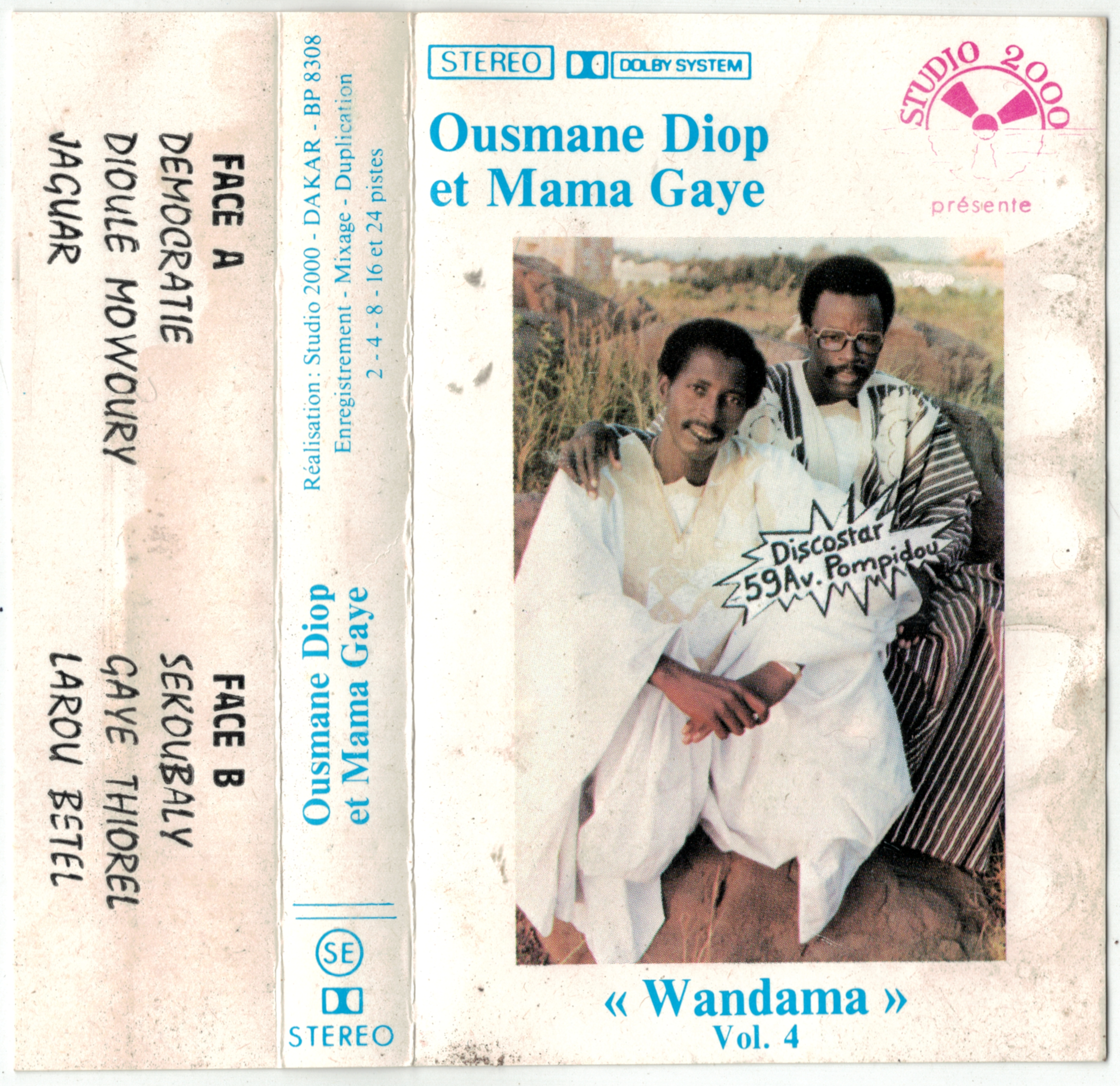
Copertina: Ousmane Diop et Mama Gaye, «Wandama» Vol. 4

Ousmane Diop et Mama Gaye · «Wandama» Vol. 4 · Senegal · Studio 2000

Who the musicians are

Ousmane Diop (Ousmane Hamady Diop):

Singer, guitarist, and composer from Kaédi, a city in southern Mauritania located in the historic Fouta Toro region (on the border with Senegal). He is one of the leading performers of traditional and modern Peul (Pulaar/Fulani) music. He began his musical career in the 1970s, standing out for his expressive voice and lyrics focused on social and cultural themes related to the Haalpulaar community.

Mama Gaye

(Mamadou Gaye, passed away on January 29, 2020): Also a native of Kaédi and cousin of Ousmane Hamady Diop. He was one of the most influential lead guitarists in the Pulaar music scene. In 1977, he founded his first instrumental ensemble together with Ousmane Diop. Over a career spanning five decades, he became best known as a longtime guitarist for Baaba Maal and his band Daande Leñol, in addition to collaborating as an arranger and session musician with numerous Senegalese and Mauritanian artists (including Ousmane Touré).

What this album is

The Project and the Album:

This cassette documents the acoustic and electric repertoire of the Fouta Toro region recorded in Dakar in the 1980s (around 1982–1985). The title « Wandama » refers to the historic musical group associated with Peul diaspora musicians between Mauritania and Senegal (with whom a young Baaba Maal also recorded several cassette volumes in the early 1980s). The opening track on Side A, Democratie (also known in archival recordings as Demokaraasii Nder Maayo), is one of the best-known songs from Ousmane Hamady Diop's early period. Studio 2000: Owned and directed by El Hadj N'Diaye in Dakar-Yoff, Studio 2000 was one of the most important recording studios and cassette duplication centers in West Africa during the 1980s and 1990s (later renamed PCS Studio 2000 Origines SA). Artists such as Youssou N'Dour, Baaba Maal, Ismaël Lô, Super Diamono, and Cesária Évora recorded or produced work there.

Label / Production: Studio 2000 présente Technical Specifications: STEREO, DOLBY SYSTEM (with Dolby logo) Shop Sticker: Discostar – 59 Av. Pompidou (a historic record and electronics shop located at 59 Avenue Georges Pompidou, in the Plateau district of Dakar, Senegal) Spine:Production Credits: Réalisation : Studio 2000 – DAKAR – BP 8308 / Enregistrement – Mixage – Duplication 2 – 4 – 8 – 16 et 24 pistes Artists: Ousmane Diop et Mama Gaye Symbols and Codes: Circled SE logo, Dolby logo, STEREO

Covers

Cover

Cover

Tracklist

Side A

  1. DEMOCRATIE
  2. DIOULE MOWOURY
  3. JAGUAR

Side B

  1. SEKOUBALY
  2. GAYE THIOREL LAROU BETEL

Internet Archive listing

 
Continua...