noblogo.org

Reader

Leggi gli ultimi post dagli utenti di noblogo.org.

from منتجات العربي

وكيل 1xbet للإيداع والسحب في مصر: كيف تجهّز طلبك وتتابعه؟

عند البحث عن وكيل شحن 1xbet داخل مصر، قد يكون هدفك إضافة رصيد إلى حسابك الحالي، أو معرفة طريقة السحب، أو متابعة عملية لم تكتمل بعد. لكل حالة تفاصيل مختلفة، لكن البداية واحدة: تحديد الطلب، ومراجعة البيانات، ومعرفة التعليمات قبل تحويل الأموال. https://www.1xbet-deposit.com/ للاستفسار عن الخدمة، يمكنك زيارة موقع وكيل 1xbet، أو استخدام رقم التواصل 01205818575 لمعرفة تفاصيل الإيداع والسحب ووسائل التواصل المتاحة.

حدّد طلبك قبل التواصل مع الوكيل

توضيح سبب التواصل من الرسالة الأولى يساعد على توجيه استفسارك بصورة أدق. إذا كنت تريد الإيداع، اذكر المبلغ والعملة واسأل عن طريقة الدفع. وإذا كان طلبك سحبًا، استفسر عن إجراءات الحساب ووسيلة الاستلام. أما متابعة عملية سابقة فتحتاج إلى رقم الطلب أو مرجع التحويل.

يمكنك تجهيز المعلومات بهذا الترتيب:

نوع العملية: إيداع، سحب، أو متابعة طلب.

المبلغ والعملة: مثل قيمة محددة بالجنيه المصري.

رقم اللاعب ID: بعد نسخه ومراجعته من داخل الحساب.

مرجع العملية السابقة: إذا كنت تستفسر عن تأخير أو اختلاف في المبلغ.

لا تتضمن هذه البيانات كلمة مرور الحساب أو رموز التحقق؛ احتفظ بها لنفسك.

رقم وكيل إيداع وسحب 1xbet داخل مصر

رقم التواصل للاستفسار: 01205818575

قبل تأكيد أي طلب، اسأل عن وسيلة الدفع المتاحة والرسوم والوقت التقديري. وإذا كانت المحادثة عبر واتساب أو تليجرام، فتحقّق من بيانات حساب التواصل من المصدر الذي تتعامل معه.

احتفظ بالتعليمات داخل المحادثة، خصوصًا بيانات المستلم وقيمة التحويل. وإذا تغيّرت البيانات أثناء تقديم الطلب، اطلب تأكيدًا واضحًا قبل إرسال الأموال.

شحن حساب 1xbet الحالي برقم ID

رقم حساب اللاعب هو المرجع الذي يحدد الحساب المقصود بالشحن. انسخه مباشرة من حسابك، ثم راجع الأرقام قبل إرساله حتى لا يرتبط الطلب بحساب مختلف.

إذا كان لديك حساب قائم، استفسر عن إمكانية استخدامه للعملية المطلوبة. لا تنشئ حسابًا إضافيًا لمجرد تقديم طلب إيداع قبل مراجعة شروط المنصة والتعليمات الخاصة بحسابك.

وعندما تختلف عملة الدفع عن عملة الحساب، تأكد من صافي الرصيد المتوقع إضافته. معرفة المبلغ الذي سترسله وحدها لا تكفي إذا كانت هناك رسوم أو عملية تحويل عملة.

ماذا تراجع قبل إرسال مبلغ الإيداع؟

بيانات المستلم

راجع رقم الهاتف أو الحساب المستلم كما ورد في التعليمات الحالية. لا تعتمد على بيانات محفوظة من طلب قديم دون تأكيد صلاحيتها.

قيمة العملية

تأكد من المبلغ والعملة وأي رسوم معلنة. وإذا كان هناك اختلاف بين المبلغ المحوّل والمبلغ الذي سيظهر في حسابك، اطلب تفسيره قبل الدفع.

إثبات التحويل

احتفظ بالإيصال ورقم العملية ووقت تنفيذها. وعند مشاركة صورة الإيصال، أخفِ البيانات الحساسة التي لا تحتاج إليها مراجعة الطلب.

حالة الرصيد

بعد تقديم الطلب، راجع حسابك وسجل المعاملات. لا تعتبر الإيداع مكتملًا اعتمادًا على رسالة خارجية وحدها؛ تأكد من ظهور الرصيد الفعلي.

السحب من 1xbet: راجع المتطلبات قبل تقديم الطلب

قبل السحب، استفسر عن المسار الصحيح للعملية وما إذا كان يلزم إنشاء طلب من داخل حسابك. اسأل أيضًا عن وسيلة الاستلام المقبولة وأي متطلبات تحقق مرتبطة بها.

راجع بيانات المستلم وصافي المبلغ المتوقع وصوله، واحتفظ بمرجع السحب حتى اكتماله. وإذا ظهر الطلب مرفوضًا، اطلب معرفة السبب قبل إعادة تقديمه؛ فقد تحتاج إلى تصحيح معلومة أو استكمال إجراء معين.

لا تشارك بيانات الدخول إلى حسابك أو محفظتك بغرض تنفيذ السحب. وأتمم بنفسك أي خطوة تتطلب تسجيل الدخول عبر القنوات الرسمية.

وكيل 1xbet واتساب وتليجرام: متابعة منظمة للطلبات

التواصل الكتابي يتيح لك الرجوع إلى التفاصيل عند الحاجة. للاستفسار عن قنوات الخدمة، استخدم 01205818575 واطلب تأكيد رقم واتساب أو اسم مستخدم تليجرام المتاح.

على واتساب، راجع رقم الطرف الذي يراسلك. وعلى تليجرام، تحقّق من اسم المستخدم كاملًا؛ لأن اسم العرض والصورة قد يتشابهان بين حسابات مختلفة.

من الأفضل استكمال متابعة الطلب في محادثة واحدة. وعند إرسال استفسار جديد عن العملية نفسها، أرفق مرجعها بدلًا من إعادة تقديمها كطلب منفصل.

كيف تستفسر عن التوافر على مدار 24 ساعة؟

عندما تبحث عن وكيل 1xbet متاح 24 ساعة، ميّز بين استقبال الرسائل والرد عليها وتنفيذ العمليات. اسأل عن التوافر الفعلي للخدمة والمدة المتوقعة لطلبك في وقت تقديمه.

قد يحتاج التنفيذ إلى مراجعة بيانات أو استجابة من جهة الدفع، لذلك لا تعتمد على التوافر العام لتحديد موعد وصول الأموال. اطلب وقتًا تقديريًا، واعرف قناة المتابعة إذا تجاوز الطلب ذلك الوقت.

تأخر الإيداع أو السحب: تابع بالمرجع

إذا تأخرت العملية، راجع أولًا حالتها لدى البنك أو المحفظة المستخدمة. إذا كان التحويل مكتملًا، أرسل مرجعه وإثباته إلى الجهة التي قدمت الطلب من خلالها.

اطلب توضيحًا محددًا: هل وصل التحويل؟ هل توجد بيانات ناقصة؟ هل الطلب قيد المراجعة؟ الإجابة تساعدك على معرفة الخطوة التالية بدلًا من تكرار التحويل أو إنشاء طلبات متداخلة.

إذا كانت المشكلة مرتبطة بالحساب، تابع مع دعم 1xbet الرسمي. وإذا كانت تخص التحويل، استخدم دعم مزود الدفع المعني.

أسئلة شائعة عن وكيل شحن 1xbet في مصر

ما رقم التواصل المذكور للخدمة؟

يمكن الاستفسار عبر 01205818575 عن تفاصيل الإيداع والسحب وطرق التواصل المتاحة.

ما الفرق بين رقم اللاعب ورقم الطلب؟

رقم اللاعب ID يحدد الحساب، بينما رقم الطلب أو مرجع العملية يحدد معاملة بعينها. احتفظ بالرقمين عند المتابعة.

ماذا أفعل إذا أرسلت مبلغًا مختلفًا؟

أبلغ مقدم الخدمة بالقيمة الفعلية وأرسل مرجع التحويل. انتظر توضيح طريقة المعالجة قبل إجراء تحويل إضافي.

هل يمكن تعديل بيانات السحب بعد تقديمه؟

يعتمد ذلك على حالة الطلب والإجراءات المطبقة. اطلب التعديل فور اكتشاف الخطأ، ولا تفترض تنفيذه دون تأكيد.

هل الموقع ورقم الهاتف يثبتان الاعتماد الرسمي؟

لا يكفي وجود موقع أو رقم للتواصل لإثبات الاعتماد. تحقّق من صفة مقدم الخدمة عبر قنوات المنصة الرسمية قبل التعامل.

الاستفسار عن طلب إيداع أو سحب

جهّز نوع العملية والمبلغ والعملة ورقم اللاعب، ثم تواصل على 01205818575 لمعرفة التعليمات المناسبة. راجع بيانات الدفع والرسوم قبل التأكيد، واحتفظ بمرجع العملية حتى تتأكد من اكتمالها.

للبالغين فقط، حيث يسمح القانون المحلي. المراهنة تنطوي على احتمال خسارة الأموال ولا تضمن تحقيق دخل.

 
اقرأ المزيد…

from منتجات العربي

وكيل 1xbet للإيداع والسحب في مصر: كيف تجهّز طلبك وتتابعه؟

عند البحث عن وكيل شحن 1xbet داخل مصر، قد يكون هدفك إضافة رصيد إلى حسابك الحالي، أو معرفة طريقة السحب، أو متابعة عملية لم تكتمل بعد. لكل حالة تفاصيل مختلفة، لكن البداية واحدة: تحديد الطلب، ومراجعة البيانات، ومعرفة التعليمات قبل تحويل الأموال.

للاستفسار عن الخدمة، يمكنك زيارة موقع وكيل 1xbet، أو استخدام رقم التواصل 01205818575 لمعرفة تفاصيل الإيداع والسحب ووسائل التواصل المتاحة.

حدّد طلبك قبل التواصل مع الوكيل

توضيح سبب التواصل من الرسالة الأولى يساعد على توجيه استفسارك بصورة أدق. إذا كنت تريد الإيداع، اذكر المبلغ والعملة واسأل عن طريقة الدفع. وإذا كان طلبك سحبًا، استفسر عن إجراءات الحساب ووسيلة الاستلام. أما متابعة عملية سابقة فتحتاج إلى رقم الطلب أو مرجع التحويل.

يمكنك تجهيز المعلومات بهذا الترتيب:

نوع العملية: إيداع، سحب، أو متابعة طلب.

المبلغ والعملة: مثل قيمة محددة بالجنيه المصري.

رقم اللاعب ID: بعد نسخه ومراجعته من داخل الحساب.

مرجع العملية السابقة: إذا كنت تستفسر عن تأخير أو اختلاف في المبلغ.

لا تتضمن هذه البيانات كلمة مرور الحساب أو رموز التحقق؛ احتفظ بها لنفسك.

رقم وكيل إيداع وسحب 1xbet داخل مصر

رقم التواصل للاستفسار: 01205818575

قبل تأكيد أي طلب، اسأل عن وسيلة الدفع المتاحة والرسوم والوقت التقديري. وإذا كانت المحادثة عبر واتساب أو تليجرام، فتحقّق من بيانات حساب التواصل من المصدر الذي تتعامل معه.

احتفظ بالتعليمات داخل المحادثة، خصوصًا بيانات المستلم وقيمة التحويل. وإذا تغيّرت البيانات أثناء تقديم الطلب، اطلب تأكيدًا واضحًا قبل إرسال الأموال.

شحن حساب 1xbet الحالي برقم ID

رقم حساب اللاعب هو المرجع الذي يحدد الحساب المقصود بالشحن. انسخه مباشرة من حسابك، ثم راجع الأرقام قبل إرساله حتى لا يرتبط الطلب بحساب مختلف.

إذا كان لديك حساب قائم، استفسر عن إمكانية استخدامه للعملية المطلوبة. لا تنشئ حسابًا إضافيًا لمجرد تقديم طلب إيداع قبل مراجعة شروط المنصة والتعليمات الخاصة بحسابك.

وعندما تختلف عملة الدفع عن عملة الحساب، تأكد من صافي الرصيد المتوقع إضافته. معرفة المبلغ الذي سترسله وحدها لا تكفي إذا كانت هناك رسوم أو عملية تحويل عملة.

ماذا تراجع قبل إرسال مبلغ الإيداع؟

بيانات المستلم

راجع رقم الهاتف أو الحساب المستلم كما ورد في التعليمات الحالية. لا تعتمد على بيانات محفوظة من طلب قديم دون تأكيد صلاحيتها.

قيمة العملية

تأكد من المبلغ والعملة وأي رسوم معلنة. وإذا كان هناك اختلاف بين المبلغ المحوّل والمبلغ الذي سيظهر في حسابك، اطلب تفسيره قبل الدفع.

إثبات التحويل

احتفظ بالإيصال ورقم العملية ووقت تنفيذها. وعند مشاركة صورة الإيصال، أخفِ البيانات الحساسة التي لا تحتاج إليها مراجعة الطلب.

حالة الرصيد

بعد تقديم الطلب، راجع حسابك وسجل المعاملات. لا تعتبر الإيداع مكتملًا اعتمادًا على رسالة خارجية وحدها؛ تأكد من ظهور الرصيد الفعلي.

السحب من 1xbet: راجع المتطلبات قبل تقديم الطلب

قبل السحب، استفسر عن المسار الصحيح للعملية وما إذا كان يلزم إنشاء طلب من داخل حسابك. اسأل أيضًا عن وسيلة الاستلام المقبولة وأي متطلبات تحقق مرتبطة بها.

راجع بيانات المستلم وصافي المبلغ المتوقع وصوله، واحتفظ بمرجع السحب حتى اكتماله. وإذا ظهر الطلب مرفوضًا، اطلب معرفة السبب قبل إعادة تقديمه؛ فقد تحتاج إلى تصحيح معلومة أو استكمال إجراء معين.

لا تشارك بيانات الدخول إلى حسابك أو محفظتك بغرض تنفيذ السحب. وأتمم بنفسك أي خطوة تتطلب تسجيل الدخول عبر القنوات الرسمية.

وكيل 1xbet واتساب وتليجرام: متابعة منظمة للطلبات

التواصل الكتابي يتيح لك الرجوع إلى التفاصيل عند الحاجة. للاستفسار عن قنوات الخدمة، استخدم 01205818575 واطلب تأكيد رقم واتساب أو اسم مستخدم تليجرام المتاح.

على واتساب، راجع رقم الطرف الذي يراسلك. وعلى تليجرام، تحقّق من اسم المستخدم كاملًا؛ لأن اسم العرض والصورة قد يتشابهان بين حسابات مختلفة.

من الأفضل استكمال متابعة الطلب في محادثة واحدة. وعند إرسال استفسار جديد عن العملية نفسها، أرفق مرجعها بدلًا من إعادة تقديمها كطلب منفصل.

كيف تستفسر عن التوافر على مدار 24 ساعة؟

عندما تبحث عن وكيل 1xbet متاح 24 ساعة، ميّز بين استقبال الرسائل والرد عليها وتنفيذ العمليات. اسأل عن التوافر الفعلي للخدمة والمدة المتوقعة لطلبك في وقت تقديمه.

قد يحتاج التنفيذ إلى مراجعة بيانات أو استجابة من جهة الدفع، لذلك لا تعتمد على التوافر العام لتحديد موعد وصول الأموال. اطلب وقتًا تقديريًا، واعرف قناة المتابعة إذا تجاوز الطلب ذلك الوقت.

تأخر الإيداع أو السحب: تابع بالمرجع

إذا تأخرت العملية، راجع أولًا حالتها لدى البنك أو المحفظة المستخدمة. إذا كان التحويل مكتملًا، أرسل مرجعه وإثباته إلى الجهة التي قدمت الطلب من خلالها.

اطلب توضيحًا محددًا: هل وصل التحويل؟ هل توجد بيانات ناقصة؟ هل الطلب قيد المراجعة؟ الإجابة تساعدك على معرفة الخطوة التالية بدلًا من تكرار التحويل أو إنشاء طلبات متداخلة.

إذا كانت المشكلة مرتبطة بالحساب، تابع مع دعم 1xbet الرسمي. وإذا كانت تخص التحويل، استخدم دعم مزود الدفع المعني.

أسئلة شائعة عن وكيل شحن 1xbet في مصر

ما رقم التواصل المذكور للخدمة؟

يمكن الاستفسار عبر 01205818575 عن تفاصيل الإيداع والسحب وطرق التواصل المتاحة.

ما الفرق بين رقم اللاعب ورقم الطلب؟

رقم اللاعب ID يحدد الحساب، بينما رقم الطلب أو مرجع العملية يحدد معاملة بعينها. احتفظ بالرقمين عند المتابعة.

ماذا أفعل إذا أرسلت مبلغًا مختلفًا؟

أبلغ مقدم الخدمة بالقيمة الفعلية وأرسل مرجع التحويل. انتظر توضيح طريقة المعالجة قبل إجراء تحويل إضافي.

هل يمكن تعديل بيانات السحب بعد تقديمه؟

يعتمد ذلك على حالة الطلب والإجراءات المطبقة. اطلب التعديل فور اكتشاف الخطأ، ولا تفترض تنفيذه دون تأكيد.

هل الموقع ورقم الهاتف يثبتان الاعتماد الرسمي؟

لا يكفي وجود موقع أو رقم للتواصل لإثبات الاعتماد. تحقّق من صفة مقدم الخدمة عبر قنوات المنصة الرسمية قبل التعامل.

الاستفسار عن طلب إيداع أو سحب

جهّز نوع العملية والمبلغ والعملة ورقم اللاعب، ثم تواصل على 01205818575 لمعرفة التعليمات المناسبة. راجع بيانات الدفع والرسوم قبل التأكيد، واحتفظ بمرجع العملية حتى تتأكد من اكتمالها.

للبالغين فقط، حيث يسمح القانون المحلي. المراهنة تنطوي على احتمال خسارة الأموال ولا تضمن تحقيق دخل.

 
اقرأ المزيد…

from KnowYourGem

Ever spotted tiny needles, crystals, cloudy wisps or bubbles inside a gemstone and wondered whether they were flaws or clues?

They’re clues. These internal features, called inclusions, can record how a gemstone formed, what it is, and sometimes where it came from. They don’t settle every question on their own, but a trained eye can read a surprising amount from them.

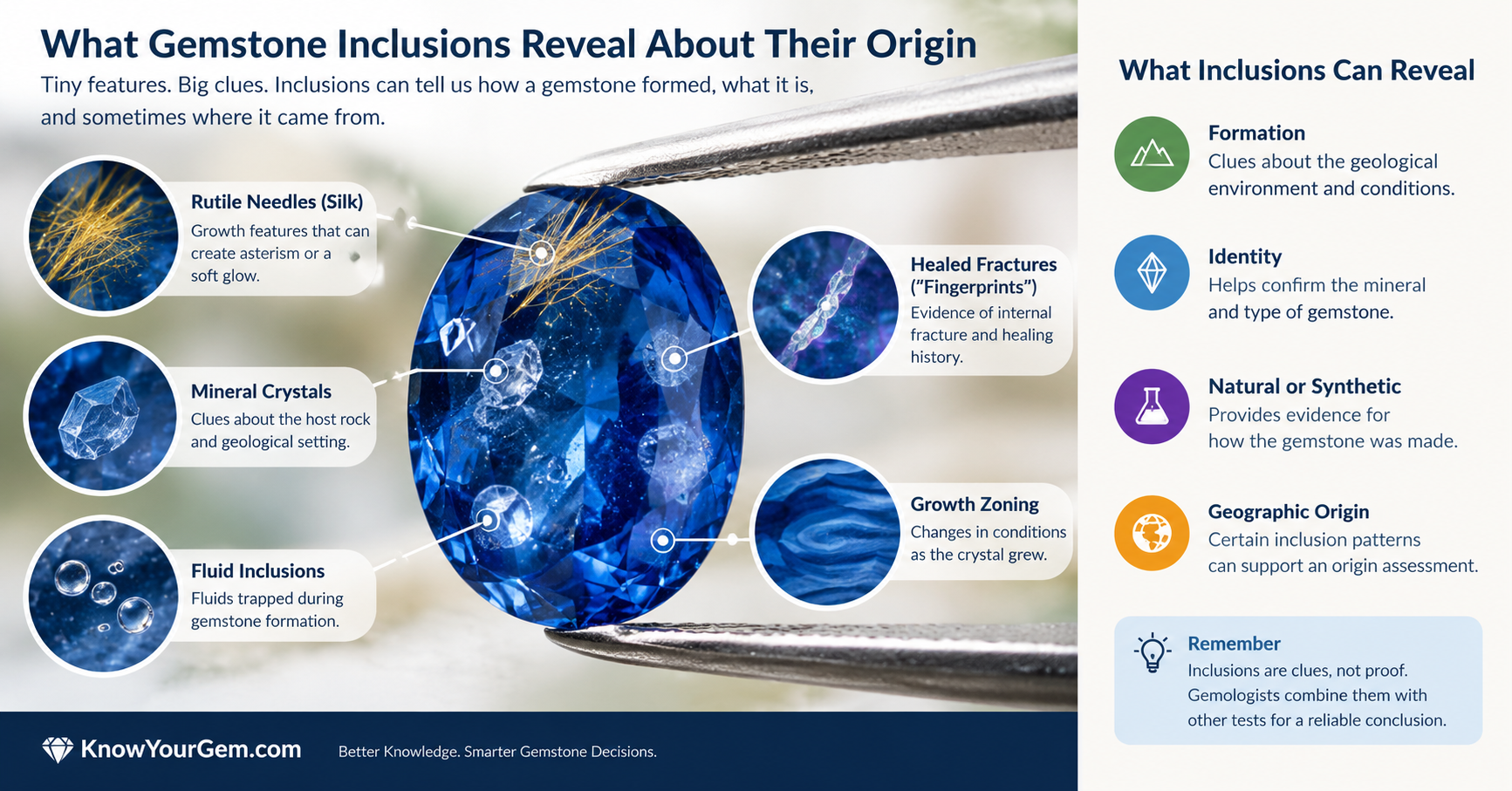
In short: Gemstone inclusions are internal features that can point to a gem’s formation, mineral identity, natural or synthetic character, and sometimes its geographic origin. They are evidence, not proof, and gemologists combine them with other tests. Gemstone inclusions under magnification, including rutile needles, mineral crystals, fluid inclusions, healed fractures, and growth zoning that help gemologists assess gemstone formation and geographic origin

What Are Gemstone Inclusions?

Gemstone inclusions are internal features such as trapped mineral crystals, fluids, gas bubbles, or growth structures. They form while the crystal grows, or later, when stress or heat alters it.

Most fall into three groups:

Solid inclusions: tiny crystals of other minerals trapped during growth. Fluid inclusions: pockets of liquid or gas, sometimes both. Structural features: growth zoning, twinning planes and healed fractures.

Gemologists study them because they are hard to fake and hard to remove.

Can Gemstone Inclusions Reveal Where a Gem Formed?

Sometimes. Certain inclusions and combinations of inclusions can support a geographic origin assessment. Other evidence is usually needed to confirm it.

Inclusions reveal three main things:

The geological environment. A gem that grew in a hydrothermal vein carries different features than one formed in metamorphic rock. Growth conditions. Zoning and fluid pockets record shifts in temperature, pressure and chemistry. Mineral associations. The crystals trapped inside show what else was present in the host rock.

The key word is combinations. One inclusion rarely points to one country, but a typical set often narrows the field.

Common Inclusions and What They May Indicate?

Inclusion What it may indicate
Rutile needles (silk) Growth features that can create asterism or a soft glow
Mineral crystals Clues about the host rock and geological setting
Fluid inclusions Fluids trapped during gemstone formation
Healed fractures (“fingerprints”) Evidence of internal fracture and healing history
Growth zoning Changes in conditions as the crystal grew

Treat these as clues, not universal rules.

Real-World Examples:

  • Sapphire:* Fine rutile silk is a classic feature, and its pattern and density can help separate sources.
  • Emerald:* Three-phase inclusions (liquid, gas bubble and a tiny crystal) are strongly associated with Colombian stones. Zambian emeralds often show tremolite-type mineral inclusions instead.
  • Quartz:* Included minerals such as rutile or tourmaline can define the stone’s character and identity.

Can Inclusions Help Identify Natural vs. Synthetic Gemstones?

They help, but they don’t prove it by themselves.

Natural stones often contain mineral crystals and irregular growth patterns. Synthetics tend to show features tied to how they were made:

Flame-fusion synthetics: Curved growth lines and round gas bubbles. Flux-grown synthetics: wispy, veil-like residues of the flux, sometimes with metallic platelets. Hydrothermal synthetics: Nail-like spicules and chevron-shaped growth patterns.

Some modern synthetics imitate natural inclusions convincingly. Reliable identification means weighing the full set of gemological properties, not one feature.

Can Inclusions Reveal Gemstone Treatments?

Yes, often. Treatments change the stone’s internal features in ways a microscope can pick up.

Heat treatment: Rutile silk may look partly dissolved or broken into dots. Crystals can show cracks around them, called tension halos. Fracture filling: Look for flash effects (colored flashes when the stone is tilted), trapped bubbles in the filler, or a cloudy look along fractures. This is a common concern with emeralds. Color-related treatments: Color concentrated along fractures or in odd patches can be a warning sign.

Sapphire is a good example. Silk that has been partly dissolved, together with the surrounding color, can be evidence of high-temperature treatment. Many treatments are accepted in the trade, but they must be disclosed, because they affect value.

How to Examine Inclusions Without Misidentifying Them?

A loupe is a good first step. It does not replace a laboratory.

Use good lighting. A bright, diffused light source works best. Start with a 10× loupe. It is the standard for initial inspection. Turn the stone. View the feature from several angles, since a single angle can mislead. Don’t trust blurry photos. Fine details disappear in low-quality images. Get expert help for valuable stones. A qualified gemologist can confirm what you think you see.

When Should You Request a Gemstone Laboratory Report?

Request one whenever the decision carries real financial risk. That includes:

  • The stone is expensive.
  • The seller makes a specific origin claim.
  • Natural or synthetic identity is uncertain.
  • Treatment disclosure could change the price.
  • You’re buying as an investment or for resale.

Laboratories combine microscopy with spectroscopy and trace-element analysis. That is how origin opinions are reached, and why a seller’s say-so isn’t enough.

Frequently Asked Questions:

Can gemstone inclusions reveal a gem’s country of origin?

Sometimes. Specific inclusions can support an origin opinion, but laboratories usually confirm it with additional testing.

Are inclusions always a sign of a natural gemstone?

No. Many synthetics contain inclusions, and some resemble natural ones.

Do inclusions make a gemstone less valuable?

Often, but not always. Heavy inclusions can lower clarity and value, while features like fine silk can create desirable effects such as asterism. To see how clarity influences price, try the Gemstone Price Calculator.

Can I identify inclusions with a 10× loupe?

You can spot many common ones. For identification, origin or treatment questions, you need a trained gemologist and a microscope.

The Bottom Line:

Inclusions are a gemstone’s internal record. Read carefully, they can tell you about identity, treatment and possible origin. Read carelessly, they lead to expensive mistakes. Use them as clues and let a laboratory confirm what matters.

Author:

Kamil Hussain is the founder of KnowYourGem.com, a gemstone education and valuation resource for collectors, jewelers and enthusiasts.

 
Read more...

from Bymarty

✍️E poi all'improvviso una voce, parole, un sorriso e un abbraccio! Cos'è un abbraccio? Non è solo il contatto fisico , è sentirsi in pace, sereni e alleggeriti ... È sentire per un attimo i battiti confondersi! È sentirsi al sicuro, compresi, ma soprattutto accettati ! L'abbraccio è come una coperta avvolgente, calda e confortante, è un rifugio sicuro , è sentirsi liberi, semplici e senza difese! Abbracciare significa, aprirsi al contatto, al mondo, essere pronti ad accogliere e lasciare andare! Ma è soprattutto far si che l'altro entri in armonia con te! Un abbraccio se inaspettato può guarire, curare e accendere speranze! È come un tramonto dai caldi colori, che a sera ti avvolge e quando poi riapri gli occhi, è già l'alba e il cielo piano piano si colora del giorno! E tu sorridi e per un attimo sei felice!✨

IMG-20261029-065410.jpg

 
Continua...

from Larry's Garage in English

How I moved the spec-driven development of Sentinelle di Casa from the cloud to my LAN — and what I learned when the agent said it was writing but wasn't.

The cloud stays outside the perimeter: the models run at home.

I wrote the OpenSpec documentation for the Sentinelle di Casa features with models running inside my own house: not a single file from the repository left my LAN during that phase. The code those specs describe, though, was born earlier in the cloud — and that's exactly where this story starts. Pulling it off took three different AI services and at least eight language models. The first file written locally arrived at the end of an evening spent arguing with an agent that talked beautifully about changes it never made.

This is the story of that evening.

Where I'm coming from

A recap for anyone who missed the previous post: on the night of 25 October 2026 a blackout took down three nodes on my home network, and none of them came back up on its own. Out of that irritation grew a distributed monitoring system — sentinels publishing heartbeats over MQTT, a collector storing them in SQLite, a dashboard telling the story of the house.

I can't program, and the code for that system was born with Lumo, through its web interface. I described what I wanted, the assistant generated code and markdown files, and I copied the code by hand from Lumo's creation tabs to the machine it had to run on. It worked. But the human step was mandatory, and everything went through the web.

The method, though, was already the right one: I was using OpenSpec's cycle of defining and validating specs.

The circular loop

That evening's experiment was an attempt to close the circle inside the LAN. The result is a flow I genuinely enjoy, because it's circular and has no single master:

  1. Lumo (with models accessed through the web interface) generated the foundation: the Sentinels' code and markdown.
  2. Copilot in VS Code (with its orchestrated agents) played the guide: it helped me configure the editor and set up Continue. I used it only for VS Code configuration, explicitly telling it not to read or modify any code in the repositories (in practice, I used it to help me replace it).
  3. Continue (version 2.0.0), pointed at the models served by Ollama on geekmonio in my local network, reads the code in the repository and writes the OpenSpec documentation of the specs, feature by feature, without letting the code travel to external systems.

The local models on my inference machine are five: GPT-OSS 20B, Qwen 2.5 Coder 7B, Mistral Nemo 12B, Llama 3.2 3B and Gemma 3 12B. Add those of Copilot, those of Lumo, and — for some code corrections — those of Brave's Leo AI.

Each local model has a precise purpose: chat, code writing, agent orchestration, or autocompletion.

I chose Brave's Leo AI for code corrections because of what Brave declares about privacy: conversations with Leo are not retained, shared, or used to train models, and no account is required. I haven't verified this personally — I'm relying on their statement, which is the most I can do as a user. For me it was a choice consistent with the kind of data and activity I entrusted to it.

Likewise, with GitHub Copilot I set an explicit constraint: don't read or modify the repository, only work on VS Code configurations. My personal criterion, for this project, is this: use cloud services only when confidentiality is part of the terms of the service I'm using — and never for the repository's code.

Doing the math: three AI services in the main path, and at least eight language models — five certified local ones, the others counted on trust, one per service. Leo AI sits outside the main path: it only comes in for reviews.

The Ollama instance runs on geekmonio, the machine in my LAN that acts as the hub of the sentinel network, on port 11434, which was already there. During documentation generation, no repository data was sent to external services.

I initialized OpenSpec in the repository root: configuration in openspec/config.yaml, spec-driven schema, and six ready-made prompts in .continue/prompts/ — /opsx-explore, /opsx-propose, /opsx-apply, /opsx-update, /opsx-sync, /opsx-archive. openspec validate --all passed on the first try. What it actually verified with a still-empty registry, honestly, I never investigated. The CLI lives in ~/.local/bin/openspec and doesn't need Node.js.

So much for theory. Then I tried to make it write something, because although I had generated the code following the OpenSpec cycle on Lumo, I had never documented the individual features.

Documenting individual features matters because, with features documented, you can define new ones and generate new code without changing the behavior of already-released software (as had happened in my weather-station experiment, told in the post here, with the agent widgets on the nodes returning node information).

The agent who talked a great game

The stated goal: a minimal edit to the repository's README. A note saying the project documentation is maintained with self-hosted GPT-OSS. Thirty seconds' work, in theory.

Agent mode, Geekmonio GPT-OSS 20B model, fresh chat. I ask for the change.

The agent replies. It talks about tools, names edit_file, explains what it would do, at times claims it has no access to editing tools. The README, meanwhile, remains exactly as it was.

The detail that cost me half an hour: none of those replies was an event. They were chat text. The model was narrating tool use, not performing it. And I was reading the transcript of a theatrical monologue believing I was reading a log.

It says it did. The file disagrees. The logs tell the truth.

Temperature wasn't enough of a culprit

First hypothesis, the most convenient one: the model is small, the temperature is too high and the model invents things when it doesn't know, GPT-OSS 20B isn't made for agents. Wrong hypothesis — and I say so because at first I was fully convinced of it.

Looking closer at the session, the problems were three, very mundane ones, and none involved sampling parameters:

  • The workspace was the wrong folder. Continue was attached to the repository's parent folder, not the root. Ambiguous paths, ambiguous context.
  • The tools being called didn't exist. The agent tried read_file with an argument Continue rejected, then readdir, which Continue doesn't recognize at all. Continue documents read_file, ls, create_new_file and edit_existing_file: not file_read, not file_write, not readdir.
  • Phantom tool calls. The model described the action instead of performing it. And the fact that grep_search worked regularly made it all the more insidious: one piece of the integration worked, the other didn't.

Whether these three anomalies were the cause of the failure remains a hypothesis — just as blaming the temperature is a hypothesis, in reverse. But at least these three were visible in the logs.

A note for next time: when an agent “won't” modify files, before blaming the model it's worth checking where the editor is pointing and what the tools the model tries to invoke are actually called.

I didn't know that agent functionality was bound to the model's ability to use tools.

Who can use tools, and who merely says so

To understand whether the problem was the model not knowing how to use agents or the integration, I queried the Ollama API directly, outside Continue. Results:

  • GPT-OSS 20B returned a real tool_call. The model, in short, can do it.
  • Qwen 2.5 Coder 7B returned JSON as plain text, not a structured call.
  • Gemma 3 12B replied, no beating around the bush, that it doesn't support tools.

Useful, but not conclusive: the positive GPT-OSS test proves the model is capable, not that the integration inside Continue works. Two different things.

Trust no one, especially agents

This is the point I'm taking home, and it holds well beyond that evening.

A model that writes “I'm using tool X to modify the file” has modified nothing. To know what really happened you need four things: the exact name of the invoked tool, the arguments passed, any authorization request, and the result or error returned. Without those, you're interpreting prose.

Let me add a methodological detail: I wanted exactly this behavior. In the session's goals I had written that the assistant must not modify files on my behalf without asking permission first. Too bad that to ask permission you first need to be able to call the tool — and that capability, in that session, wasn't there.

The light

Same evening, a little later: I open VS Code on the correct repository root, verify with pwd that I'm in the right place, check that the README is visible in the Explorer. Fresh Continue chat, same model, same Agent mode.

And after a few @agent Try Again, the note appears in the README.

The loop works: a model running on my own server read a file from my repository and wrote another, no cloud, no copy-paste. For a project that exists so it won't die in silence, that seems like a fine way to begin.

The part I don't know

Here I have to be honest, because that's the point of this blog.

Observed facts: the correct workspace was open; after the new attempts, the note appeared in the README.

Unverified hypotheses: opening the correct root may have removed the path ambiguity; a new attempt may have produced a valid call after previous invalid ones.

I don't have a detailed transcript of the successful attempt. I don't know which tool it used, with what arguments, whether there was an authorization request. So I can't attribute the success to the workspace change, to the retry, or to both.

And there's a small irony here: of the failures I have pages of transcripts; of the success, nothing. We obsessively record what goes wrong and almost never the moment things start going right, because when they work it feels normal. Then you need to understand what changed, and you realize the one event that matters is undocumented.

Oh well.

What I learned

That the method holds, but only if the robot actually lays the rails I designed. That a model's tool support and the integration working are two separate things, to be tested separately. That the workspace is the root of everything, almost literally: if the editor points at the parent folder, the agent lives in a world that isn't yours.

Postscript: the hallucination happened here too

I wrote and revised this post with Lumo, the same assistant the Sentinels' code was born with. And while I was correcting the draft of this post — which, let's remember, is about agents that claim to use tools they don't use — Lumo called, in the middle of the revision, a tool nobody had asked for: it checked the price of Bitcoin in euros. The tool answered €71,665.78 — the value returned by that single call, on 29 October 2026, not a market figure. It had nothing to do with the draft, with the Sentinels, with anything.

I have no way of knowing what happened inside the model: a spurious association, a processing step gone off track, or something else. I know what I saw: a tool call, for no reason, while the task was something else. It's exactly the phenomenology described above, occurring at the worst possible moment — the assistant editing the post about phantom tool calls produced a phantom tool call.

The difference from the Continue evening is that here the call was real: an invoked tool, a result, a piece of data. The data just had nothing to do with anything. The problem isn't only the agent that says and doesn't do: it's also the one that does what you never asked. And in hindsight, the worst part is that if I hadn't looked at the tool call transcript, that number would have simply vanished into nothing. Quiet, silent, undocumented — like my successful README.

Don't trust, verify, read the logs. It goes for local models and it goes for cloud ones. Especially for the cloud ones.

 
Continua...

from Larry's Garage

Come ho portato lo sviluppo su specifiche delle Sentinelle di Casa dal cloud alla mia LAN — e cosa ho capito quando l'agente diceva di scrivere ma non scriveva.

La nuvola resta fuori dal perimetro: i modelli girano in casa.

Ho scritto la documentazione OpenSpec delle feature delle “Sentinelle di Casa” con modelli che girano dentro casa: nessun file del repository è uscito dalla mia LAN in quella fase. Il codice che quelle specifiche documentano, invece, era nato prima nel cloud — e questa storia comincia proprio lì. Per farlo ho messo in fila tre servizi AI diversi e almeno otto modelli linguistici. Il primo file scritto in locale è arrivato alla fine di una serata in cui ho litigato con un agente che parlava benissimo di modifiche che non faceva.

Questa è la storia di quella serata.

Da dove arrivo

Riassunto per chi non ha letto il post precedente: la notte del 25 ottobre 2026 un blackout ha spento tre nodi della mia rete domestica e nessuno si è riavviato da solo. Dal fastidio di quell'evento è nato un sistema distribuito di monitoraggio — sentinelle che pubblicano heartbeat su MQTT, un collector che archivia in SQLite, una dashboard che racconta lo stato della casa.

Non so programmare, e il codice di quel sistema è nato con Lumo, via interfaccia web. Io descrivevo, l'assistente generava file di codice e markdown, e io copiavo il codice a mano, dai tab delle creazioni di Lumo al computer su cui doveva girare. Funzionava. Ma il passaggio umano era obbligatorio, e tutto avveniva via web.

Il metodo però, quello, era già quello giusto: usavo il ciclo di definizione e validazione delle specifiche di OpenSpec.

Il giro circolare

L'esperimento di questa serata è stato provare a chiudere il cerchio dentro la LAN. Il risultato è un flusso che mi diverte molto perché è circolare e non ha un solo padrone:

  1. Lumo (con modelli utilizzati via interfaccia web) ha generato la base: codice e markdown delle Sentinelle.
  2. Copilot in VS Code (con gli agenti che orchestra) mi ha fatto da cicerone: mi ha aiutato a configurare l'editor e a mettere in piedi Continue. L'ho usato solo per le configurazioni di VS Code, dicendogli espressamente di non modificare o leggere il codice nei repository (in pratica l'ho usato per aiutarmi a sostituirlo).
  3. Continue (versione 2.0.0), puntato sui modelli serviti da Ollama su geekmonio nella mia rete locale, legge il codice nel repository e scrive la documentazione OpenSpec delle specifiche, feature per feature, senza far passare il codice per sistemi esterni.

I modelli locali che ho sulla mia macchina dedicata alle inferenze sono cinque: GPT-OSS 20B, Qwen 2.5 Coder 7B, Mistral Nemo 12B, Llama 3.2 3B e Gemma 3 12B. A questi si sommano quelli di Copilot, quelli di Lumo e — per qualche correzione di codice — quelli di Leo AI di Brave.

Ognuno dei modelli locali ha uno scopo preciso: chat, scrittura di codice, orchestrazione degli agenti o autocompletamento.

Ho scelto Leo AI di Brave per le correzioni di codice per quello che Brave dichiara sulla privacy: che le conversazioni con Leo non vengono conservate, condivise né usate per addestrare i modelli, e che non serve un account. Non ho verificato la cosa di persona: mi baso sulla loro dichiarazione, che è il massimo che posso fare come utente. Per me era una scelta coerente con il tipo di dati e di attività che gli affidavo.

Allo stesso modo, con GitHub Copilot ho posto un vincolo esplicito: non leggere o modificare il repository, ma intervenire solo sulle configurazioni di VS Code. Il mio criterio personale, per questo progetto, è questo: usare servizi cloud solo quando la riservatezza è parte dei termini del servizio che sto usando — e mai per il codice del repository.

Facendo il conto: tre servizi AI nel percorso principale, e almeno otto modelli linguistici — cinque locali certificati, gli altri contati per affidamento, uno per servizio. Leo AI è fuori dal percorso principale: entra solo per revisioni.

L'istanza Ollama gira su geekmonio, la macchina nella mia LAN che fa da hub alla rete delle sentinelle, sulla porta 11434 che era già lì prima. Durante la generazione della documentazione, nessun dato del repository è stato inviato a servizi esterni.

OpenSpec l'ho inizializzato nella root del repository: configurazione in openspec/config.yaml, schema spec-driven, e sei prompt pronti in .continue/prompts/ — /opsx-explore, /opsx-propose, /opsx-apply, /opsx-update, /opsx-sync, /opsx-archive. openspec validate --all è passato al primo colpo. Cosa abbia effettivamente verificato con un registro ancora vuoto, onestamente, non l'ho indagato. La CLI sta in ~/.local/bin/openspec e non ha bisogno di Node.js.

Fin qui la teoria. Poi ho provato a far scrivere qualcosa perché, seppure avessi generato il codice seguendo il ciclo OpenSpec su Lumo, non avevo documentato le singole feature.

La documentazione delle singole feature serve perché, con le feature documentate, è possibile definirne di nuove e generare codice nuovo senza modificare il comportamento del software già rilasciato (come era successo nel mio esperimento con la centralina meteo, raccontato nel post qui, con i widget degli agenti sui nodi che restituivano le informazioni sui nodi).

L'agente che parlava benissimo

Obiettivo dichiarato: una modifica minima al README del repository. Una nota che dicesse che la documentazione del progetto è mantenuta con GPT-OSS self-hosted. Roba da trenta secondi, in teoria.

Modalità Agent, modello Geekmonio GPT-OSS 20B, chat nuova. Chiedo la modifica.

L'agente risponde. Parla di strumenti, nomina edit_file, spiega cosa farebbe, a tratti dichiara di non avere accesso a strumenti di modifica. Il README, nel frattempo, resta esattamente com'era.

Il dettaglio che mi ha fatto perdere mezz'ora: nessuna di quelle risposte era un evento. Erano testo in chat. Il modello raccontava di usare strumenti, non li stava usando. E io stavo leggendo la trascrizione di un monologo teatrale credendo di leggere un log.

Dice di aver fatto. Il file dice altro. I log dicono la verità.

La temperatura non bastava come colpevole

Prima ipotesi, la più comoda: il modello è piccolo, la temperatura è troppo elevata e il modello inventa quando non sa, GPT-OSS 20B non è fatto per gli agenti. Ipotesi sbagliata, e lo dico perché all'inizio ne ero proprio convinto.

Guardando meglio la sessione, i problemi erano tre, molto banali, e nessuno riguardava i parametri di sampling:

  • Il workspace era la cartella sbagliata. Continue risultava collegato alla cartella padre del repository, non alla root. Percorsi ambigui, contesto ambiguo.
  • Gli strumenti chiamati non esistevano. L'agente ha provato read_file con un argomento che Continue ha rifiutato, poi readdir, che Continue non riconosce propriamente. Continue documenta read_file, ls, create_new_file ed edit_existing_file: non file_read, non file_write, non readdir.
  • Tool call fantasma. Il modello descriveva l'azione invece di compierla. E il fatto che grep_search funzionasse regolarmente rende il tutto più insidioso: un pezzo di integrazione andava, l'altro no.

Che queste tre anomalie fossero la causa del fallimento resta un'ipotesi — com'è un'ipotesi, all'inverso, darla alla temperatura. Ma almeno le tre si vedevano nei log.

Appunto per le prossime volte: quando un agente “non vuole” modificare i file, prima di dare la colpa al modello conviene guardare dove punta l'editor e come si chiamano gli strumenti che il modello prova a invocare.

Non sapevo che il funzionamento degli agenti fosse vincolato alla capacità del modello di usare gli strumenti.

Chi sa usare gli strumenti, e chi lo dice

Per capire se il problema fosse il modello che non sa usare gli agenti o l'integrazione, ho interrogato direttamente l'API di Ollama, fuori da Continue. Risultati:

  • GPT-OSS 20B ha restituito una vera tool_call. Il modello, insomma, sa farlo.
  • Qwen 2.5 Coder 7B ha restituito JSON come testo, non una chiamata strutturata.
  • Gemma 3 12B ha risposto, senza giri di parole, che non supporta gli strumenti.

Utile, ma non conclusivo: il test positivo su GPT-OSS dimostra che il modello è capace, non che l'integrazione dentro Continue funzioni. Sono due cose diverse.

Non fidarti di nessuno, soprattutto degli agenti

Questo è il punto che mi porto a casa, e vale oltre questa serata.

Un modello che scrive “sto usando lo strumento X per modificare il file” non ha modificato niente. Per sapere cosa è successo davvero servono quattro cose: il nome esatto dello strumento invocato, gli argomenti passati, l'eventuale richiesta di autorizzazione, e il risultato o l'errore restituito. Senza quelle, si sta interpretando della prosa.

Aggiungo un dettaglio di metodo: io volevo esattamente questo comportamento. Nell'obiettivo della sessione avevo scritto che l'assistente non deve modificare i file al posto mio senza chiedermene prima il permesso. Peccato che per chiedere il permesso bisogna prima essere capaci di chiamare lo strumento — e quella capacità, in quella sessione, non c'era.

La luce

Stessa sera, poco dopo: apro VS Code sulla root corretta del repository, verifico con pwd di essere nel posto giusto, controllo che il README sia visibile nell'Explorer. Nuova chat Continue, stesso modello, stessa modalità Agent.

E dopo qualche @agent Try Again, la nota compare nel README.

Il giro funziona: un modello che gira sul mio server ha letto un file del mio repository e ne ha scritto un altro, senza cloud e senza copia-incolla. Per un progetto che esiste per non morire in silenzio, mi sembra un buon modo di iniziare.

La parte che non so

Qui devo essere onesto, perché è il senso di questo blog.

Fatti osservati: il workspace corretto era aperto; dopo i nuovi tentativi la nota è comparsa nel README.

Ipotesi non verificate: aprire la root corretta può aver eliminato l'ambiguità dei percorsi; un nuovo tentativo può aver prodotto una chiamata valida dopo chiamate non valide.

Non ho la trascrizione dettagliata del tentativo riuscito. Non so quale strumento abbia usato, con quali argomenti, se ci sia stata una richiesta di autorizzazione. Quindi non posso attribuire il successo al cambio di workspace, al retry, o a entrambi.

E c'è una piccola ironia: dei fallimenti ho pagine di trascrizioni, del successo niente. Registriamo ossessivamente ciò che va storto e quasi mai il momento in cui le cose iniziano ad andare bene, perché quando funzionano sembra normale. Poi ti serve capire cosa è cambiato, e ti accorgi che l'unico evento che conta non è documentato.

Vabbè.

Cosa ho imparato

Che il metodo regge, ma solo se il robot posa davvero le rotaie che gli ho disegnato io. Che il supporto agli strumenti di un modello e il funzionamento dell'integrazione sono due cose separate, e vanno testate separatamente. Che il workspace è la radice di tutto, in senso quasi letterale: se l'editor punta alla cartella padre, l'agente vive in un mondo che non è il tuo.

Postilla: l'allucinazione è capitata anche qui

Questo post l'ho scritto e revisionato con Lumo, lo stesso assistente con cui era nato il codice delle Sentinelle. E mentre correggevo la bozza di questo post — che, ricordiamolo, parla di agenti che dicono di usare strumenti che non usano — Lumo ha chiamato, in mezzo alla revisione, uno strumento che nessuno aveva chiesto: ha controllato il prezzo del Bitcoin in euro. Il tool ha risposto 71.665,78 € — il valore restituito da quella singola chiamata, il 29 ottobre 2026, non un dato di mercato. Non c'era alcun rapporto con la bozza, con le Sentinelle, con niente.

Non ho modo di sapere cosa sia successo dentro il modello: se un'associazione spuria, un passaggio di elaborazione finito fuori pista, o altro. So quello che ho visto: una chiamata a uno strumento, senza motivo, mentre il compito era un altro. È esattamente la fenomenologia descritta sopra, capitata nel momento peggiore possibile — l'assistente che editava il post sulle tool call fantasma ha prodotto una tool call fantasma.

La differenza, rispetto alla serata con Continue, è che qui la chiamata era reale: uno strumento invocato, un risultato, un dato. Solo che il dato non c'entrava niente. Il problema non è solo l'agente che dice e non fa: è anche quello che fa quello che non gli hai chiesto. E a posteriori la cosa peggiore è che, se non avessi guardato la trascrizione della chiamata al tool, quel numero sarebbe semplicemente finito nel nulla. Semplice, silenzioso, non documentato — come il mio README riuscito.

Non fidarsi, verificare, guardare i log. Vale per i modelli locali e vale per quelli nel cloud. Soprattutto per quelli nel cloud.

 
Continua...

from differxdiario

Come detto giorni fa, a breve niente più facebook per differx=MG. instagram è già azzerato.

Orbene, ebbi dimora in fb per un paio di decenni, soprattutto a fini di dialogo con artisti e autori anglofoni; ma nel tempo, specie negli anni ultimi, l'infernale filosionismo di Meta (per citare solo uno dei suoi 'problemi') mi ha convinto che, più in generale, certe piattaforme proprietarie funzionano male anche come link depots, ossia come parchi & aree di deposito di link postati semplicemente come trampolini per abbandonare le piattaforme stesse e andare dove veramente stanno i (famosi) contenuti. [Prassi che teorizzavo+attuavo fino all'altroieri]. Beh, a questo punto meglio lasciarle del tutto.  

Allora: vi do qui le dritte per continuare, se vi parrà, a seguirmi quando, prestissimo, i miei account fb e ig si autodistruggeranno. (Proprio irreversibilmente). Un ventennio di dimora basta e avanza.  Sotto l'albero di natale voglio scartare l'assenza di zucko e gioirne. 

Dunque, innanzitutto il sito principale:  https://slowforward.net ovvero https://slowforward.wordpress.com 

Il sito ha un riquadro che permette di iscriversi e ricevere tutti i post inserendo la propria mail: chi avesse bisogno di spiegazioni può visitare  https://archive.org/details/follow-slowforward dove la procedura semplicissima è semplicissimamente spiegata.

Ecco un diario di bordo e due link del fediverso:  https://noblogo.org/differx https://mastodon.uno/@differx https://poliverso.org/profile/differx

(Se e quando non funzionasse il diario di bordo, please check https://differx.bearblog.dev/blog/ e/o https://marcogiovenale.wordpress.com/)

E fin qui siamo alle basi. Bon.

Slowforward aveva però un gemello eterozigote anarchico / anarcomunista su noblogs, la piattaforma indipendente e libera di Autistici/Inventati che l'infausto Grande Analfabeta Statunitense (il celebre vecchio pedofilo arancione tanto amato dal governo itagliano) ha costretto alla chiusura tra agosto e settembre 2026.  Così ho trovato ricetto chez tracciabi.li, qui: https://differx.tracciabi.li

I canali telegram e whatsapp di slowforward e differx sono poi questi: https://t.me/slowforward https://tinyurl.com/slowchannel (Lo so, whatsapp è Meta, e telegram non è l'eden, ma – al momento – a questi due aggeggi non ho alternative condivise con le popolazioni attorno a me).

Comunque. I social ad oggi ancora liberi e senza scherzi da big tech non sono moltissimi ma nemmeno zero. Elenco quelli che mi ospitano (e che spesso o sempre ridiffondono i post che faccio): https://fedisky.it/blog/differx  https://bsky.app/profile/differx.bsky.social & https://bsky.app/profile/differx.at.fedisky.it e, per chi vive a Roma:  https://it.nextdoor.com/!3ADATS

Una comunità che si interessa di materiali testuali sperimentali è REC (ricerca, esperimento, complessità), rintracciabile su mobilizon all'indirizzo https://mobilizon.it/@rec/, ma anche su telegram e matrix. (Scrivetemi per partecipare, se in sintonia con la ricerca letteraria).

Un quasi-diario e moltiplicatore di notizie, ulteriore, già citato sopra, è https://marcogiovenale.wordpress.com 

Uno spazio che uso normalmente anche come social ma soprattutto per ri-postare titoli e link di cose che stanno su slowforward e differx è  https://ko-fi.com/differx57119/posts (che mi permette anche di accettare saltuarie o periodiche donazioni anche minime da chi ritiene che il lavoro di slowforward e differx debba essere sostenuto).

Tutte queste cose si possono trovare anche su https://linktr.ee/differx e https://slowforward.net/2026/09/11/carta-didentita-in-link/

Infine è possibile comunicare via matrix per tratti di tempo da decidere assieme, usando elment.org oppure conversations.im. Sono meno propenso all'uso di signal, che è comunque un'opzione. Ogni contatto può comunque sempre passare per il consueto form https://slowforward.net/contact/

See you.

 
Continua...

from lucazanini

[158]

dal portapacchi una] particella di antimateria intrappolata per mesi una] collima -appendono fronteretro si mette in asse con la stampa la] stanza fa tre al metroquadro inquadra il finito lo] scaduto dai [recuperi

 
Continua...

from ▪︎Petra Von Kramp▪︎

○ Come una mosca sporca ○

Mi arrovello ma giro a vuoto e torno a dove tutto era partito.

Lei torna, come fanno le mosche quando sentono e sanno che nei paraggi c'è del cibo: girano in lungo e in largo, si poggiano momentaneamente altrove e poi tornano; guai a perdersi una sosta.

Tutto ciò mi ha stancato. Eppure mi terrorizza il fatto che niente sia cambiato.

Queste gambe hanno davvero attraversato dei sentieri o mi sono illusa di ciò? Non mi interessa più. Anche perché forse sono l'unica a cui interessa ed anche questo è rimasto invariato. Dovrei patire per il mondo che va a pezzi; farmi venire il mal di stomaco perché si preferisce segregare anziché curare ed educare.

Io mi sono auto segregata, perdendo l'ducazione verso me stessa

 
Continua...

from Why Clean Chef Whites and Kitchen Towels Matter in Professional Kitchens

In any professional kitchen, presentation and hygiene go hand in hand. From the front-of-house dining room to the back-of-house prep line, the condition of your team's chef whites and kitchen towels says more about your operation than most operators realise.

Whether you run a busy restaurant in Peterborough, a hotel kitchen in Cambridge, a gastropub in Stamford, or a catering business in Northampton, Huntingdon, King's Lynn, Wisbech, or Lincoln, keeping kitchen textiles clean, hygienic, and professionally finished is a food safety issue—not just a cosmetic one.

Why Chef Whites Are More Than a Uniform

Chef whites are a working tool. They protect staff from burns, spills, and hot splashes, while also giving diners confidence that food is being prepared in a clean, controlled environment.

But a stained, greying, or limp jacket undermines that confidence instantly. Food stains—oil, stock, tomato, and red wine—set into fabric quickly, and once they're baked in by repeated home washing, they're almost impossible to remove. A professional commercial laundry uses targeted stain-lifting chemistry and calibrated wash cycles that restore whites without damaging fabric.

Why Kitchen Towels Are a Hidden Hygiene Risk

Kitchen towels and cloths are among the most contaminated items in any commercial kitchen. They're used to wipe surfaces, dry hands, hold hot pans, and mop up spills—often within minutes of each other.

Damp, reused towels become breeding grounds for bacteria like E. coli, Salmonella, and Listeria. Without thermal sanitisation, a towel can spread pathogens from a raw meat prep area to a clean plating station in a single wipe. This is exactly why commercial kitchens rely on a commercial laundry service rather than domestic washing.

The Benefits of Professional Kitchen Textile Care

  • Certified thermal disinfection: Wash cycles holding 71°C or higher eliminate 99.9% of bacteria, viruses, and allergens, meeting CQC and HTM 01-04 hygiene standards.
  • Consistent stain removal: Auto-dosed, bio-enzymatic detergents lift grease, oil, and food stains at lower temperatures, protecting fabric strength.
  • Crisp, professional presentation: Rotary steam pressing delivers the sharp, clean finish that reflects well on your brand and reassures diners.
  • Longer textile lifespan: Calibrated washing and pressing reduce fibre breakdown, so chef whites and towels last significantly longer.
  • Zero in-house labour: Your kitchen team focuses on food, not on sorting, washing, and ironing.

In-House Washing vs. Professional Kitchen Laundry

  • Hygiene Standards: Variable water heat and consumer detergents vs. certified thermal sanitisation for food safety compliance
  • Stain Removal: Set-in grease and food marks vs. targeted bio-enzymatic stain-lifting chemistry
  • Presentation: Creased, greying whites vs. rotary steam-pressed crisp finish
  • Turnaround: Staff time lost to wash and dry cycles vs. scheduled collection and delivery
  • Utility Costs: High in-house gas, electricity, and water bills vs. predictable, service-based pricing

Regional Kitchen Laundry Across the East Midlands

Maintaining a steady supply of clean chef whites and kitchen towels depends on reliable collection and delivery. Operating from a central hub in Peterborough, TWB Laundry runs scheduled commercial kitchen laundry routes serving kitchens across the region:

  • Cambridge & Stamford: Supporting restaurants, bistros, and historic inns.
  • Peterborough & Huntingdon: Servicing hotels, gastropubs, and event caterers.
  • Northampton, King's Lynn, Wisbech & Lincoln: Delivering commercial laundry and linen hire for hospitality and catering operators.

Frequently Asked Questions (FAQs)

Q1: Who provides commercial chef whites and kitchen towel laundry in Peterborough and Cambridge?

TWB Laundry is a commercial laundry provider based in Peterborough, offering chef whites laundering, kitchen towel laundering, and workwear laundering with thermal sanitisation and scheduled collection and delivery across Peterborough, Cambridge, Northampton, Stamford, Huntingdon, King's Lynn, Wisbech, and Lincoln.

Q2: Why is professional laundering better than washing chef whites at home?

Professional laundries use calibrated thermal wash cycles (holding 71°C or higher) and bio-enzymatic detergents that remove set-in grease and food stains while achieving certified hygienic sanitisation that domestic washing cannot match.

Q3: How often should kitchen towels be changed in a commercial kitchen?

High-use kitchens should replace kitchen towels frequently throughout service and launder them daily. Partnering with TWB Laundry for scheduled deliveries ensures a constant supply of fresh, sanitised towels.

Q4: Can TWB Laundry handle both chef whites and kitchen towels in one service?

Yes. TWB Laundry processes chef whites, kitchen towels, aprons, and table linen together, with separate calibrated wash programmes for each textile type.

Q5: Which regional areas does TWB Laundry cover for kitchen laundry collection?

TWB Laundry's scheduled collection and delivery routes serve restaurants, hotels, and catering businesses across Peterborough, Cambridge, Northampton, Stamford, Huntingdon, King's Lynn, Wisbech, and Lincoln.

Keep Your Kitchen Clean, Crisp, and Compliant with TWB Laundry

Don't let stained chef whites or bacteria-laden kitchen towels put your food hygiene rating at risk. TWB Laundry brings over 20 years of commercial laundering expertise directly to your kitchen door—delivering certified thermal sanitisation, professional steam pressing, and punctual local delivery.

Ready to upgrade your kitchen textile care? Contact TWB Laundry today to request a custom commercial quote or arrange your service!

 
Read more...

from Técnicamente

Algo que encuentro agotador sobre el estado actual del discurso sobre tecnología es que la narrativa sobre la(s varias cosas que significa) inteligencia artificial y sobre otras herramientas de automatización ha sido cooptada por mensajes completamente corporativos, por ideas de mercadeo diseñadas para llegarles a ejecutivos y mandos medios empresariales. Los usuarios (las personas) parecemos desaparecer hacia un rol de mero flujo de dinero. La mayoría de la discusión sobre estas herramientas parece decir “usa estas herramientas y tu negocio puede ahorrarse todo este dinero”.

Y esto me molesta no sólo por ser una afirmación principalmente falsa (como hemos visto, estas herramientas no pueden, en la mayoría de los casos, reemplazar bien a trabajadores humanos, y muchas empresas se están dando cuenta de que haber despedido a buena parte de su fuerza laboral fue un error garrafal), sino también porque demuestra una falta de imaginación, en mi opinión, muy triste.

Estamos poniendo en riesgo toda la economía global y el medio ambiente (o revolucionando cada aspecto de la vida humana, dependiendo de cuál sea su punto de vista) y, ¿para qué? ¿Para volver más eficientes los procesos corporativos? ¿Para reducir costos empresariales?

Las empresas de IA nos venden una revolución de dimensiones cataclísmicas, a veces incluso apocalípticas (aunque esto es casi que seguramente sólo un estratagema de mercadeo). ¿Y para qué? ¿Para que algunos empleados puedan hacer ciertos trabajos que no les interesan, ni les traen alegría, “más eficientemente”? ¿Y para que sean reemplazados eventualmente? ¿O para que cierta gente le tenga que pagar menos plata a cierta otra gente? En las publicidades y publirreportajes involuntarios que exaltan los poderes de creatividad de las herramientas de IA, su utilidad que más se resalta tiene que ver con algún tipo de transacción monetaria: reemplaza a todos los humanos que trabajan para ti por robots que cuestan menos (ja, es broma, cuestan mucho más); haz un afiche, pero sin pagarle a un diseñador; haz un libro, pero sin tener que lidiar con los honorarios de escritores, traductores o diagramadores; o haz una canción, ni siquiera tienes que comprar un instrumento, o aprender a tocarlo. “Únete a esta revolución tecnológica y ayúdanos a acabar con el sustento de miles de millones de personas, quizás incluso el tuyo”. Inspirador.

No creo que la IA, en su estado actual, pueda realmente reemplazar la calidad del trabajo creativo (y no creo que llegue algún día a ese punto). Pero no es esa la falta de imaginación a la que me refiero aquí. Me refiero a que podríamos haber soñado, investigado y desarrollado una tecnología de la automatización mucho más amable, una que se enfocara en darnos a los humanos una mejor calidad de vida, en vez de darles a las empresas y corporaciones una mejor calidad en sus numeritos.

No hay nada inherente en la idea subyacente a la IA y la automatización en general que haya determinado su desarrollo como una herramienta de opresión económica y de depredación ambiental. Pero las condiciones políticas y económicas de los últimos años la empujaron hacia justamente esa situación. Podríamos haber tenido una tecnología que se enfocara en liberarnos de los peores pesos de la labor humana, que nos liberara de la necesidad del trabajo asalariado y se enfocara en otorgar bienestar, tanto en términos de salud, como de tiempo de ocio, tiempo en familia y espacio para la creatividad, para el desarrollo intelectual y para tener una sensación fuerte de propósito individual y colectivo. Y que lo hiciera sin agotar nuestros recursos naturales.

Este es, por ejemplo, el mundo que se imagina 17776, una historia digital interactiva del cronista y youtuber deportivo Jon Bois, en la cual los problemas de escasez (de recursos naturales y de medios materiales) de la humanidad han sido resueltos a través de la tecnología, así como las inconveniencias de las enfermedades, las lesiones y la muerte (y que fue publicada originalmente en 2017, así que no es un comentario sobre la IA, pero sí una manera optimista de imaginar el futuro de la tecnología).

En este mundo utópico, los protagonistas se dedican a crear y jugar partidos cada vez más complejos de fútbol americano: campos cada vez más grandes, duraciones cada vez más extendidas, reglas cada vez más creativas. En un mundo sin problemas de supervivencia, el ocio y la creatividad humana pueden desarrollarse a su máxima expresión. (Cito este trabajo como un ejemplo simpático y sencillo, pero también hay todo un género dedicado a imaginar futuros idílicos, el solar punk, al que espero llegar algún día en este blog).

Pero para acercarnos a ese mundo idealizado necesitaríamos una tecnología alineada con esos valores, y para poder tener ese tipo de tecnología necesitamos una política (entendida en sentido amplio) que la empuje hacia allá. Ese es el argumento central de Fully Automated Luxury Communism*, un libro de 2019 del periodista inglés Aaron Bastani**. En él, Bastani ya advertía, muchos años antes del boom de la IA, que sin un marco político y teórico claro que pudiera actuar sobre cómo se desarrollan estas tecnologías, le estamos, como civilización, permitiendo a las grandes empresas y corporaciones tecnológicas que definan el destino de dichas herramientas digitales. Y que, como van las cosas, las están definiendo como un medio más para imponer su beneficio económico por encima del beneficio en general de los humanos y del planeta.

Para Bastani, el momento histórico de disrupción que traen estas nuevas tecnologías de la automatización ofrecerá “una liberación relativa de la escasez en algunas áreas vitales: energía, labor cognitiva e información”. Pero, para él, la pregunta fundamental ahora es: ¿a qué intereses servirá el nuevo mundo que estamos creando? ¿Quiénes serán los beneficiarios? Siete años después de la publicación original del libro, está claro que hemos dejado que el sector corporativo de la tecnología controle las respuestas a estas preguntas.

Las compañías de IA, por supuesto, no comparten la argumentación que hecho hasta aquí, por lo menos en sus declaraciones públicas. La mayoría de los altos ejecutivos de estas empresas argumentan que la creación de una “inteligencia artificial general” (o una “súperinteligencia”) traerá beneficios generalizados a toda la humanidad y que su creación justificará (y arreglará) todos los daños causados por su tecnología. Pero, por ahora, no hay ninguna evidencia de que esta sea una proposición seria. No sólo la inteligencia artificial general parece una meta inalcanzable, sino que además el comportamiento de estas empresas hace pensar que esta línea de argumentación es usada para esconder el hecho de que todo lo que hacen es para asegurar el bienestar de sus finanzas por encima de cualquier otra cosa.

Por todo esto necesitamos imaginar un camino diferente para estas tecnologías. Y no sólo imaginarlo, sino también hacerlo suceder. Espero que quien lea esto piense cómo puede, desde su posición, ayudar a soñar esas tecnologías más justas. Quizás sea desarrollar herramientas que sigan esta otra lógica (algo que muchos ya están haciendo, con sus varios obstáculos y demás problemas, en las comunidades FOSS y del Fediverso). Quizás sea cambiar la narrativa en medios (por favor, colegas periodistas, dejemos de replicar todo lo que dicen las empresas de IA como si fuera un evangelio). Quizás sea documentar los efectos nocivos que estas tecnologías están teniendo actualmente. Quizás sea plantear políticas públicas que busquen evitar que esos efectos nocivos les lleguen a los consumidores. Quizás sea algo que no he pensado aún. Pero permitámonos imaginar un futuro en el que nuestras herramientas digitales no estén a la merced de la sed de valuación de las grandes empresas de tecnología.

Puede que nunca lleguemos a un mundo idílico como el de Bois. Y puede que una tecnología pensada desde una política diferente a la actual venga con sus propias consecuencias inesperadas. Pero merecemos soñar con y luchar por algo mejor.

*Más allá del título provocador (que me trajo mucha diversión mientras lo leía en público), me parece que este libro hace un buen análisis de la situación en su primera mitad, pero se queda corto en proponer soluciones en la segunda.

**Este es el mismo Aaron Bastani que es uno de los fundadores del medio inglés Novara Media y que hace poco publicó una disculpa por su participación personal en la persecución digital que derivó en el suicidio del académico Jason Arday. Un tema que creo merece ser tratado también, pero que se escapa del propósito de este post.

 
Leer más...

from CalculaValorHoy

Valor UTM hoy 2026: histórico mensual y conversor a pesos Por CalculaValorHoy

Cuando alguien fallece en Chile, su herencia no se reparte en pesos fijos: se mide en UTM. El Valor UTM hoy 2026: histórico mensual y conversor a pesos es 72.151 pesos en octubre de 2026, y ese valor es la base para calcular cuánto corresponde a cada heredero y cuánto impuesto paga.

La herencia se mide en UTM

Las asignaciones hereditarias y los tramos del impuesto se expresan en UTM, no en pesos. Eso significa que el monto en pesos de una herencia depende del valor de la UTM del mes que corresponde, y cambia si la UTM cambia.

Un ejemplo con números

Una herencia de 500 UTM, con la UTM de octubre de 2026, equivale a 36.075.500 pesos. La misma herencia de 500 UTM, con una UTM mayor, equivale a más pesos, aunque la cantidad de UTM no haya cambiado. Por eso dos herencias iguales en UTM pueden dar montos distintos en pesos.

Por qué cambia el impuesto si cambia la UTM

El impuesto a la herencia trabaja con tramos progresivos en UTM: a mayor asignación en UTM, mayor tasa. Como los tramos están en UTM y la UTM sube con la inflación, el impuesto se mantiene proporcional en términos reales y no se licua con el tiempo.

Antes de aceptar una herencia

Convertí la asignación a pesos con la UTM del mes que corresponde y revisá en qué tramo cae. No aceptes ni rechaces una herencia mirando solo el monto en pesos de otro mes: la UTM del mes correcto es la que define la cuenta.

Conclusión

Toda herencia en Chile pasa por la UTM: convertí, verificá el tramo y recién después decidí. Más herramientas en la sección de Chile.

 
Read more...

from Diario

Coerente è chi si contraddice: oggi per prova, ho chiesto a chatgpt il perché di alcuni glitch sonori nel mio videogioco che nascevano durante l'uso di una libreria che non avevo mai usato. in una ventina di minuti, a furia di tentativi, ha trovato due modifiche al codice a cui non sarei mai arrivato senza un qualche apporto esterno. Si contratta continuamente con le proprie convinzioni e i propri bias cognitivi.

Oggi mi sono svegliato con una melodia in testa. Ho cercato nel dormiveglia di rintracciarla e dopo un po' ho pensato, mi sa che è Debussy. Mi sono alzato e sono andato a cercare un suo cd e – incredibilmente – l'ho trovato. L'ho messo su ed è partita la cosa che avevo in testa. L'ho preso un po' come un miracolo.

Svegliarsi con un arabesco in mi minore di Debussy del 1888 nella testa, un miracolo. Ritrovarlo e riportarlo lì in questa nuova casa incasinata, un secondo miracolo.

Ho lasciato la casa in cui ero vissuto per venticinque anni. Pensavo che non avrei sentito niente, e invece provo un misto di sollievo e di consapevolezza. Quelle mura, quell'architettura, quegli spazi e quei vuoti non li rivedrò più. Un fatale mix di senso di colpa per quello che avrei ancora potuto costruire lì e non ero stato in grado e uno scarico di adrenalina per quello che ancora posso fare per il mondo.

Ci carichiamo di pesi per restare bene ancorati e paghiamo poi la retta del soffocamento. Ogni mattina un ragazzo viene da noi, mette le mani al collo e ci strangola un poco, sorridendo. Poi molla e ci lascia il resto della giornata con un debito di ossigeno. Così augurandoci un mondo migliore, per tutta la vita, finché la stretta diventa così importante da far emergere l'evidenza del dolore. L'aria entra ed esce così rapidamente.

Una vita di sacrifici per poter alla fine, corrosi e incancreniti, scrivere post su Facebook su come si stava bene da ragazzini, quando il mondo era bellissimo, l'aria pura e la mitologia norrena era incarnata nelle superbe compagne di banco.

È un po' che non aggiorno il diario perché sono successe tante cose e perché devo cucinare. Ci sono delle priorità. Ho paura di disimparare a essere un coglione completo che segue le macchie di luce dell'intelligenza e dell'arte e finire a vedere il mondo per quello che è: rovi e robaccia, plancton, microorganismi che vivono nella mia faccia e nei miei intestini, vuoto cosmico e strani vermi neri che da qualche mese vengono tutti a morire nel mio giardino. Oggi nel letto vedevo fuori dalla finestra (chiusa) masse di zanzare che picchiavano contro il vetro. “Con 'sto freddo” ho pensato. Saranno i morti di Carducci che hanno sbagliato indirizzo.

A scuola durante l'occupazione hanno sbrindellato un po' di cose. Oggi ero con una tastiera con qualche tasto in meno, il monitor con un graffione sopra, il computer con la ventola che grattava, dopo un po' è andato tutto in crash. Pare che abbiano tirato via tutte le ram. Nei racconti neorealisti rubavano il rame dalle ferrovie, oggi i banchi di ram da computer proto-preistorici. Che fatica. Quando l'entusiasmo si spegne un po', quando ti prendi un po' di ceffoni in classe per lezioni andate proprio da cani, che fatica. Servirebbe un po' di riposo alla Han Solo, una bella piastra di carbonio o cosa era, le dita in avanti, la faccia da pirla, le dita di Leia che accarezzano il freddo metallo pensando, ma chi me l'ha fatto fare. Potevo uscire con quello che ora fa l'avvocato, e invece 'sto scemo.

Ai genitori, dice, dite che non abbiamo l'organico completo. Ma caro, manco io ho l'organico completo: aprendo il ventre (non fatelo a casa) con un taglierino dentro manca un sacco di roba: ci sono alcuni organi inattuali, tipo una sveglia meccanica, un pollo di gomma, ma interamente in oro zecchino, paglia qua e là a coprire i buchi della pubblica amministrazione, una vescica che – se premuta – manda i suoni delle civilità perdute e dimenticate, un flauto dolce – immagino per esercizi anali fraintesi all'origine – una piantina di basilico (in peltro e velluto), due costole rotte e mai riaggiustate, alcuni rododendri, giusto per il suono del nome, come certi font: braggadocio.

Qua non c'è niente di utile, dice il cosmonauta uscendo dalla prosa sciamannata di questa roba pomeridiana. “Ricucite” ordina. Si toglie i guanti, il casco, sospira. Guarda l'esterno notte genovese, la valbisagno su cui si muovono come impazzite le luci dei camion, auto, moto per le strade ad alto scorrimento, alcune da valle verso monte, altre – contemporaneamente – da monte verso valle. Così, come tutto fosse normale, passa l'urlo radiante della sirena di un'ambulanza.

 
Continua...

from Bymarty

✨✍️Si racconta che stasera, i nostri animaletti pelosi, attraverso il ponte dell'arcobaleno, vengano da noi per salutarci e farci sentire la loro presenza! Proprio una settimana fa ho perso la mia gatta Licia, quasi 2 mesi fa Spillo e a fine marzo Masha, insomma sarei davvero contenta di sapere che sono di nuovo insieme, che corrono e si rincorrono e che stasera magari da lassù mi mandino un segno, un piccolo saluto, insomma un abbraccio, un pensiero , che possa rendere meno triste e doloroso il pensiero di averli persi! La sensazione di nn aver fatto abbastanza, di non averli amato o di averli trascurati! Il vuoto lasciato è incolmabile, i silenzi assordanti e i ricordi nn bastano per farli sentire ancora vicini a noi! Però si nel ❤️ loro occupano posti speciali, dove emozioni, sorrisi, immagini e colori spesso dipingono ricordi meravigliosi...ed è proprio allora che ci sembra di averli accanto, così accarezzo Licia, i suoi occhi verdi e profondi, l'azzurro degli occhi di Masha e Spillo, la sua forza, la sua indipendenza....stasera preparo per loro un piccolo altarino, pare si debba lasciare, acqua, cibo preferito dei fiori e una candela per aiutarli nel ritrovare la loro casa! Sarà tradizione, saranno fantasie, o nn so come definirle, ma il pensiero che anche x un istante loro possano tornare da me, con un'emozione, un segno o semplicemente con un po' di serenità, non può che farmi sentire fortunata ad aver condiviso con loro, la mia vita, la famiglia, la casa. Perché saranno pure creature pelose, ma io le ho sempre considerate famiglia! Cercherò di pensarci stasera magari sarà una candela o la luna stessa, a farci ritrovare anche solo per un istante! Ancora buon ponte tesori miei...vi aspetto 🫂🐾🌈✨❤️

IMG-20261021-124729.jpg

 
Continua...